12 Great Animations You May Have Missed in 2022

Artist credit: HeroCollector16 on DeviantArt
While 2022 was largely a good year for animation in film, TV, and anime, it could also be argued that it marked the start of the second Dark Age of American animation. I go into more detail about this in the article “A Brief History of the Animation Age Ghetto,” but the TL;DR is that in August of that year, David Zaslav, the CEO of Warner Brothers Discovery, commenced his cost-cutting efforts on HBO Max by removing several animated TV shows from the streaming service, including Close Enough, OK K.O., and (this is the one that hurt me the most) Infinity Train. This sparked a wave of other streamers doing the same, especially Disney+ and Paramount+, which destroyed many animation fans’ trust that these streamers would treat the shows they love with even a modicum of respect (to say nothing of the people in the industry who actually created these shows).
If you’re wondering why I’m calling it the second Dark Age, it’s because the first Dark Age lasted from the mid-60s to the late 80s, starting with the death of Walt Disney, which left his company (and the American animation industry as a whole) rudderless and adrift, and ending when the financial success of The Little Mermaid and Who Framed Roger Rabbit helped usher in the Renaissance Era. The era was defined by the limited-animation stylings of Hanna-Barbera and a push for much more family-friendly stories, which helped solidify the widespread misconception that animation is a genre of children’s entertainment rather than an artistic medium anyone can enjoy.
Still, there were plenty of films and TV shows during the Dark Age that managed to overcome these obstacles and prove themselves to be genuinely great artistic works. American filmmakers like Don Bluth and Ralph Bakshi made some of their best work in this era, and Europe gave us films like Yellow Submarine, Fantastic Planet, and Watership Down. Japanese animation really came into its own as an art form during this period, and many in the West began to take notice (though it wouldn’t be until Akira’s release in 1988 that anime exploded in popularity stateside). Even American TV had some bona fide gems, like Scooby-Doo, Fat Albert, The Flintstones, Schoolhouse Rock, and the Rankin-Bass and Peanuts Christmas specials.
The same is true for the current late capitalist Dark Age. 2022 gave us plenty of excellent animated feature films, be they major tentpole releases (Turning Red, The Bad Guys, Guillermo del Toro’s Pinocchio, Puss in Boots: The Last Wish, etc.) or indie or foreign releases (My Father’s Dragon, Unicorn Wars, Suzume, Apollo 10 1/2, etc.). Several great TV shows also debuted in both America (The Cuphead Show, The Legend of Vox Machina, Smiling Friends, Bee & Puppycat, The Proud Family: Louder and Prouder, etc.) and Japan (Spy x Family, Uncle from Another World, Mobile Suit Gundam: The Witch From Mercury, My Dress-Up Darling, Cyberpunk: Edgerunners, Bocchi the Rock, Chainsaw Man, etc.).
However, with all the hype they received, some good ones fell through the cracks, whether because they weren’t promoted properly, were indie releases, or were canceled and removed from one streaming service only to be rescued by another. So, instead of making whole lists of the best animated TV shows and movies of 2022, like I’ve done for 2023 and 2024 so far, how about I instead talk about twelve shows and movies from 2022 that I think deserve much more attention than they got? From the buried gems of Netflix and Hulu to the more obscure offerings from the foreign film circuit, here’s my picks for the top 12 most underrated animated releases of 2022, starting with:
The House
Distributor: Netflix
Production companies: Nexus Studios, Netflix Animation
Directors: Emma de Swaef, Marc James Roels, Niki Lindroth von Baer, Paloma Baeza
Writers: Enda Walsh (screenplays); Emma de Swaef, Marc James Roels, Niki Lindroth von Baer, Johannes Nyholm, Paloma Baeza (stories)
Producers: Charlotte Bravasso, Christopher O’Reilly
Music: Gustavo Santaolalla
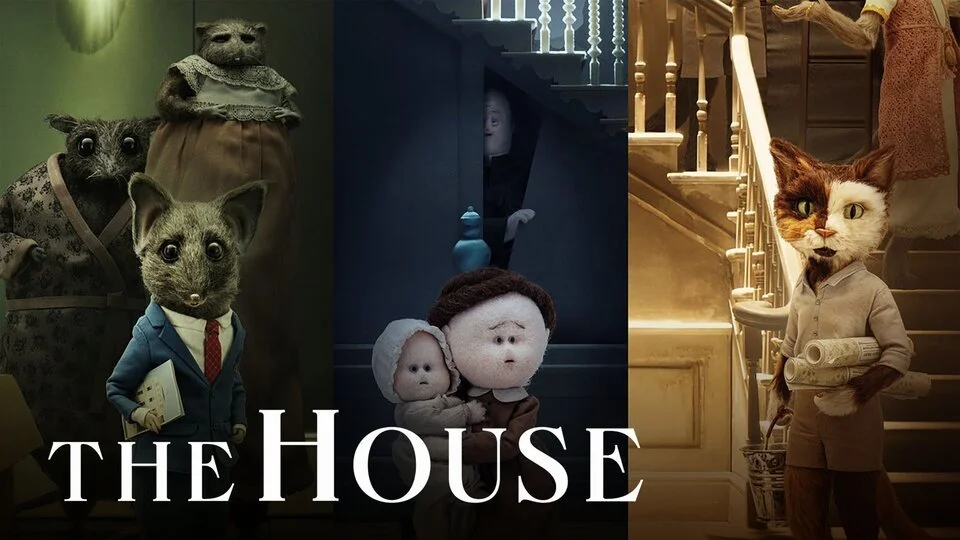
Stop-motion always lends itself well to horror, and this beautifully strange Netflix original serves as further proof of that. It also offers good life lessons through its themes of wealth, the insanity that comes with it, and the idea that the best way to achieve true happiness might be to let go of all of that.
The story of the eponymous domicile is told in an anthology style through three short films. The first, “And Heard Within, a Lie is Spun,” follows a poor family who unexpectedly get an offer from the mysterious architect Mr. Van Shoonbeek (Barney Pilling) to live in one of his newly constructed mansions. The parents, Raymond and Penelope (Matthew Goode and Claudie Blakley), are overjoyed, but their daughter, Mabel (Mia Goth), begins to suspect that something is wrong with the house, and struggles to convince her parents of the danger before it’s too late. The second, “Then Lost Is Truth That Can’t Be Won,” takes place about a century later in a city of anthropomorphic mice, and follows a real estate developer (Jarvis Cocker) who tries to cut corners while renovating the house when he starts running out of funds. He starts to go mad when the house experiences an oddly persistent fur beetle infestation, and is constantly bugged (no pun intended) by an odd couple (Yvonne Lombard and Sven Wollter) who are insistent on buying the house. The third, “Listen Again and Seek the Sun,” sees the house imperiled by climate change-induced floodwaters, with an anthropomorphic cat developer, Rosa (Susan Wokoma), struggling to save her childhood home. Her tenants, the slacker fisherman Elias (Will Sharpe) and the hippie couple Jen and Cosmos (Helena Bonham Carter and Paul Kaye), seem to be more of a hindrance than a help. However, their carefree attitude might be the key to keeping Rose from going crazy in her efforts to outrun the flood and turn the house into a profitable business.
The animation itself is probably the most unique thing about this anthology. As I said, stop-motion lends itself very well to horror, and The House certainly delivers on this front. The art style of the first short is especially notable in this regard, as it toes the line between cute and uncanny valley creepiness, particularly in the way the characters’ faces are way too small for their heads. However, the real standout sequence is the scene in the second short where the developer hallucinates the fur beetles performing a Busby Berkeley-style dance number as he goes increasingly insane, which manages to toe the line between hilarious and disturbing, especially when some of the beetles start blowing kisses. Overall, the horror in the anthology is more of a slow-burn, atmospheric type than an in-your-face jump-scare type, especially with long takes that show the house’s empty, liminal hallways and its surreal dream logic.
The stories told through these stop-motion puppets are equally captivating, as they are all character studies of people who become their own worst enemies in their quests to subdue the house to their materialistic will. It never goes well for them, except in Rosa’s case, as she makes a discovery that not only saves her from the downward spiral of the other protagonists but lets the house do as it pleases for a change, likely breaking Van Schoonbeek’s curse in the process. Indeed, the third short is interesting in that it rather abruptly shifts away from horror almost entirely, becoming a sort of post-apocalyptic fairy tale instead. I can see some viewers being turned off by this sudden genre shift, but I think it works, with the neurotic Rosa fitting the film’s main character theme like a glove.
Add to that a haunting score from the same composer as Brokeback Mountain and The Last of Us and an equally haunting end credits theme from Jarvis Cocker, and you’ve got one of the best new animated horror films from the last few years (well, aside from another Netflix original that we’ll get to later in this article…).
The Girl From the Other Side: Siuil a Run
Distributor: Crunchyroll
Production company: Wit Studio
Directors/writers: Yutaro Kubo, Satomi Maiya (based on the manga by Nagabe)
Producers: Naokado Fujiyama, Hitoshi Ito, Kyohei Shinfuku
Music: Schroeder-Headz
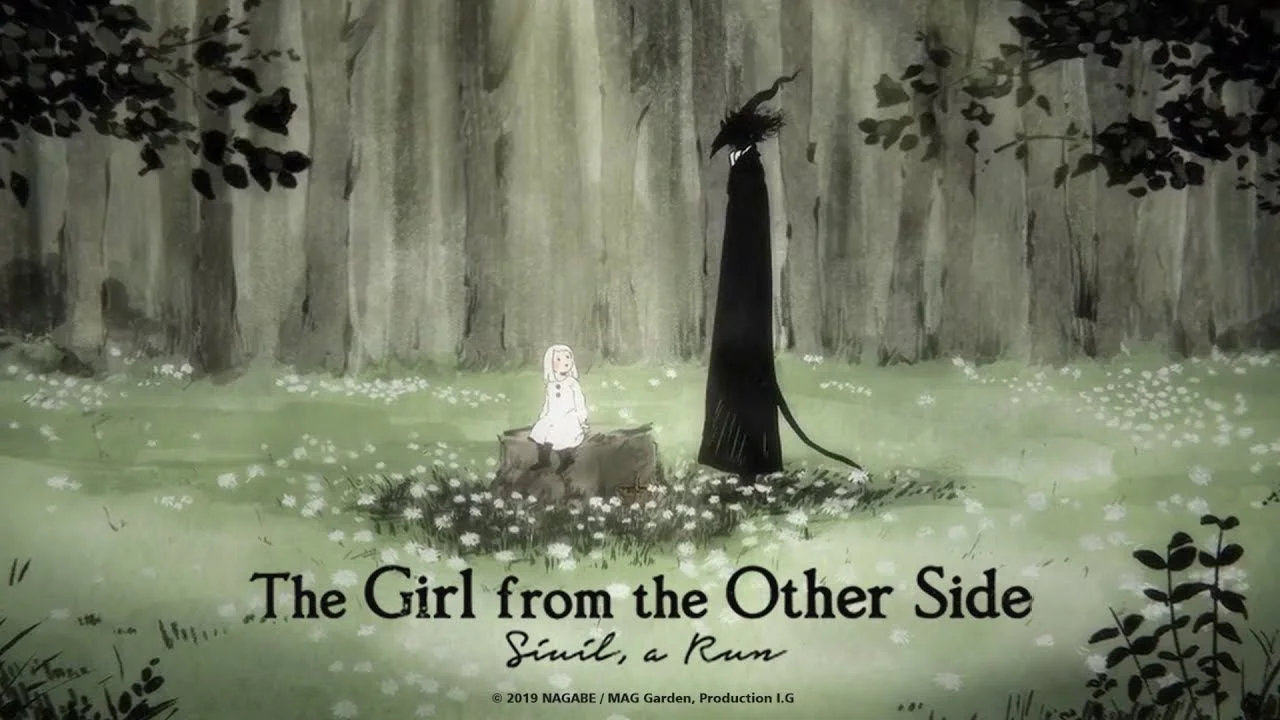
This slow-paced gothic fantasy OVA revolves around a world divided into two halves. On the outside roam the “Outsiders,” victims of a mysterious curse that turns them into monsters with skull-like faces and black skin who can infect other humans by touching them. Meanwhile, “Insiders” are those surviving humans who have walled themselves inside their cities to protect themselves, occasionally conducting purges to remove those they believe are infected. One victim of these purges, a six-year-old girl named Shiva (Rie Takahashi/Sarah Wiedenheft), is lucky enough to find protection in the form of an Outsider she calls Teacher (Jun Fukuyama/Gary Furlong), who has retained much more of his humanity than the other Outsiders. The two outcasts quickly form a loving found family, but this bond may be tested as both sides of the conflict hunt down Shiva to appease their respective deities.
I should warn you that this OVA attempts to adapt a twelve-volume manga into a film that’s only 80 minutes long, so its story is pretty bare-bones and might be hard to follow for anyone who hasn’t read the manga (myself included). Despite this, I’d argue the OVA manages to save itself with its character dynamics and its animation. Teacher and Shiva cultivate a rather adorable surrogate father-daughter take on the classic Beauty and the Beast narrative that’s both pleasant and heartwarming to watch. The sketchy animation style really sets it apart from other anime with its muted color palette and its laid-back, unflashy movements, reminding us of the dark reality of this fantasy world without beating us over the head with it. Indeed, it’s rather remarkable how laid-back this story feels despite the darkness surrounding our main characters. True, its focus on Teacher and Shiva, rather than the dark forces hunting them, has left many manga fans dissatisfied, but it still makes for an experience like no other.
It certainly seems like you might need the manga to fully appreciate what this story is trying to accomplish (as I stated above, I haven’t, though I am strongly considering it). Still, the OVA version of The Girl From the Other Side is one of the most unique dark fantasy stories I’ve ever experienced, not just in anime but in animation as a whole, and I think you owe it to yourself to give it a try.
Summertime Rendering
Distributors: Tokyo MX, BS11, Kansai TV, KBC, Disney Platform Distribution
Production company: OLM Team Kojima
Director: Ayumu Watanabe
Writer: Hiroshi Seko (based on the manga by Yasuki Tanaka)
Music: Keiichi Okabe, Ryuichi Takada, Keigo Hoashi
This sci-fi/horror/mystery anime can probably be best described as “Groundhog Day meets Twin Peaks directed by Christopher Nolan.” Unfortunately, it didn’t gain the attention it should have in the West, as Disney doesn’t really care to advertise its anime acquisitions in the West and instead just shunts them to Hulu without any fanfare. But that’s what this article is here to remedy.
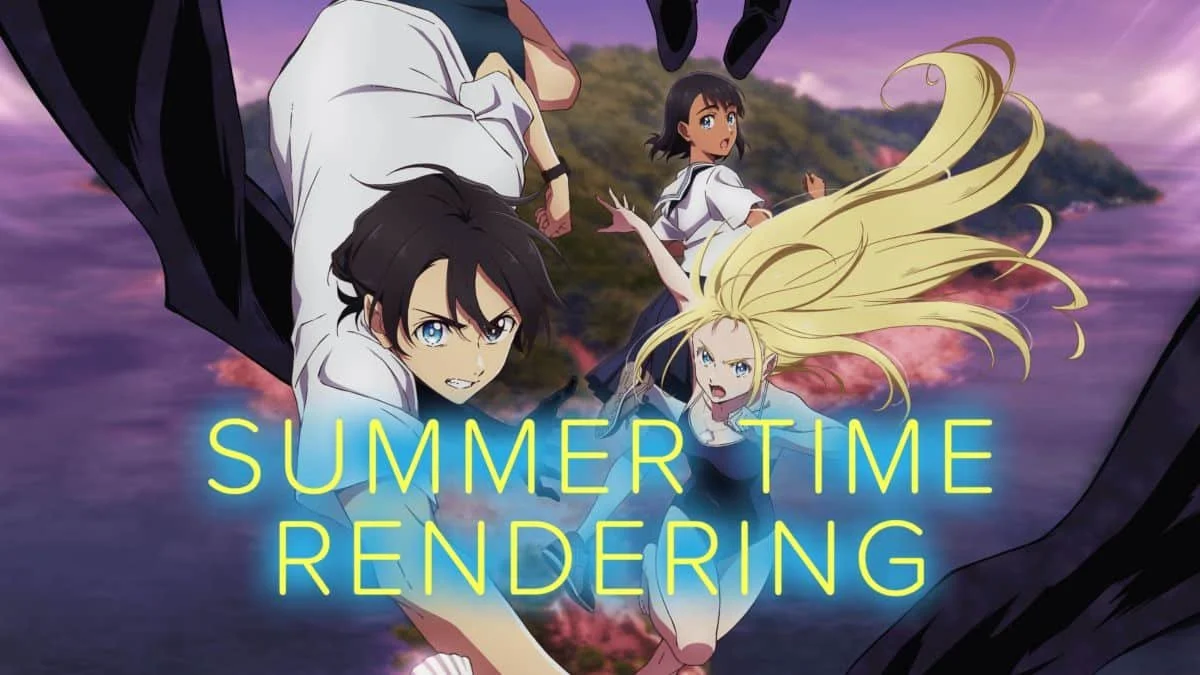
It follows Shinpei Ajiro (Natsuki Hanae/Stephen Fu) as he returns to his island home of Hitogashima in the Kitan Strait to attend the funeral of his adoptive sister, Ushio Kofune (Anna Nagase/Emi Lo), who sacrificed herself to save a drowning child. However, evidence begins to pile up suggesting that Ushio’s death may not have been an accident, from rumors of strangulation marks around her neck to her younger sister, Mio (Saho Shirasu/Merk Nyuyen), claiming she and Ushio met the latter’s doppelganger before she died. This suggests that there may be something to the local legend of the “shadow sickness,” in which Hitogahsima residents are killed and have their identities stolen by evil spirits. This is confirmed at the end of Episode 1 when one of the doppelgangers kills Shinpei…who suddenly wakes up on the ferry the previous morning, having yet to arrive in Hitogashima.
And then it gets weird.
Probably the best part of this story is the way it plays with its time loop scenario. In most other Groundhog Day-type plots, the loop always resets exactly where it began. For Shinpei, however, the restart point always moves later and later in the day, which not only lends the story a ticking-clock urgency but also gives his adversaries a loophole to exploit. The tension caused by this time loop decay hardly ever lets up throughout the series’ 25-episode run, with Shinpei constantly scrambling to outsmart his shadowy opponents even as they find new ways to trip him and his allies up.
That’s another thing this anime does differently with the time loop plot: Shinpei isn’t the only one to remember the time loop. Sure, the shadows are aware, but, more unexpectedly, Shinpei also finds allies on the island who have studied the shadows well enough to fight them: Hizuru Minakata (Yoko Hikasa/Jenn Wong), a horror-mystery writer who battles the shadows with a large sledgehammer, and Ginjiro Nezu (Jin Urayama/Tim Dang), an elderly fisherman who uses his sniper skills to great effect against the shadows. He also recruits Mio and his best friend Sou Hishigata (Kensho Ono/Jason Lin) into the fight, as well as Ushio’s shadow, who doesn’t behave like the other shadows at all, which is yet another mystery for the main cast to solve.
One of the few major flaws I can see with the anime is that the series packs so many twists and turns into its plot that one can easily get overwhelmed with the sheer amount of them, with some not getting the focus they deserve as a result (Shadow Ushio’s angst over potentially dying with the rest of the shadows is brushed over rather quickly, for instance). Some have also complained about distracting fanservice elements, like Shadow Ushio’s insistence on wearing only the swimsuit she died in or the way a panty shot from Mio becomes a major plot point (no, I am not kidding!).
Even so, Summertime Rendering is such a wonderfully executed mystery-thriller that I really think you’d be doing yourself a disservice by writing it off for some misplaced T&A. The characters are compelling and intelligent, the villains are intimidating, the action is inventive and well-choreographed, and the mythology behind the mystery is complex and engaging. Not many in the West may have heard about it, but I really think it’s one of the best anime to come out in the 2020s.
My Love Affair With Marriage
Distributors: New Europe Film Sales, Studio Locomotive, Tamasa, Filmin, HBO Central Europe
Production companies: Studio Locomotive, The Marriage Project, Antevita Films
Director/writer: Signe Baumane
Producers: Roberts Vinovskis, Sturgis Warner, Raoul Nadalet, Signe Baumane
Music: Kristian Sensini
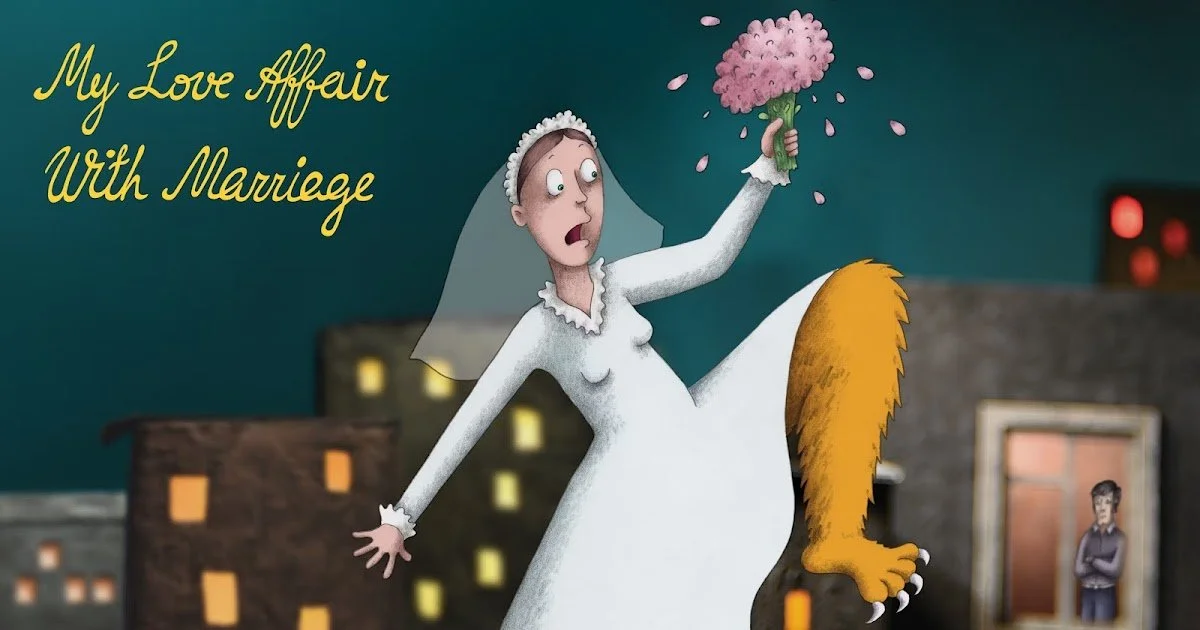
This hidden gem from Latvian animator Signe Baumane tells a semi-autobiographical tale of a young woman named Zelma (Dagmara Dominiczyk) as she struggles to fit into the societal expectations imposed on her in the Soviet Union. On one hand, she is told by her teachers, classmates, and mother (Florencia Lozano) that her purpose is to find a man and marry him, and then all her problems will go away, a social pressure personified by the singing trio of Mythology Sirens (the Latvian singing group Trio Limonade) that constantly butt in whenever she questions this advice. On the other hand, she is also at the mercy of her Biology (Michele Pawk) and the powerful sexual and neurological urges that come with it. This conflict manifests in myriad ways as Zelma grows up, from getting her period to losing her virginity to a much older artist named Jonas (Stephen Lang) to dealing with grief when her best friend Darya (Carolyn Baeumler) dies in childbirth. Things don’t get any better when her first husband, Sergei (Cameron Monaghan), turns out to be an abusive prick, thus throwing everything she’s ever been taught into question. But then, when her second husband, Bo (Matthew Modine), turns out to be gender-nonconforming, Zelma learns that maybe things aren’t as set in stone for her as she thought they were.
The first thing you’ll probably notice when watching this film is the unique animation style, which places its 2D characters inside 3-D stop-motion sets. The animation on the characters themselves is loose and old-fashioned and drawn in a rather Bill Plympton-esque style (I assume; I haven’t actually seen that much of Plympton’s work). The most impressive part is that almost all the characters were animated by Signe Baumane herself over a period of seven years. The sole exception was Biology, animated in a more modern style by Yajun Shi using Adobe Photoshop and After Effects.
Speaking of Biology, that’s another thing that sets this film apart: its lengthy discussions on what’s happening in Zelma’s brain during her development, whether during puberty, sex, menstruation, or instances of ecstatic joy or high stress (like in a domestic abuse situation). These “edutainment” segments also spend a great deal of time deconstructing oxytocin’s reputation as the “love hormone,” explaining that its functions are a lot more complex than that. They also go a long way in showing how universal Zelma’s experiences are to young girls and women across the globe.
These segments also feed into philosophical ponderings about the nature of love, asking whether it’s nothing more than chemical reactions we are powerless to resist, or whether there is something real going on in a spiritual sense. Naturally, given the title, the institution of marriage itself is put under scrutiny, as Zelma questions whether her marriages are genuine expressions of love or merely fulfill the role society expects of her. Ultimately, the film seems to come down to the message that while loving others is important, you also have to love yourself enough not to let your guard down or let others change you into something you don’t recognize.
Tie this all together with many fun songs (oh yeah, did I mention this film is a musical?), and My Love Affair with Marriage stands as a funny and emotional look at love and loss through the eyes of a young woman navigating the social nuances of the Soviet Union. It’s a moving tale about finding your own personal rebellion against what society expects of you, as Zelma fights her way to liberation.
Aurora’s Sunrise
Production companies: Bars Media, Broom Films, Gebreuder Beetz Filmproduktion
Director: Inna Sahakyan
Writers: Peter Liakhov, Kerstin Meyer-Beetz, Inna Sahakyan
Producers: Arevik Avanesyan, Christian Beetz, Kestutis Drazdauskas, Eric Esrailian, Angela Frangyan, Nvard Ghazaryan, Vardan Hovhannisyan, Kathrin Isberner, Sona Margaryan, Juste Michailinaite, Yelizaveta Petrosyan, Khane Poghosyan, Inna Sahakyan, Astghik Sayadyan, Anna Ter-Gabrielyan, Anna Zakaryan
Music: Christine Aufderhaar
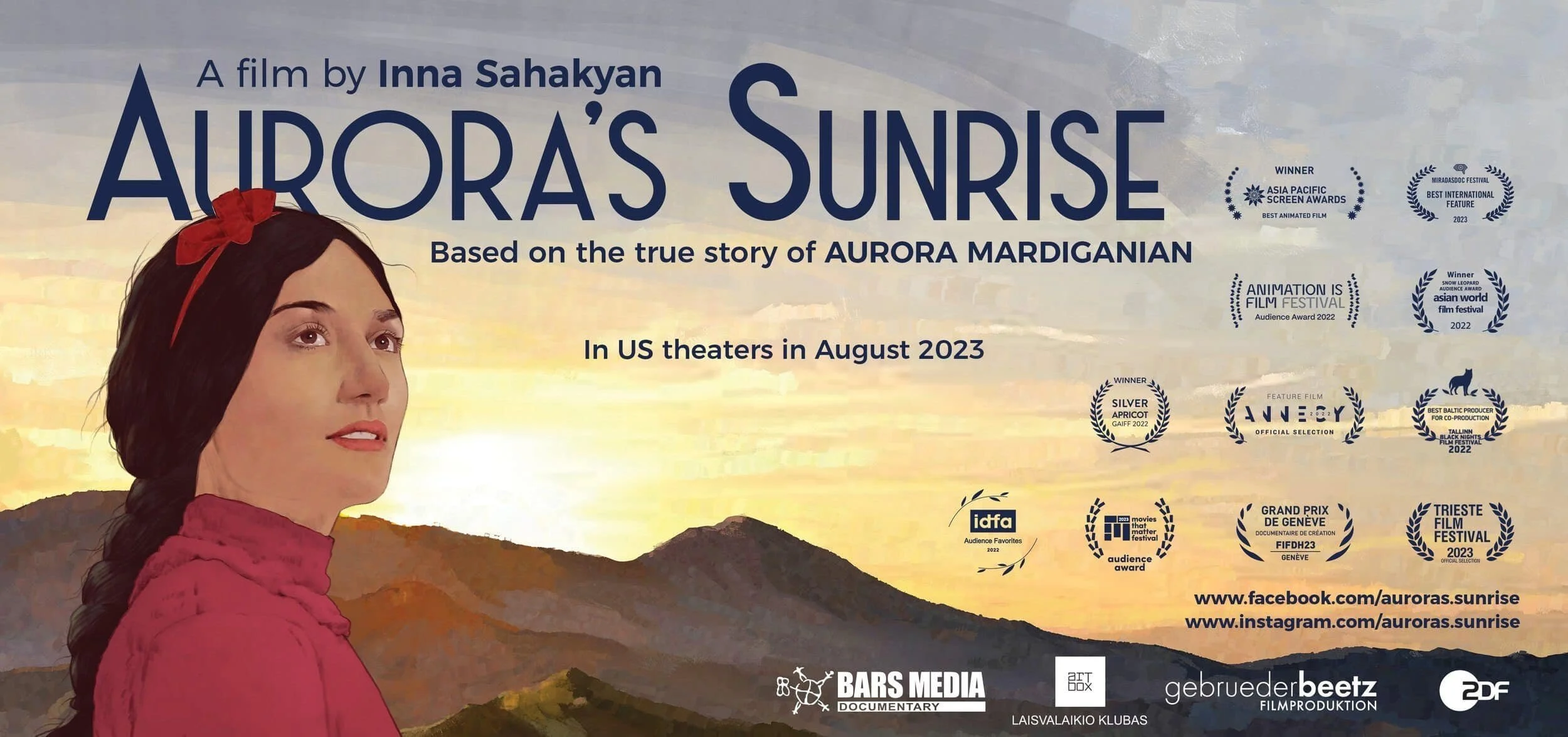
This animated documentary is by far the most obscure item on this list, which is a shame, as it deals with what is probably the most important subject matter on this list: genocide.
The film tells the real-life story of Arshaluys Mardiganian, as she witnesses the horrors of the Armenian Genocide, perpetrated by the Ottoman Empire’s Committee of Union and Progress between 1915 and 1917, in an effort to stamp out Armenian nationalist movements and forcibly convert the largely Christian ethnic group to Islam in an effort to unify the Republic of Turkey. Arshaluys endures watching her father and brother get forcibly drafted into World War I, a death march across the Syrian desert that claims her mother and siblings’ lives, being sold into sexual slavery, and running all across the Armenian highlands trying to avoid her oppressors. She eventually makes her way to the United States, where famed resistance leader General Andranik Ozanian tasks her with informing America of the plight of the Armenians. She does so via the 1918 book Ravished Armenia, under the Anglicized name Aurora, which later becomes the basis of the 1919 silent film Auction of Souls, in which Aurora played herself. After growing exhausted from touring and constantly reliving the trauma of the genocide, she withdraws from private life and spends the rest of her life as a mother and housewife until her death in 1994 at the age of 93. She gets to enjoy small victories before she dies, such as inspiring the creation of the Near East Foundation, reuniting with her sister Arusyak, and seeing Armenia gain independence from the Soviet Union in 1991.
Aurora’s Sunrise is presented as a mix of clips from Auction of Souls (thought lost until a 15-minute segment was rediscovered in 1994), an interview with Aurora recorded shortly before her death, and animated segments depicting Aurora’s recollections of her journey, rendered in CG yet resembling paper cutouts. While one may quibble that the animation isn’t all that impressive from a technical standpoint (with very few frames animated per second), it still allowed the filmmakers the license to use poetic symbols to portray the Armenians’ suffering in a tasteful manner. For instance, every time a member of the Mardiganian family is confirmed to have died, a silk cocoon (a reference to Aurora’s father’s silk business) is shown being dyed blood red. Of course, there are also moments where the film gets much more blunt about the true horrors of the genocide, like when Aurora reveals the gruesome reality behind Auction of Souls’ infamous crucifixion scene.
Naturally, given the subject matter, Aurora’s Sunrise is a hard watch, but it is extremely important, especially given how the Armenian Genocide seems largely forgotten nowadays. Turkey refuses to recognize it as such, and the United States only officially acknowledged it in 2019 (although Trump rejected the Senate’s resolution, because of course he did!). Indeed, this film may be the most important on this list for the simple reason that it addresses a historical event that truly deserves not to be forgotten.
So if you’re in the mood for an animated documentary film about a historical atrocity but don’t want to deal with Waltz with Bashir’s potentially Zionist baggage, Aurora’s Sunrise might be the film for you.
Dead End: Paranormal Park
Distributor: Netflix
Production companies: Blink Industries, Netflix Animation
Creator: Hamish Steele (based on his graphic novel series Deadendia)
Writers: Nicole Paglia, Hamish Steele, Elijah W. Harris, Furquan Aktar, Jen Bardekoff, Mia Resella, Brydie Lee-Kennedy, Divya Sachdeva-Malde
Producers: Hamish Steele, James Stevenson Bretton, Tom Stuart (executive); Jen Coatsworth
Music: Julian Guidetti
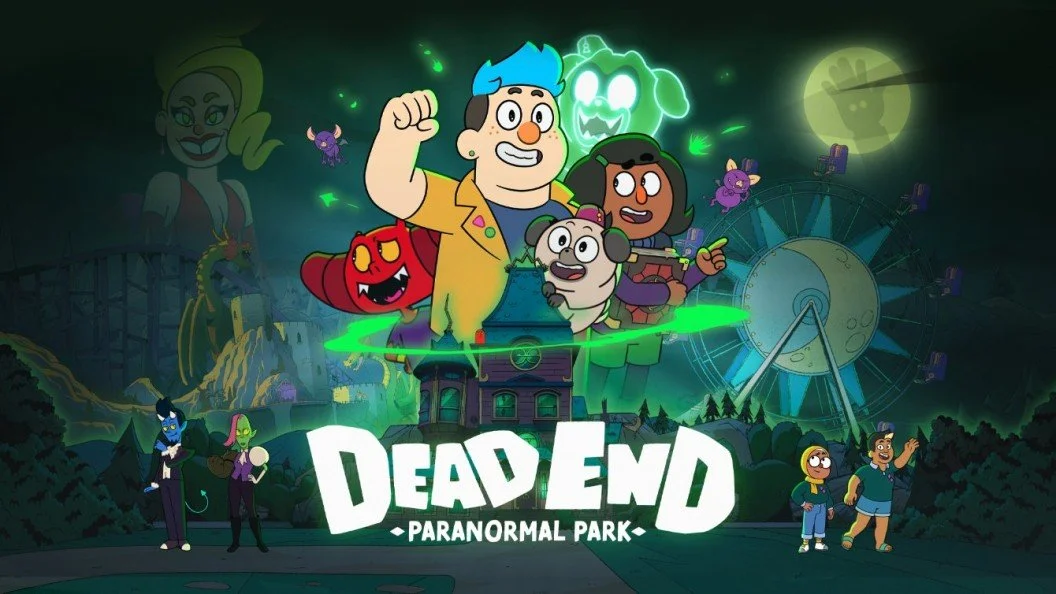
This underrated Netflix show has become the target of culture warriors like the Daily Wire and Libs of TikTok for having the audacity to include a trans character in its main cast. The problem is that it also includes some of the best autism representation I’ve seen in recent years, so yeah…it’s personal.
The show is centered on two teenage outcasts, the gay and transgender Barney Guttman (Zack Barack) and the autistic Pakistani-American Norma Khan (Kody Kavitha), who get new jobs working security for Phoenix Parks, a theme park heavily inspired by Dollywood, based on the famous actor/singer Pauline Phoenix (Clinton “Miss Coco Peru” Leupp). The job turns out much different from what they expected, however, when Barney’s pet pug, Pugsley (Alex Brightman), gets possessed by a demon named Temeluchus (also Brightman) when a summoning ritual by another demon named Courtney (Emily Osment) goes awry. And that’s only the first of several supernatural events that Barney, Norma, and the other Phoenix Park employees have to deal with, as the park exists on the spot of a celestial elevator that visits the different levels of Heaven and the Underworld, bringing the various denizens to the human world. But as our heroes battle real demons, they may find they also have internal demons to exorcise…
I’m not gonna lie: Dead End is probably my favorite thing on this list. Damn near everything about it is perfect: the animation, the characters, the voice acting, the music (including an entire musical episode with songs written by Fall Out Boy’s Patrick Stump), and the multi-dimensional setting. It all comes together so well that it arguably makes it one of the best Netflix original cartoons of this decade.
Of all those aspects, though, it’s probably the characters that are the best part of this series, at least for me. From Barney learning not to push his otherwise supportive family away for some relatively minor mistakes (like not standing up to his transphobic grandma) to Pugsley agonizing over whether or not to let Temeluchus fully possess him when things are really getting bad to Courtney learning that she probably doesn’t need to return to Hell to find a place where she truly belongs, there’s a lot of good character stuff in here. However, Norma is obviously the one I resonated with the most. Between her anguished declaration that “My fear world is the real world!” to the emotion-eating villain of the week, Harmony (Alan Cumming), her obvious confusion over social norms, and the struggles she experiences when the subject of her biggest hyperfixation turns out to be a horrible person, Norma Khan is by far one of the best autistic protagonists to come out this decade.
Sadly, like with most animated Netflix shows, Dead End was canceled after just two seasons. Luckily, we still have the original Deadendia graphic novels to give us the complete story. The right-wing bigots running our country might not like it, but so what? It’s good enough for all of us outcasts and weirdos out there, and that’s all that matters.
Pantheon
Distributors: AMC+, Amazon Prime Video
Production companies: Sesfonstein Productions, Titmouse Inc., AMC Studios
Creator: Craig Silverstein (based on the short stories of Ken Liu)
Writers: Craig Silverstein, Albert Kim, Taii K. Austin, Andy Parker, Julia Cooperman, Scott Gunnison Miller, Michael Taylor, Yasemin Yilmaz
Producers: Chris Prynowski, Shannon Prynowski, Antonio Canobbio, Ben Kalina, Juno Lee, Craig Silverstein
Music: Marco Beltrami, Brandon Roberts, Buck Sanders
This series was almost single-handedly responsible for me writing this article, as it was nearly buried by its original distributors. It was unexpectedly removed from AMC+ and Prime Video just four months after the first season premiered, despite a second season having already been greenlit. Consequently, Season 2 premiered only in Australia and New Zealand. Fortunately for the rest of the world, Netflix managed to rescue it from tax write-off purgatory in November of 2024, and thank god they did, because this is a series that really deserves more flowers than it’s got.
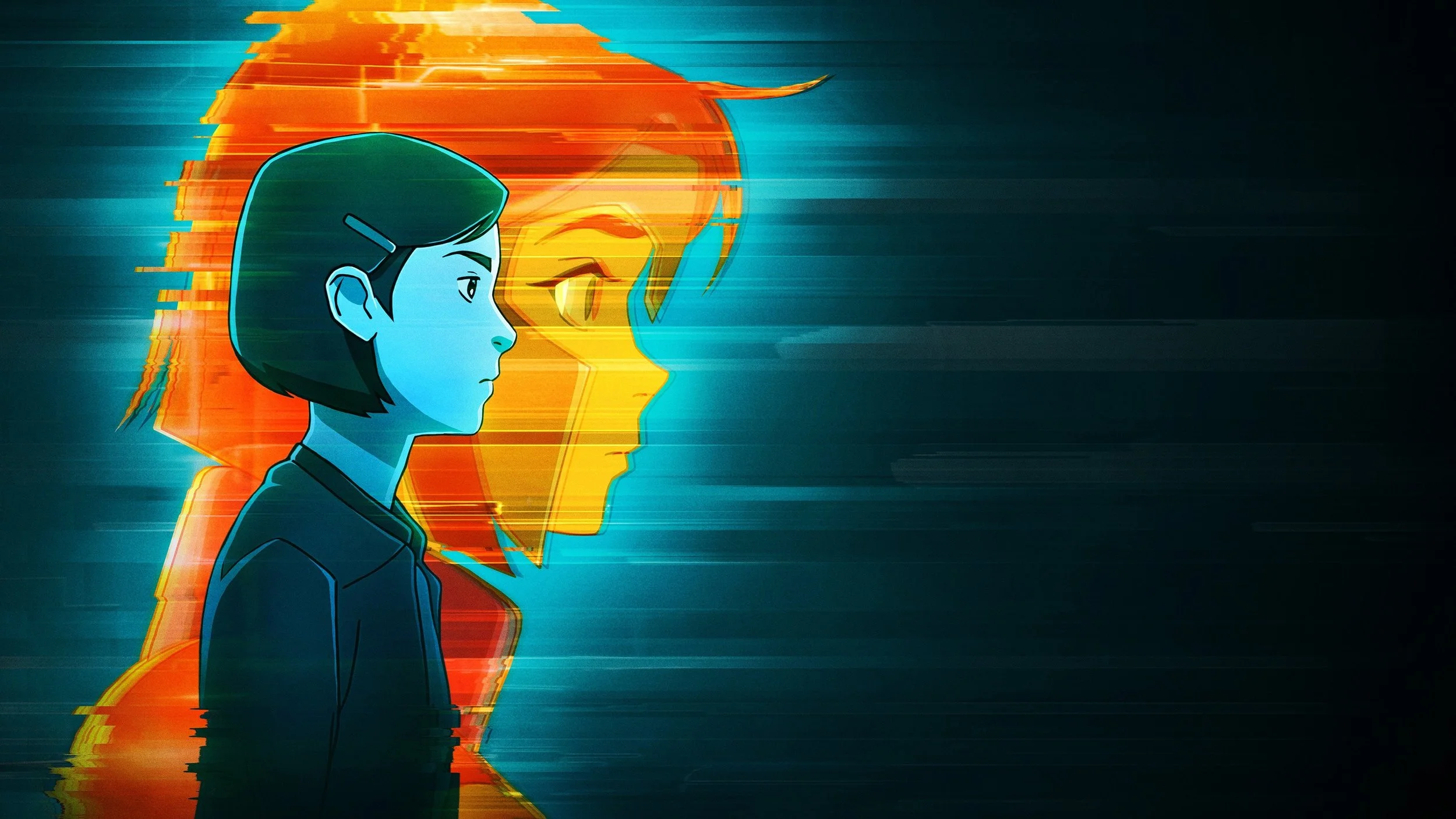
We follow three main protagonists as they get dragged into a globe-spanning corporate conspiracy in a version of our world that is rapidly approaching the technological singularity. The first, Maddie Kim (Katie Chang), is a bullied high school girl grieving her father, the brilliant programmer David Kim (Daniel Dae Kim), who was presumed dead when an operation to upload his mind to an experimental computer program failed. The second, Caspian Keyes (Paul Dano), is another teenager living with his abusive “parents,” Cary and Renee (Aaron Eckhart and Taylor Schilling), who, unbeknownst to him, are actually actors hired by Logorhythms, the company that made David’s program, to mold their “son” for some mysterious purpose related to its long dead CEO, Stephen Holstrom (William Hurt). The third, Vinod Chanda (Raza Jaffrey), an Indian computer engineer, has been uploaded to the UI (uploaded intelligence) program against his will, and soon escapes his virtual prison to seek revenge. It may be up to Maddie, Caspian, and the tech skills they’ve inherited to not only save the world from the dangers of the rogue UIs but also the greed and ambitions of the tech CEOs that created them
For those who want an animated sci-fi mystery thriller but want something less fantastical and more grounded in hard science than Summertime Rendering, Pantheon might be right up your alley. Sure, it’s still got plenty of well-animated action scenes that wouldn’t feel out of place in a shounen anime whenever the UIs demonstrate what they are capable of in cyberspace, but the main focus is on the philosophical and ethical ramifications of these newly created transhuman beings. We get to witness the rogue UIs use their powers to commit deadly terrorist attacks and blackmail governments into doing their bidding. We also see what effect having loved ones basically brought back from the dead has on their families, like watching Maddie and her mother, Ellen (Rosmarie DeWitt), deal with the sudden return of David, or watching the third rogue UI, Laurie Lowell (Heather Lind), struggle to overcome a potentially fatal integrity problem while her husband, Cody (Scoot McNairy), struggles to help her. Above all, the biggest questions involve how the UIs are redefining what it means to be human now that they no longer have to fear death and the other biological limitations of their real-world bodies. This is helped by a voice cast that is surprisingly strong, given that it is mostly made up of film and television actors with little voice-acting experience.
It’s also helped that the story keeps the computer science techno-babble understandable to its layperson audience by grounding the science in the conflicts and relationships the characters go through, including some agonizing moral decisions they have to make, especially whenever the protagonists have to deal with Logorhythms and its ruthless CEO, Julius Pope (Chris Diamantopoulous). Granted, there are a few places in the second half of Season 2 where the story stumbles a little bit in the form of characters not getting resolution (especially Caspian’s fake girlfriend, Rachel “Hannah” Brooks (Krystina Alabado)), and a final episode that includes a twist that takes the story in such a cosmic mindfuck direction that it might leave many viewers scratching their heads (probably not helped by its sudden cancellation likely forcing the crew’s hand).
Still, given how rare it is to see a 2020s animated series get a proper ending, Pantheon has definitely made it farther than many of its peers. Indeed, with the possible exception of Aurora’s Sunrise, I don’t think there’s any item on this list that I want you to see more urgently than this one. It really would be a shame to see it miss out on the fandom it deserves simply because its original business daddies decided it wasn’t worth the cost to keep it around.
Wendell and Wild
Distributor: Netflix
Production companies: Netflix Animation, Gotham Group, Monkeypaw Productions
Director: Henry Selick
Writers: Henry Selick, Jordan Peele (based on an unpublished book by Selick and Clay McLeod Chapman)
Producers: Henry Selick, Ellen Goldsmith-Vein, Jordan Peele
Music: Bruno Coulais
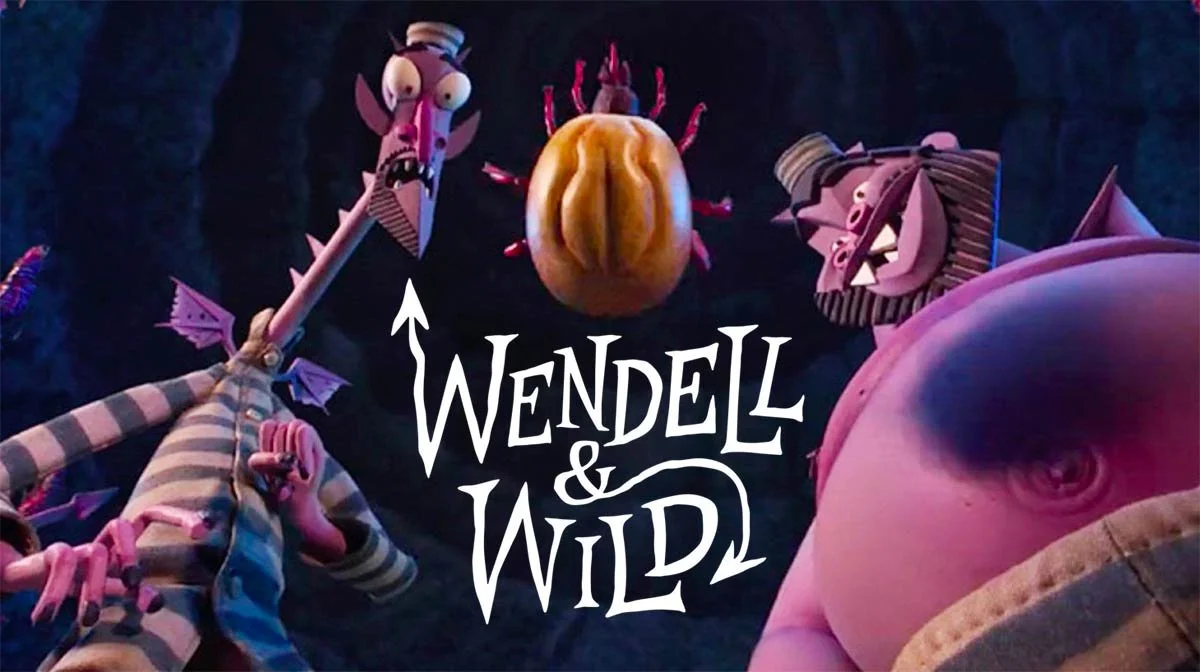
This potential future Halloween cult classic (directed by the same guy as the biggest holiday cult classic of them all, The Nightmare Before Christmas) follows the titular demon brothers (Keegan-Michael Key and Jordan Peele, respectively) as they hatch a scheme to escape the underworld amusement park created by their father, Buffalo Belzer (Ving Rhames), and create a better one. To do so, they make a deal with a delinquent teenage girl named Katherine “Kat” Elliot (Lyric Ross), who has just returned to her hometown of Rust Bank five years after her parents’ (Gary Gatewood and Gabrielle Dennis) deaths. She finds it run-down and bought up by Klax Corp, run by the ruthless private prison profiteers Irmgard and Lane Klaxon (Maxine Peake and David Harewood), who also fund the all-girls’ Catholic school where she is now enrolled. Kat not only has to avoid attracting the attention of her demon-fighting teacher, Sister Helley (Angela Bassett), if she wants to see her parents brought back to life as Wendell and Wild promised her, but also has to deal with the evil machinations of the Klaxons, and her own inner demons, if she wants to see her hometown restored to its former glory.
Jordan Peele and Henry Selick are great enough separately, but combine their talents, and you get art almost on par with Selick and Tim Burton’s famous collaboration. As Guardian writer Radheyan Simonpillai points out in his review for the Guardian, “[Selick] has carved out a space for carnivalesque horror in children’s fare. [Peele] inspired a black horror renaissance with Get Out, which chipped away at racial politics and oppressive social constructs in a post-Obama era. Together, they try to make a movie that does both.”
Of course, “try” is definitely the operative word here. It’s not that the story is bad, far from it. It’s more that it’s a little too overstuffed for its own good. It tries to tackle so many different social issues facing 21st-century America (listless youth, for-profit prisons, the hollowing out of small towns, etc.) that its characters and world-building can feel somewhat neglected. I’ve even heard suggestions that the film would have worked better as a TV series, which I would definitely love to see.
Still, it’s obviously the animation that we’re all here for. While Selick does indulge in the grandiose stop-motion setpieces that he helped Laika pioneer with Coraline in 2008, he also adds some small touches to his animation, like visible face plate seams and slower frame rates to emphasize the ways stop-motion is different than other forms of animation, something Selick feared was getting lost with Laika’s productions getting so slick that it was often indistinguishable from CG animation. The animation also sets itself apart with its uniquely geometric character designs, courtesy of Pablo Lobato, and the way it plays with the black protagonists’ distinctive aesthetics, such as hair puffs and Bantu knots.
The characters themselves are also fun thanks to the lively and diverse voice cast. Key and Peele are as hilarious as ever as the titular demonic duo; Ross gives poignant life to Kat as she puts up a tough-as-nails facade to hide the anguish she still feels over her parents’ deaths; and Bassett gives a formidable performance as Sister Helley. Other standout performances include the ever-reliable James Hong as the school’s morally wishy-washy headmaster, Father Level Bests, Sam Zelaya as the trans-masc Raul Cocolotl (who feels a kinship with fellow outcast Kat), Tamara Smart as the Klaxons’ somewhat insensitive yet kindhearted daughter Siobhan, and Tantoo Cardinal as Kat’s patient and understanding care worker Ms. Hunter.
Add to this a kickass soundtrack featuring many notable black rock and punk acts (Fishbone, the Specials, X-Ray Spex, Death, Living Colour, TV on the Radio, etc.), and you get one of the most unique stop-motion films of the 21st century. While Wendell & Wild’s status as a Netflix original may hamper its reach a bit (we all know how much Netflix hates marketing its animated properties), hopefully, articles like this can help it find the spooky season audience it deserves.
Spirit Rangers
Distributor: Netflix
Production companies: Laughing Wild, Superprod Studio, Netflix Animation Studios
Creator: Karissa Valencia
Writers: Karissa Valencia, Lucas Brown Eyes, Jason Marcus, Kelly Lynn D’Angelo, Kent Redeker, Joey Clift, Shelley Dennis, Carlee Malemute, Lizzie Prestel, Kris Crenwelge, Lucas Mills, JhonTom Knight, Blake Pickens, Norma P. Sepulueda, Joy Harjo
Producers: Karissa Valencia, Chris Nee
Music: Raye Zaragoza, Ehren Kee Natay (theme music); Jordan Kamalu
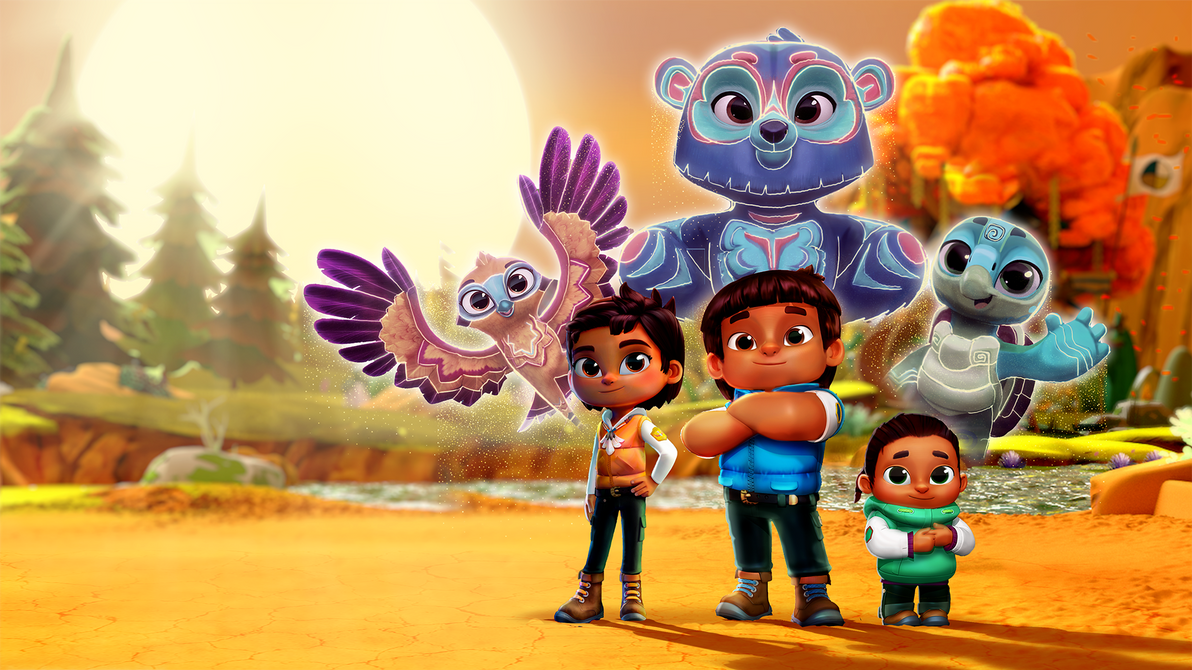
Released on Indigenous People’s Day (or Columbus Day if you’re racist), this edutainment show offers a Native American twist on the usual preschool show formula and offers Indigenous children a plucky trio of protagonists that aren’t the flawed representations that Disney keeps horking out (Tiger Lily, Pocahontas, etc.)
The premise centers on the three Skycedar siblings, who live with their mixed Cowlitz-Chumash parents (Kimberly Norris Guerro and John Timothy) in the fictional Xus National Park in California and possess magical necklaces that can transport them to a parallel version of the park where the gods and animal spirits of Native American myth and legend live and play. They each transform into fellow animal spirits when the necklaces are activated: the oldest, Kodi (Wačíŋyeya Iwáš'aka Yracheta), becomes a bear; the middle child, Summer (Isis Celilo Rogers), a hawk; and the youngest, Eddie (Talon Proc Alford), a turtle. There, they interact with the spirits and help them solve their problems, usually with their comical spirit-world sidekicks, Coyote (Shaun Taylor-Corbett) and Lizard (Cree Summer), who guide them through the park’s many wonders, both natural and supernatural.
While Indigenous Americans have been having something of a renaissance on television lately, most of these works have been strictly aimed at adults (Reservation Dogs, Rutherford Falls, etc.). Apparently, Spirit Rangers almost followed that path as well, as, according to this Hollywood Reporter article, Karissa Valencia initially conceived the show as a horror series based on Native folklore. However, Chris Nee, founder of Laughing Wild and creator of Doc McStuffins, convinced her that there was an opening for a preschool show featuring Native characters. Thus set on her mission, Valencia drew on her own experiences as a member of the Santa Ynez Band of the Chumash Nation and relied on advisors from various other tribes to fill in the rest.
The result is not only a labor of love but a real community effort, as Indigenous creators from every corner of Turtle Island pitched in to help with the animation, music, cultural accuracy, and so much more. The voice cast also features a truly absurd number of big names from the Indigenous acting community, including but not limited to: Wes Studi (Sunny), Tantoo Cardinal (Moon), Tonantzin Carmelo (Buffalo), Gary Paul “Litefoot” Davis (Qamash), Devery Jacobs (Wind Eagle), Eugene Brave Rock (Crane), Michael Greyeyes (‘Eleyewun), Jana Schmeiding (Vulture, Detzy, Mom Goose, and Ruby), Dallas Goldtooth (Toofus), and Joy Harjo (Great Oak Tree). There are even some Indigenous voices from outside North America, such as Moses Goods representing Hawai’i as Keali’ikau and Temeura Morrison representing Aotearoa/New Zealand as Ngārara. My personal favorites, however, are probably Nyla Rose as the hot-tempered volcano goddess Lawetlat’la and the cartoonishly cutesy voice Q’orianka Kilcher gives to the butterfly spirit ‘Ayatulutul. While few of them have much experience as voice actors outside this series, their performances are so committed and sincere that it doesn’t really matter much.
The show also excels in its technical aspects. The music is impressive, especially the once-per-episode song numbers where the main trio get to show off their shockingly good pipes. The animation is some of the most vibrant and colorful out of all the animated shows I watched for this list, and makes great use of traditional Native American art styles, especially in the designs of the Skycedar kids’ animal forms (Cowlitz for Kodi, Chumash for Eddy, and a mix of the two for Summer).
As befits its younger target audience, Spirit Rangers focuses less on serialized storytelling and more on “situation-of-the-week” episodes with a lesson at the end. This isn’t to say there aren’t any ongoing story arcs (the Rangers’ tussles with the Trickster Trio of Raven (Adrianne Chalepah), Rabbit (Bobby Wilson), and Raccoon (Deanna MAD) throughout Season Two being the most prominent), but this show is mainly content with episode-length conflicts to help communicate well-delivered lessons about family, community, friendship, and staying true to one’s roots.
Overall, Spirit Rangers is a welcome addition to the animated preschool show canon. Alongside Molly of Denali, it serves as much-needed representation for the children of this nation’s original inhabitants and offers a solid educational experience for kids, both inside and outside Native communities, to learn what Indigeneity is really all about. Also, if you have time, I highly recommend reading the Hollywood Reporter article I linked above, which provides a highly detailed account of how the show was created. Who knows? Maybe some aspiring animators out there can learn a thing or two from it.
Oni: Thunder God’s Tale
Distributor: Netflix
Production companies: Tonko House, Netflix Animation
Creator: Daisuke Tsutsumi
Writer: Mari Okada
Producers: Daisuke Tsutsumi, Robert Kondo, Kane Lee (executive); Sarah K. Sampson
Music: Zach Johnson, Matteo Roberts
This criminally overlooked Netflix original pairs the talents of its Blue Sky- and Pixar-trained director of The Damkeeper and the writer of Anohana and Maquia: When the Promised Flower Blooms to create something that blends aspects of both American and Japanese storytelling, inspired by Shinto folklore and a poem composed by Tsutsumi’s late mother.
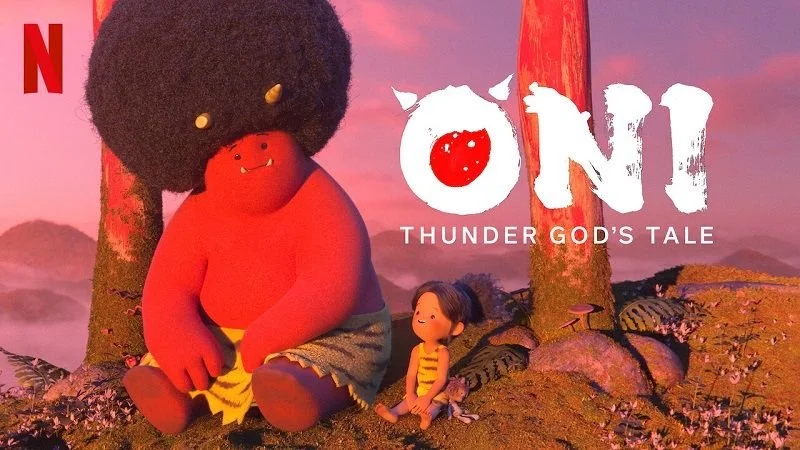
The story follows Onari (Momona Tamada), an odd duck among a school consisting of Kami children, run by the stern yet reasonable Mr. Tengu (George Takei) and a wise disembodied voice called the Principal (Tantoo Cardinal (Netflix sure was keeping her busy in 2022, weren’t they?)). She doesn’t resemble any of her peers and thus does not fit in very well. However, the adults are intrigued by the unique magical powers she possesses, believing they may be the key to saving their isolated forest village from a mysterious threat called the “Oni.” When her eccentric father, Naridon (Craig Robinson), refuses to give her answers as to why she is so different, she decides to go on a journey to find out for herself, with her best friend, the nervous Kappa (Archie Yates), tagging along. But what Onari finds outside the forest may change everything about who she thinks she is, as well as reveal that the threat of the Oni is more…modern than you may expect.
It’s the animation and the story that really make this one a must-watch. The animation is done with a combination of 3D and stop-motion, giving every character a fuzzy felt look that really helps endear them to the audience by making them look extra cute. The voice acting really helps, especially the way Craig Robinson gives Naridon so much personality, even though he can only speak in “Nyah! Nyah!” type vocalizations.
A lot of the story elements used in the miniseries have been used elsewhere (tension between father and child, a kid who doesn’t fit in at school, a journey of self-discovery, etc.), but it manages to elevate these themes with its immensely sincere presentation and with a massive twist that recontextualizes everything about the Kami’s society, as well as Onari’s true identity. While the final showdown with the Oni certainly has a bit of an environmentalist overtone to it, a la Ferngully and Avatar, the real emphasis is placed more on the dangers of prejudice and mob mentality, something tackled with surprising bluntness when Onari’s new human friend, Calvin (Seth Carr), a gaijin (outside person) who moved to Japan with his parents from the US, talks about how the native Japanese “looked at me like a monster” and how historians think “oni” was merely a word for people who didn’t look like the Japanese (“They just feared people they didn’t understand”). Maybe I’m revealing a bit too much about the big twist by talking about this, but the show does a really good job of handling these issues, so I had to bring it up.
Long story short, Oni: Thunder God’s Tale is a show that really does not deserve to be buried in the Netflix archives like it appears to be. It does a great job of combining the influences of its American- and Japanese-raised co-creators and, fitting for something originally conceived by the creator’s late mother, is full of warmth and heart even in its darkest moments. Not to mention that it utilizes its folklore setting to great effect in delivering its message against hatred and bigotry. It is a hidden gem in every sense of the word.
The Amazing Maurice
Distributors: Sky, Telepool
Production companies: Ulysses Filmproduktion, Studio Rakete, Canteleiver Media, Narrativia, Sky, Moonshot Films, Red Star 3D, Squeeze Animation Studio
Director: Toby Genkel
Writer: Terry Rossio (based on the novel The Amazing Maurice and His Educated Rodents by Terry Pratchett)
Producers: Emely Christians, Andrew Baker, Robert Chandler, Rob Wilkins
Music: Tom Howe
The prospect of adapting the works of the late, great Sir Terry Pratchett to screen has always been met with apprehension by his fanbase on the grounds that the nuances of his prose would never translate well to the screen. While I can’t promise that this one will change your mind on that front, it’s still a fun fantasy adventure in its own right.
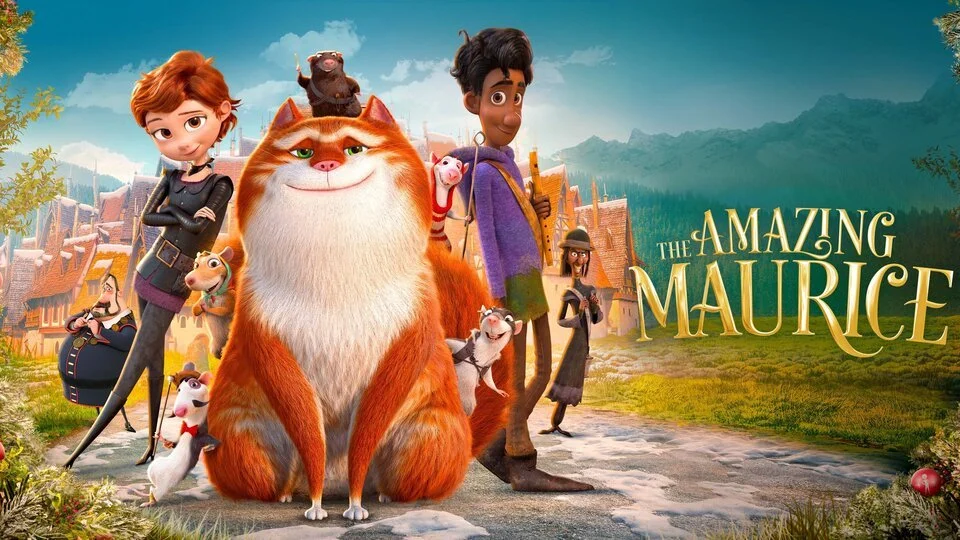
We follow the eponymous talking cat (Hugh Laurie) as he goes through several Discworld villages with his gang of rats, gifted with human-level intelligence by eating the wizardly refuse of Unseen University, perpetrating a Pied Piper of Hamelin-inspired scam, with a “stupid-looking kid” named Keith (Himesh Patel) playing the role of the aforesaid piper. When they enter the town of Bad Bintz, however, they quickly realize that there’s something off about the town. There’s no food to be found anywhere, the local ratcatchers cannot find the culprit, and the townspeople live in fear of a nebulous figure known as Boss Man (David Thewlis). It might be up to Maurice and his educated rodents to save the town from his evil clutches…if they can resist the allure of his pipe.
Unfortunately, much of your enjoyment of this film may depend on how willing you are to tolerate its heavy metafictional overtones. While this was already somewhat present in the original book, with the female lead, Malicia (Emilia Clarke), being portrayed as pathologically obsessed with viewing everything through the lens of common storytelling tropes, the movie exaggerates this by making her into a full-on fourth-wall-breaking narrator (Maurice also gets in on the act in a few scenes). While this wasn’t as much of a problem when the book was published in November 2001, nowadays this insincere, snarky “winking at the camera” style of filmmaking, popularized by Shrek and the MCU, has become so pervasive that many filmgoers are beyond sick of it. In this case, however, I would argue that the movie preserves enough of Pratchett’s wit and charm to not undermine the more emotional aspects of the story, especially in portraying how the rats deal with humanity’s prejudice against their species.
I’ll admit that the animation strikes me as more TV-quality than film-quality. Still, the voice actors do quite a lot to make the characters well worth sticking around for, especially the rats with their various contrasting personalities, from the hippieish Dangerous Beans (David Tennant) and the taciturn leader Darktan (Ariyon Bakare) to the childish Peaches (Gemma Arterton) and the huckster Sardines (Joe Sugg). Laurie gives an appropriately snooty performance as the titular streetwise cat, and Clarke manages to ride the line between energetic and annoying as Malicia.
Some Pratchett purists may balk at how the story tones down the book’s darker elements to create a more all-ages-appropriate film, but I had quite a lot of fun with The Amazing Maurice. It probably won’t change your mind about the effectiveness or necessity of Discworld adaptations, but it might be a great way to introduce your kids to one of the greatest English language writers of the past century.
Blue’s Big City Adventure
Distributor: Paramount+
Production companies: Paramount+, Nickelodeon Movies, Nickelodeon Animation Studios, 9 Story Media Group, Brown Bag Films, Boxel Animation, Line by Line Media
Director: Matt Stawski
Writers: Angela Santomero, Liz Macchie (based on the TV series’ Blue’s Clues and Blue’s Clues & You, created by Traci Page Johnson, Todd Kessler, and Angela Santomero)
Producers: Traci Page Johnson, Angela Santomero
Music: Alex Geringas, Anthony Green
Let’s end this list with a real blast from the past that many fellow millennials will likely be familiar with: a loving tribute to one of Nick Jr.’s most beloved franchises, celebrating the 25th birthday of the most famous mystery-solving cartoon dog this side of Scooby-Doo.
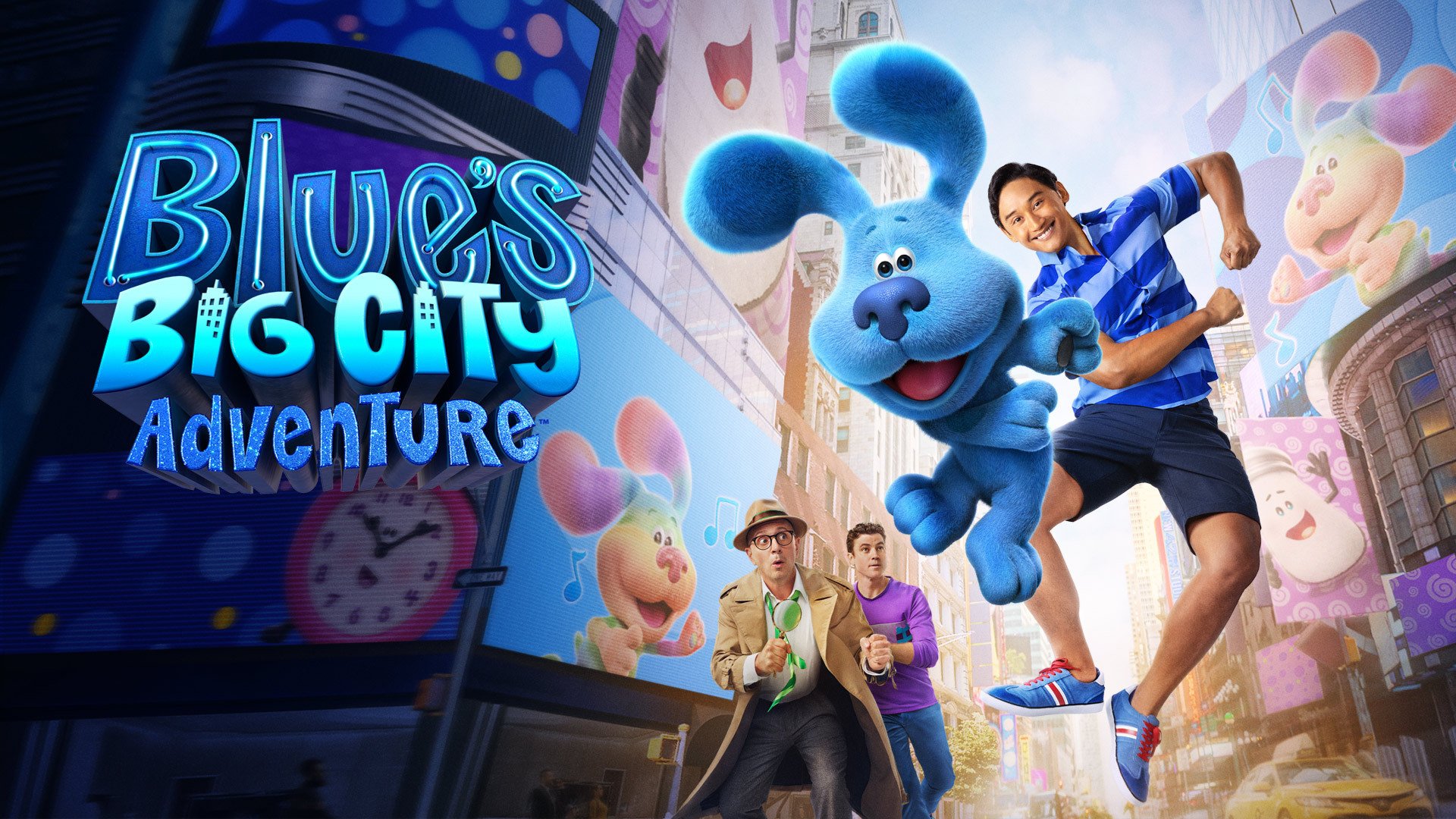
The classic show’s newest host, Josh (Josh Dela Cruz), has big dreams of making it big on Broadway, and so he and Blue (Traci Page Johnson) board the Skidoo Express and head for New York City. When they get there, Josh is horrified to discover that he forgot his Handy-Dandy Notebook at home, which is a problem because he wrote the address for the theater he’s supposed to be auditioning at in the Notebook. As a result, Blue decides to commence a game of Blue’s Clues to help Steve find the theater, taking them on an adventure across the Big Apple. Meanwhile, Mr. Salt (Nick Balaban), Tickety Tock (Ava Augustin), and Slippery Soap (Jacob Soley) decide to bring the Notebook to Josh, stumbling upon the show’s previous hosts, Steve (Steve Burns) (now working as a private detective), and Joe (Donovan Patton) (now running a candy/toy shop), in their search. Can this plucky intergenerational fellowship of kids’ show characters help Josh reach the audition before it’s too late?
It’s true that I’m a little older than this film’s target demographic, but it was so fun reconnecting with one of my childhood favorites years later. The movie makes great use of the unusual real-world setting, especially in the lavish musical numbers, with dozens of passersby (and even some roadside objects brought to life by Josh’s magic) joining in the fun. Watching Steve’s triumphant return was a wonderful blast of bittersweet nostalgia (especially the way he greets us by saying, “You got so big!”), and the way the film presents its themes of how exciting and beautiful it is to follow one’s dreams is enough to make even the most jaded of adults believe that it’s true. It also throws a bone to said jaded adults by pointing out that Josh’s hyperactive and absent-minded personality, as endearing as it is, could cause him to miss valuable opportunities if he doesn’t control himself.
Some jaded adults might take issue with the way Rainbow Puppy (Brianna Bryan) and her director (BD Wong in a surprise cameo) handle the audition, calling Josh on short notice and auditioning other aspiring actors despite her clearly having eyes only for Josh, which is definitely a major story flaw. Still, with a cast this sincere, music this good, and a message this earnestly delivered, Blue’s Big City Adventure is as good an excuse as any for anyone who grew up with the original Blue’s Clues to reconnect with one of their childhood icons. Granted, I don’t think it’s worth it to subscribe to Paramount+ to watch it (especially with how hard the Ellisons are sucking up to Agent Orange right now), but maybe it’s worth it to buy a DVD, especially if you want to introduce your kids to Blue and her mystery-solving gang.
And so we come to the end of another animation favorites list. Don’t expect me to do another one for 2021, though. As I’ve stated elsewhere, making these lists is rather time-consuming, so don’t expect any animation lists outside of the year-end ones and the “1001 Animations” entries. Speaking of which, I’m almost done watching all of my candidates for January 2025, so I’ll likely be starting those lists soon. My biggest priority, however, will be the last two entries for the Jurassic Park retrospective, which I am aiming to complete by the middle of July. I am so ready to be free of that project once and for all.
However, the one priority that supersedes all of these is my ongoing quest to get a driver’s license… which has hit a bit of a snag, since all the driving schools in my county have closed, leaving me without easy access to a driving instructor. I have sent a message to a driving school in a neighboring county to see if I have any options with them, but I’m still waiting to hear back. In any case, I’ll likely be taking a short break from the blog to complete a five-hour pre-licensing course, which is kind of annoying for me because I want to get the Camp Cretaceous and Chaos Theory reviews out as soon as possible. Still, I can’t spend the rest of my life being this chronically online, and the sooner that journey starts, the better.
Even so, I’m not planning on quitting this blog anytime soon. After all, I’ve still got 36 states to go before “Cryptids of North America” is complete (except not really, because I also want to do Canada as well)! So until I return, stay safe, watch Pantheon and Aurora’s Sunrise, and I’ll see you all very, very soon. Until next time!