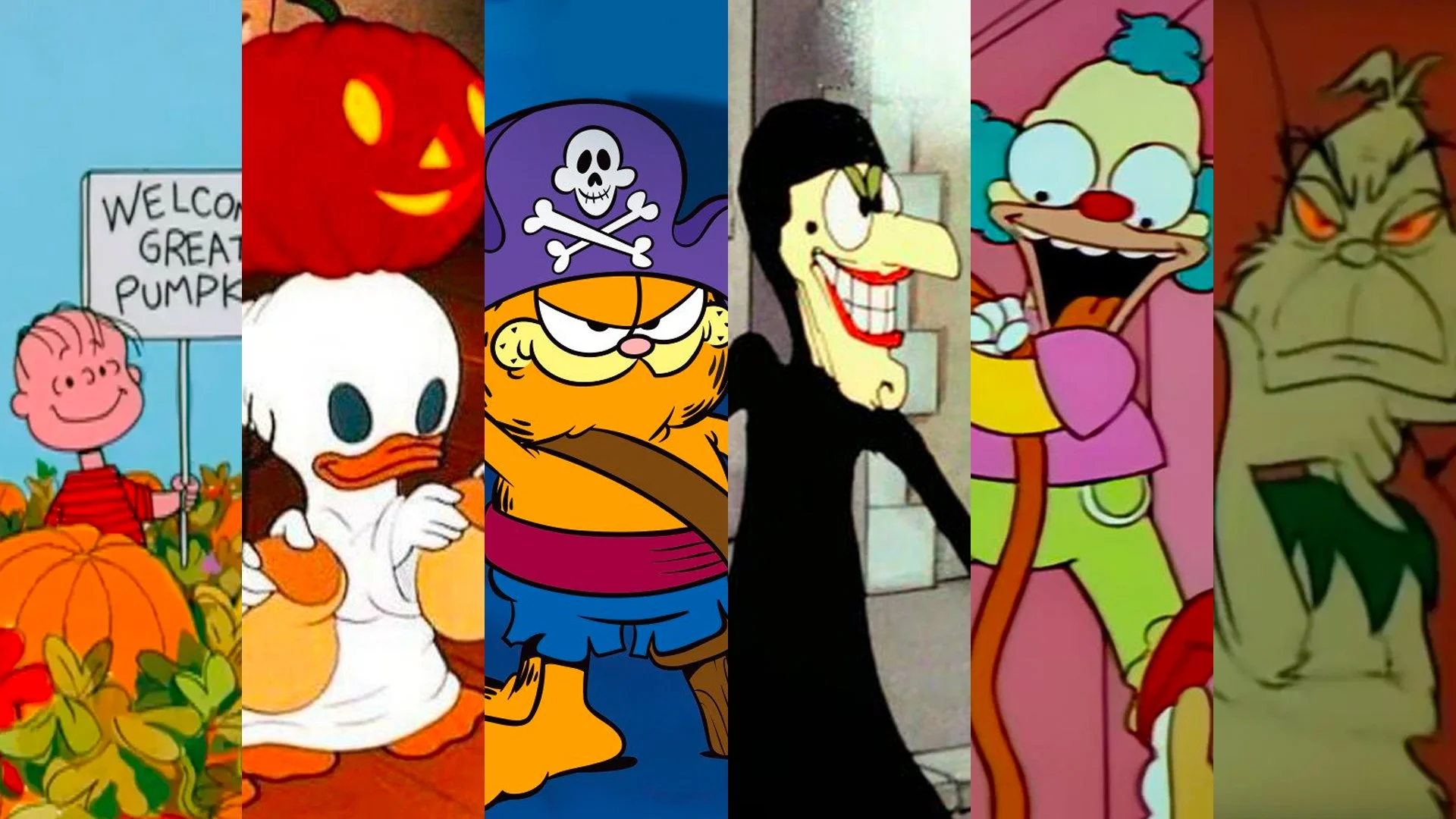
The best three months of the year have dawned once again, boils and ghouls, and you know what that means. It’s time to dive into the darkest recesses of my list of the 1001 Animations You Must See Before You Die and find some of the spookiest, most bone-chilling entries so I can hopefully help add some new hidden gems to your October watchlist.
Admittedly, not all of these actually are hidden gems. There are two Disney films on here, as well as a Disney XD series that just so happens to be one of my favorite TV shows of all time. There is also the most famous cartoon dog of all time, as well as the most spine-tingling adventure everyone’s favorite British claymation duo have ever been involved in. However, I have also included some much more obscure entries, like an animated adaptation of Night on Bald Mountain that precedes Disney’s by about a decade; the only Halloween special from a company best known for their Christmas specials; the two major screen entries from a Japanese franchise starring post-apocalyptic vampires; and a feature film from one of Europe’s most celebrated stop-motion animators adapting the definitive “deal with the devil” story.
So now that you know what to expect, let’s explore these selections together…if you dare!
#36: A Night on Bald Mountain
Animation style: 2D stop-motion
Release date: 1933
Directors: Alexander Alexeieff, Claire Parker
Music: Modest Mussorgsky (arranged by Nikolai Rimsky-Korsakov)
Modest Mussorgsky’s most famous classical work is best known today for its inclusion in the finale of Walt Disney’s 1940 masterwork Fantasia. But it wasn’t the first animated adaptation of this musical tale of witchcraft and devil worship. That honor goes to a much more obscure work of art created seven years earlier, which is probably the most obscure film I’ve covered in this series so far (it doesn’t even have it’s own Wikipedia page).
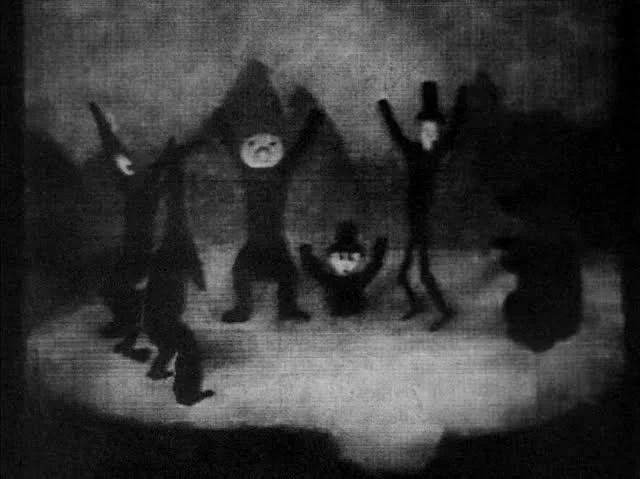
In contrast to the Disney adaptation, which tells a much more straightforward version of the tale, the Alexeieff/Parker version presents a much more abstract interpretation of events. We get bombarded with random, surreal, and nightmarish images in stark black and white. A scarecrow gets blown off its wooden frame and seemingly comes to life as it flies through the sky. A horse gallops in terror across a moonlit field, only to collapse from exhaustion and then have its body possessed by goblins. Strange humanoid shapes dance in the storm clouds, while others gather in circles and pray to whatever dark gods they worship. Stars burst in the sky and fall like confetti into a nearby lake. All the while, the townsfolk living in the shadow of Bald Mountain can only look on in terror and hope they can last until morning comes and chases these frightening figures away.
This short film was the first created with a new invention by Alexeieff and Parker, known as a pinscreen. This device used a screen filled with thousands of small pins, combined with side lighting, to create shapes and textures that traditional cel animation could not replicate. While there would be much more well-known uses of the pinscreen in later decades (the intro to Orson Welles’ 1962 adaptation of Franz Kafka’s The Trial, also animated by Alexeieff and Parker, being the most notable), A Night on Bald Mountain will always be the first, and just as memorable.
Several critics have compared its shadowy imagery to a wood engraving or old storybook illustration come to life. I would argue it looks like a black metal album cover come to life, even though that genre wouldn’t exist for another five or six decades. It manages to stack many memorable images into just eight minutes, from the horse struggling to get up only to fall back down again to the spinning nude figures in the sky to the little girl’s face getting partially obscured by the shadow of her upraised hands, as if pleading to God to make the nightmare stop.
While I do think I tend to overuse the phrase “It’s an artistic experience like no other” or some variation thereof, I don’t think I’ve meant it more than I do with this film. There legitimately isn’t any other moving picture that even remotely looks like it (at least none that I’m aware of). While the Disney version will always hold a special place in my heart, I would definitely recommend checking out Alexander Alexeieff’s version of A Night on Bald Mountain as well. It almost feels more like something out of a creepypasta than any film that actually exists, as if it was conjured up by Satan himself to place a curse on anyone who watches it.
#110: The Adventures of Ichabod and Mr. Toad
Animation style: Traditional 2D
Release date: October 5, 1949
Distributor: RKO Radio Pictures
Production company: Walt Disney Productions
Directors: Jack Kinney, Clyde Geronimi, James Algar
Writers: Erdman Penner, Winston Hibler, Joe Rinaldi, Ted Sears, Homer Brightman, Harry Reeves (based on the novel The Wind in the Willows by Kenneth Graham and the short story “The Legend of Sleepy Hollow” by Washington Irving)
Producer: Walt Disney
Music: Oliver Wallace
The eleventh film in the Disney Animated Canon marked the end of an era for the company, as it was the last of their anthology-style “package films,” which the company produced throughout the 40s due to World War II making finances tight (not to mention the many animators who were drafted into the war effort). It is also by far the most famous, probably because its last five minutes turned out so frightfully memorable.
The first half adapts the classic British children’s novel The Wind in the Willows, narrated by Basil Rathbone. It follows J. Thaddeus Toad (Eric Blore), who has earned a bad reputation in his hometown for his reckless, thrill-seeking behavior. It reaches a head when local bartender Mr. Winky (Oliver Wallace/Alec Harford) frames Toad for a car theft and swindles the luxurious Toad Hall out from under him. After Toad’s horse friend, Cyril Proudbottom (J. Pat O’Malley), breaks him out of the Tower of London, he and his friends Mole (Colin Campbell), Water Rat (Claud Allister), and Angus MacBadger (Campbell Grant) agree to infiltrate Toad Hall, steal back the deed to the manor from Winky and his weasel mooks, and clear Toad’s name.
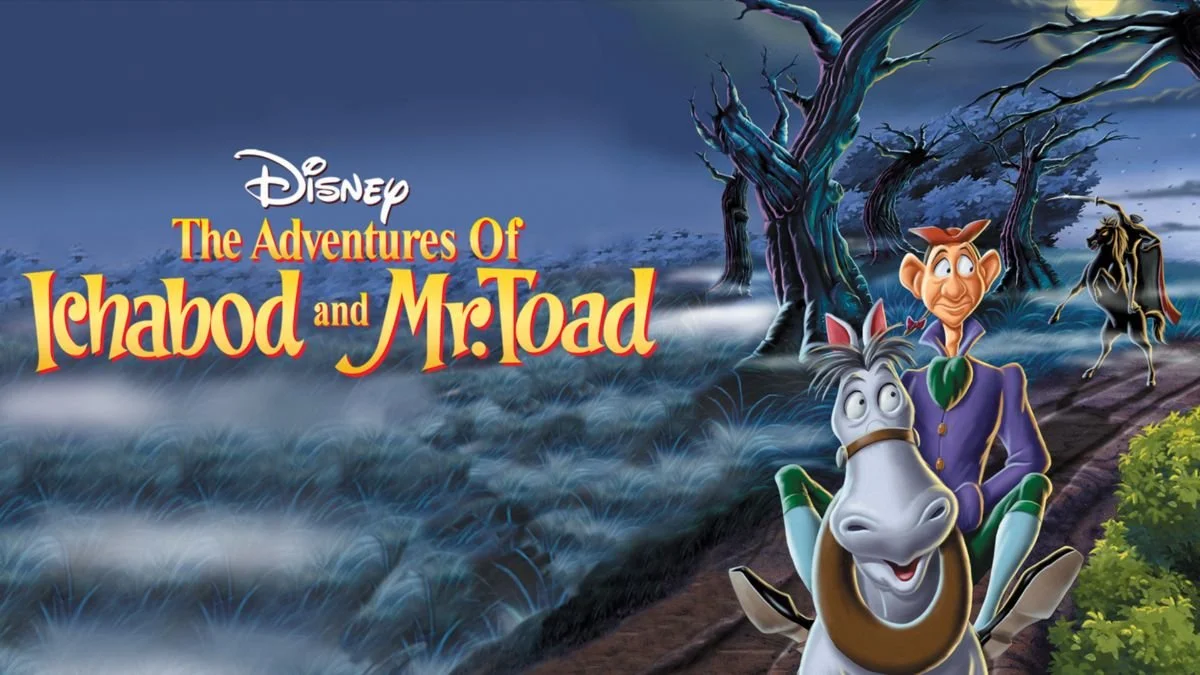
The second half adapts the classic American horror tale “The Legend of Sleepy Hollow,” narrated by Bing Crosby (who also voices most of the male cast). It follows Ichabod Crane, a lanky man who has just arrived in town as the new schoolmaster. He endears himself to most of the town women with his superficial charm, but he also makes an enemy of local hero Brom Bones as both try to court the attention of wealthy heiress Katrina von Tassel. At a Halloween party, Brom preys on Ichabod’s superstitious tendencies by telling the story of the Headless Horseman, a vengeful apparition who constantly searches for a new head to replace the one he lost. You can imagine his horror when the Horseman shows up as he rides home that night, starting a mad dash for a covered bridge which will supposedly stop the Horseman in his tracks. But Ichabod may find that the Horseman won’t be denied his prey so easily…
Many have called this film a return to form for Disney, bridging between the comparatively lower-quality package films of the earlier decade with the classics the company produced in the 50s, like Cinderella, Alice in Wonderland, and Sleeping Beauty. The Mr. Toad segment, while not quite as memorable as the Ichabod segment, is still very enjoyable. The animation in the action scenes is extremely well done, especially Toad’s wild ride with the horse and buggy, the train chase as he escapes from prison, and the climactic slapstick-filled brawl in Toad Hall (I especially love the shockingly dark part where the weasels try to decapitate Mole with an axe, complete with a makeshift executioner’s block).
However, the effort really shows in the Ichabod half. Interestingly, it’s one of the few Disney stories that doesn’t have a clear good guy and bad guy. Ichabod, despite his obvious charm, is really just a superficial gold digger after Katrina’s money, and refrains from using corporal punishment on his students for fear of alienating their mothers and losing access to their wonderful cooking. Brom, on the other hand, despite his prankster tendencies and bullying of Katrina’s other suitors, shows a good heart under his jockish exterior, as shown by how well-liked he is among the townsfolk.
There are plenty of other aspects to praise about the Ichabod segment, from the Vincent van Gogh-influenced background art to the Headless Horseman song (which proves Bing Crosby can be just as warm and inviting in a spooky Halloween song as he is in his Christmas recordings). However, it’s Ichabod’s ride through the woods that really cements this movie as a Halloween classic. The film spends several minutes building atmospheric dread with the dreary nighttime backgrounds (including a famous shot of the moon disappearing behind clouds shaped like grasping hands) and ambient animal sounds warning Ichabod to turn back. Then he breaks out in mad laughter (provided by Goofy’s then-voice actor, Pinto Colvig) when he realizes he mistook cattails thumping on a log for galloping hooves. But just as he and the audience think the coast is clear, the Horseman’s famous evil laugh (provided by Billy Bletcher) rings out, and the chase is on. There’s a good reason many consider this one of the scariest sequences Disney ever put out, especially because it ends the film on much more of a downer note than most of the rest of the Disney Canon.
All of this makes for what may be the only bona fide Halloween classic in the Disney Animated Canon (aside from maybe The Black Cauldron, although that one isn’t as fondly remembered). True, the Mr. Toad half is as far from the normal Halloween aesthetic as you can get, to the point that both shorts could be (and have been) separated into their own short films without detracting from either. Still, it’s definitely the best of Disney’s package films that helped end their WWII era on a high note, especially because it gave us such an iconic villain in the form of the Headless Horseman.
#208: Mad Monster Party
Animation style: Stop-motion
Release date: March 8, 1967
Distributor: Embassy Pictures
Production company: Rankin/Bass Productions
Director: Jules Bass
Writers: Arthur Rankin Jr. (story); Len Korobkin, Harvey Kurtzman (screenplay)
Producer: Arthur Rankin Jr.
Music: Maury Laws, Jules Bass
Rankin/Bass is better known these days for its classic stop-motion Christmas specials, but their full-length Halloween-themed motion picture seems to have slipped beneath most people’s radar. Be forewarned, though, that it is an aggressively 60s movie, in both good and bad ways.
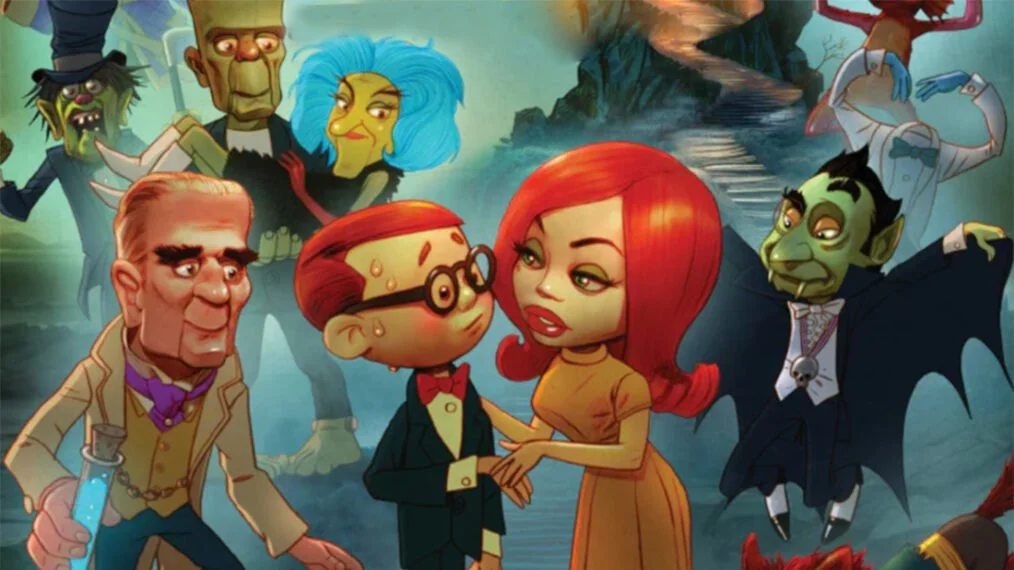
We meet Baron von Frankenstein (Boris Karloff), who is currently living on the least Caribbean-looking island in the Caribbean with his monster (Allen Swift), the monster’s bride (Phyllis Diller), and his beautiful assistant, Francesca (Gale Garnett). After finally achieving his ultimate ambition of inventing a substance that can destroy all matter, he decides to invite the other members of the Worldwide Organization of Monsters, including Count Dracula, the Mummy, Quasimodo, the Werewolf, the Invisible Man, Dr. Jekyll/Mr. Hyde, and the Creature from the Black Lagoon (all also voiced by Swift), to the Isle of Evil to celebrate. Francesca is enraged when she learns that Frankenstein also wants to retire as head of the WOM and name his pharmacist nephew, Felix Flanken (also also Swift impersonating Jimmy Stewart), as his successor, despite him being a klutzy, asthmatic nebbish who couldn’t be less like his uncle if he tried. She thus conspires with the other monsters to kill Felix and take Frankenstein’s inheritance for herself. But her plans become complicated when she starts developing feelings for the kind-hearted Felix and when the greatly feared “It” (King Kong in all but name) shows up despite not being invited.
While it might be easy to blame poor box office performance for the film’s lack of notoriety compared to its Yuletide cousins, it might also be because the film is a bit poorly conceived overall. The musical numbers, despite being as catchy as those in many other Rankin/Bass productions, are a bit boring to sit through, as the accompanying visuals are rather basic. Much of the comedy has lost it’s sheen over time, and the pacing is sluggish in places. Indeed, Jules Bass later admitted that some scenes were only added because the suits at Embassy Pictures thought the original film was too short, hence the added scenes with the island’s zombie fighter pilot corps and the Italian chef Mafia Machiavelli (You know what this is? It’s anti-Italian discrimination).
The way the film treats Francesca is also very 60s, and not in a good way. She’s constantly getting harassed by the other monsters (especially the zombie butler Yetch (also also also Swift impersonating Peter Lorre)), and her suddenly going from hating Felix’s guts to falling in love with him is very poorly handled, especially since the filmmakers decided to have him use the “Get a hold of yourself!” slap on her at one point. That’s not even getting into the scene where Francesca and the Bride rip each other’s dresses off and have a catfight in their underwear, which feels way too adult for what is ostensibly an all-ages film.
Yet despite all that, the film still retains much of that classic Rankin/Bass charm, especially with the animation itself (done at Tokyo’s MOM Productions under the supervision of Tadahito Mochinaga) and the impeccable character designs. Some comedic bits still work for modern-day audiences, like Felix earning himself a vacation from the drugstore by unintentionally thrashing it with his clumsy shenanigans; the way the crew of the S.S. Herring reacts to their monstrous passengers; Dracula inexplicably having a Yiddish accent; and Felix expressing a sudden urge to sing “Auld Lang Syne” in response to the spectacle at the ending (too soon, dude!). Speaking of which, the ending is notable for how unexpectedly dark it is compared with the rest of Rankin/Bass’ oeuvre, as well as for the last-second twist about Felix and Francesca’s identities (would I be spoiling too much by comparing it to Blade Runner?).
While it may not be as synonymous with Halloween as Rudolph the Red-Nosed Reindeer is with Christmas, and it has plenty of dated elements holding it back, Mad Monster Party still retains enough of Rankin/Bass’ whimsical charm to make it as worth revisiting as many of their more popular projects. If nothing else, it’s worth it to see how these classic stop-motion maestros apply their special magic touch to a Halloween aesthetic for a change, and it is glorious in a cheesy 60s kind of way.
#228: Scooby-Doo, Where Are You!
Animation style: Traditional 2D
Release dates: September 13, 1969- October 31, 1970
Distributor: CBS
Production company: Hanna-Barbera Productions
Creators: Joe Ruby, Ken Spears
Writers: Joe Ruby, Ken Spears, Bill Lutz, Larz Bourne, Tom Dagenais
Producers: William Hanna, Joseph Barbera
Music: Larry Marks (theme song); Ted Nichols
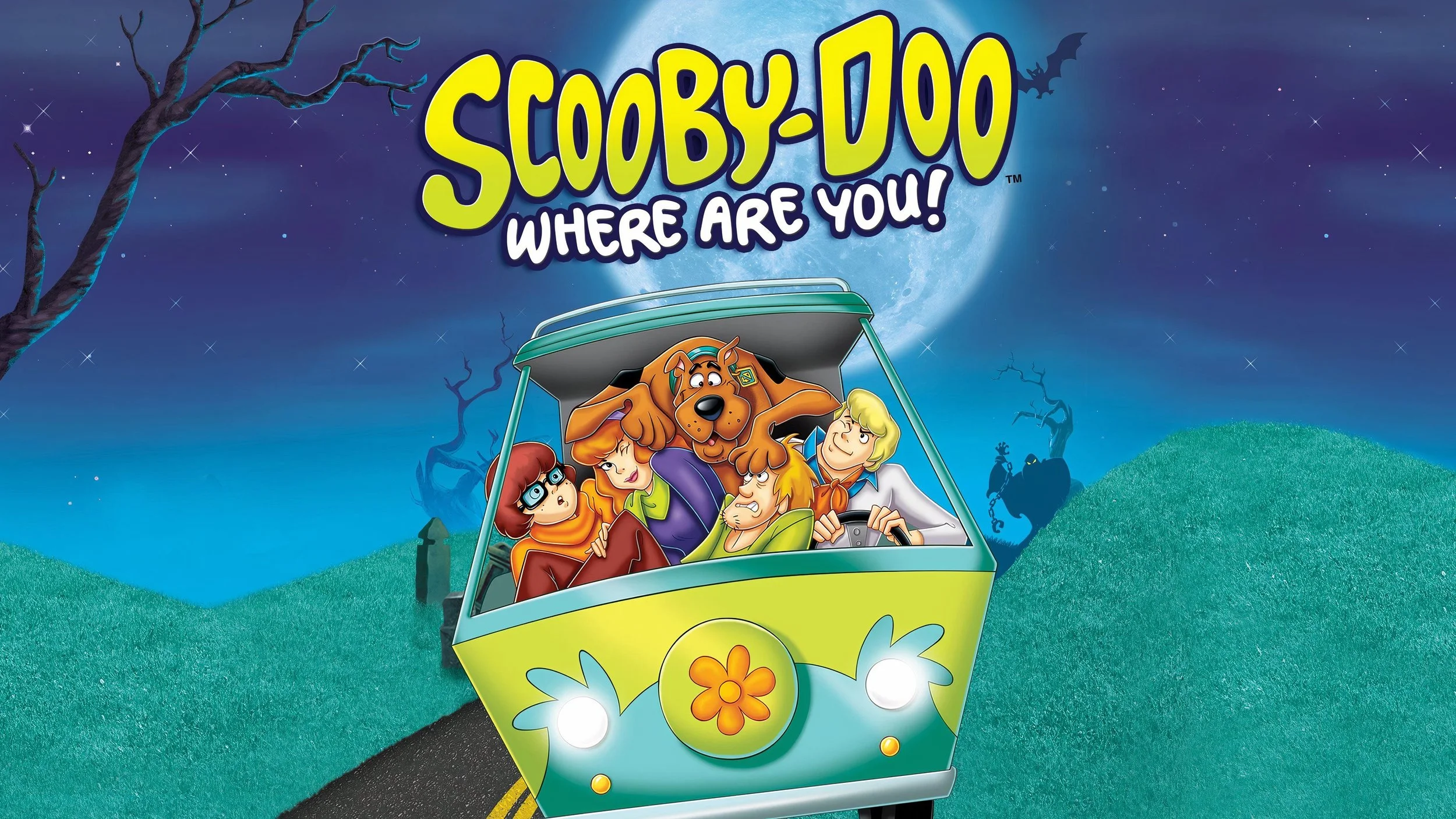
Scooby-Doo and his mystery-solving gang of misfits are probably the single most popular group of characters to come out of the golden age of Hanna-Barbera cartoons, probably rivaled only by the Flintstones, Yogi Bear, and the Jetsons. It may surprise you, then, to learn that this long-running franchise began with a show that ran for only two seasons and totaled just 25 episodes. I would have expected SpongeBob-type numbers for a series that’s still going this strong almost sixty years later, but stranger things have happened.
We all know the usual formula by now: we follow the Mystery Machine gang, consisting of leader Fred Jones (Frank Welker), wealthy fashionista Daphne Blake (Stefanianna Christopherson/Heather North), bespectacled nerdy skeptic Velma Dinkley (Nicole Jaffe), cowardly hippie Norville “Shaggy” Rogers (Casey Kasem), and his equally cowardly Great Dane companion Scooby-Doo (Don Messick). They frequently encounter seemingly paranormal occurrences while traveling across the countryside in their van, so they take it upon themselves to solve the mystery. After much wacky slapstick shenanigans, the group always traps the ghoul of the week and reveals them to be a normal human criminal in disguise, usually exploiting local urban legends for personal gain.
I can easily imagine some getting bored of the rather repetitive plot structure, especially older viewers. Still, there’s a very good reason this show became as popular as it did. It had a dark, spooky atmosphere no other Hanna-Barbera cartoon had, no doubt thanks to the background art, which was packed with scenes of darkness and decay (so much so that this Cracked article suggests that the show takes place in the wake of an economic collapse). However, the show never really crossed over into outright scary, partly because the ghosts and goblins always turned out to be fake, partly because the music score finds the right balance between eeriness and whimsy, and partly because of the main characters’ perpetually upbeat attitude.
Indeed, it’s almost certainly the characters that vaulted this classic cartoon into legendary status. Well, some of them, anyway; Fred and Daphne come across as rather flat and uninteresting by today’s standards. Velma makes a better impression with her skeptical outlook (an excellent contrast with Scooby and Shaggy’s easily frightened natures) and her once-an-episode tendency to lose her glasses and grope around helplessly looking for them. However, it’s obviously Scooby and Shaggy who are the main draw, thanks to their understandable cowardice in the face of occasionally dangerous villains (the ghost clown in “Bedlam in the Big Top” almost hypnotized him into getting eaten by a lion, for instance), the slapstick they get involved in during the chase scenes (the TV scene from “Nowhere to Hyde” being a particular favorite of mine), and their love of food, including self-made recipes that sound like they would be absolutely disgusting if they made them in real life (as the malt shop owner laments in “Scooby-Doo and a Mummy, Too,” “Liverwurst and ice cream?! What’ll they think of next?!”).
I also have to give a shout-out to the many iconic villains the Gang battled with wits and traps throughout the show’s run. Many from the original run are still well-remembered by fans to this day, including Miner 49er, the Space Kook, the Creeper, and the robot from “Foul Play in Funland.” The fact that they all turned out to be phony after investigation (except the robot, which had gone haywire) was a great way to teach the kids of its generation that you can find rational explanations for any supernatural phenomenon with a little critical thinking. At the same time, Scooby and Shaggy always keeping their fear from overriding their loyalty to their friends sets a good example for kids about the value of courage (similar to another beloved cartoon dog who would show up three decades later).
All these elements come together to make Scooby-Doo, Where Are You! not only a perfect show for an all-ages Halloween party, but the first installment in a long-running franchise that is still going strong to this very day. As such, allow me to finish this section by spotlighting some other Scooby-Doo franchise entries that, while not quite notable enough to earn a spot in the 1001 list, are still shows or movies that I highly recommend:
-A Pup Named Scooby-Doo (1988-1991): Developed by future Tiny Toon Adventures and Animaniacs creator Tom Ruegger, this Muppet Babies-esque spinoff follows younger versions of the Mystery Gang as they solve mysteries in their hometown of Coolsville. As one might imagine, given who created it, this is probably the funniest entry in the franchise so far, often bordering on self-parody. Show of hands: who else learned about the red herring concept through the character Red Herring?
-Scooby-Doo on Zombie Island (1998): This cult classic direct-to-video movie not only revived the franchise after a decade-long hiatus, but also injected new life into it with a massive bump in animation quality and a dark storyline in which, as the trailer proclaims, “This time, the monsters are real!”, which successfully introduced a set of older fans to the franchise. The direct sequel, Scooby-Doo and the Witch’s Ghost, is also really good, and earns bonus points for actually being set during autumn in New England, complete with monstrous walking jack-o’-lanterns.
-What’s New, Scooby-Doo? (2002-2006): Essentially the same as the original show, except updated to fit 21st-century aesthetics and sensibilities and including several self-parody elements (though not to the same degree as Pup).
-Scooby-Doo! Mystery Incorporated (2010-2013): Okay, I lied…this one is actually on the 1001 list. You’ll have to wait until next October to hear my thoughts, though!
#401: Vampire Hunter D
Animation style: Traditional 2D
Release date: December 21, 1985
Distributor: Toho
Production companies: Epic/Sony Records, Movic, CBS/Sony Group, Ashi Productions
Director: Toyoo Ashida
Writer: Yasushi Hirano (based on the novel by Hideyuki Kikuchi)
Producers: Hiroshi Kato, Mitsuhisa Hida, Yukio Nagasaki
Music: Tetsuya Komuro
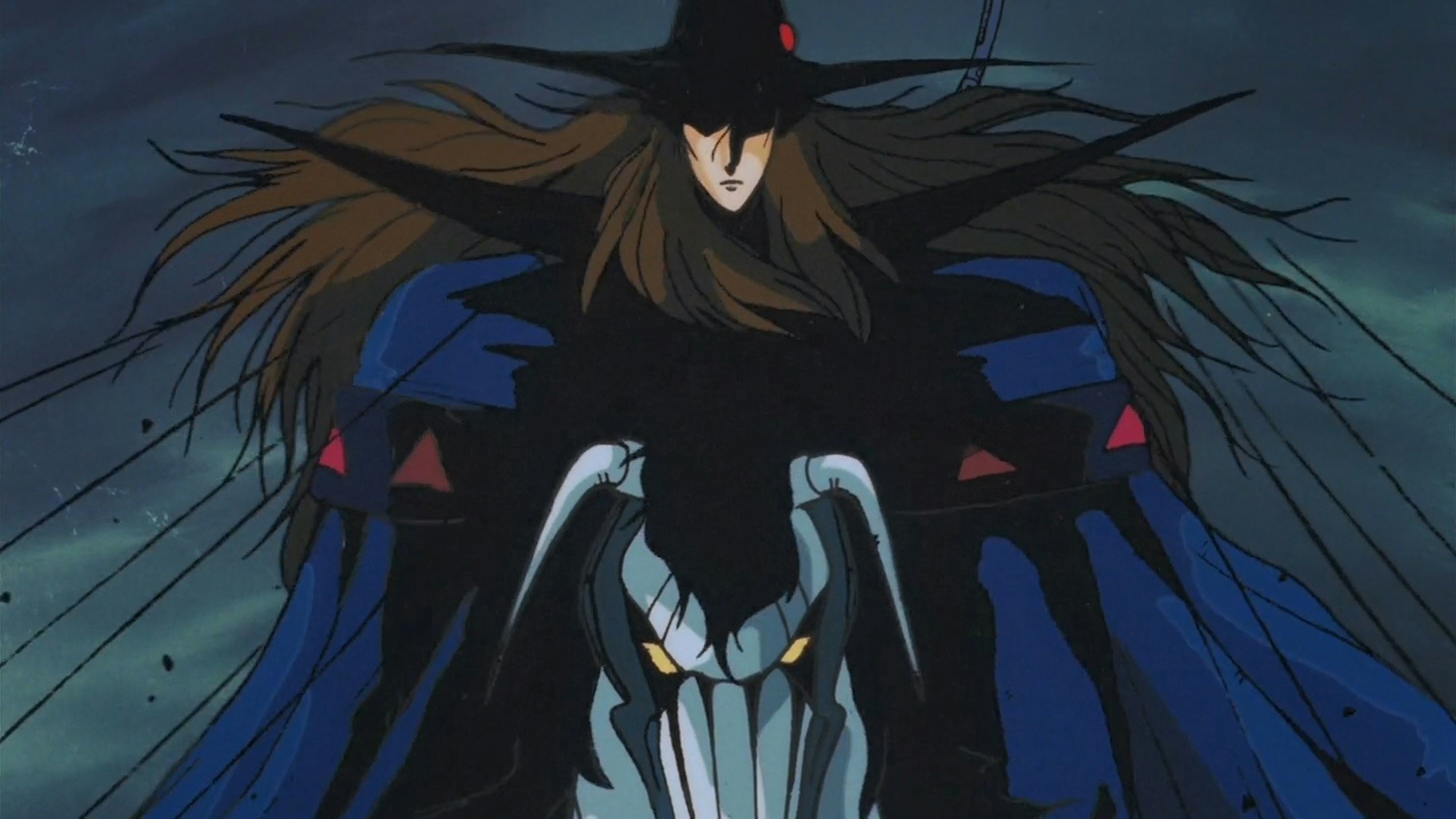
This dark and brooding entry in Japan’s 1980s OVA boom takes place 10,000 years after a nuclear holocaust has left the Earth a shattered ruin where mutants, demons, and vampires stalk the night. One of these vampires, Count Magnus Lee (Seizo Kato/David Wald), bites young demon hunter Doris Lang (Michie Tomizawa/Luci Christian) for trespassing on his territory. All seems lost until she encounters a dhampir (half-human, half-vampire) vampire hunter known only as D (Kaneto Shiozawa/Josh Gremillion) who wanders the Earth alone except for an obnoxious yet helpful parasite (Ichiro Nagai/Andy McAvin) that lives in his left hand. D agrees to help free Doris from the Count and, by extension, save her village from his entourage of monstrous minions. But in doing so, he may have to confront his own dark past…
It’s commonly agreed nowadays that the first Vampire Hunter D film matters more for its place in animation history than for its merits as a film in its own right. It came out just as anime was starting to become popular in the West, and thus became a source of nostalgia for many Gen X otakus. Compared to much more stylish OVAs like Wicked City and Project A-ko, however, it comes across as rather basic nowadays. There’s not that much extreme violence, aside from a crushed skull near the end, nor much sex or nudity aside from a few scenes with Doris and the snake witches that D fights inside Count Magnus’ castle. The animation and action sequences are serviceable, but not quite as impressive as other anime classics of the 80s (and certainly pales in comparison to its much more famous sequel).
Still, it’s definitely not a bad film, at least in my opinion. The characters are still likable and interesting, especially in the way D sometimes shows a more human side beneath his stoic and brooding demeanor. His speech to Doris’ younger brother, Dan (Keiko Toda/Shannon Emmerich), about how crying is okay but not in front of his sister, as she needs hope and encouragement more than tears right now, is a definite highlight of the film. And despite all the shortcomings in the animation, the film manages to create a unique atmosphere with its blend of gothic horror and post-apocalyptic sci-fi.
In short, Vampire Hunter D is a good but not great entry from the classic anime era that’s better remembered for laying the groundwork for its much more popular sequel than for being a classic in its own right. Before we talk about that, however, let’s swing over to the Czech Republic and talk about one of the greatest unsung heroes of stop-motion animation.
#534: Faust
Animation style: Live-action/stop-motion hybrid
Release date: September 10, 1994
Distributor: Lucernafilm-Beta
Production companies: Athanor, BBC, CNC, Pandora Filmproduktion
Director/writer: Jan Svankmajer (based on the tragic plays by Christopher Marlowe and Johann Wolfgang von Goethe)
Producer: Jaromir Kallista
It’s hard to know where to start when talking about this very unusual adaptation of the definitive “deal with the Devil” story. It definitely counts as the “arthouse” entry on this list, similar to Belladonna of Sadness in the last Halloween special, so its oblique approach may not appeal to many moviegoers. Still, with its combinations of marionettes and claymation, it offers a visual journey like no other.
Said journey takes place in modern-day Prague with an ordinary middle-aged man (Petr Cepek) who, after experiencing several paranormal incidents in his apartment, decides to follow a map given to him by men on the street. He arrives at an underground location in Prague’s Old Town, and reads a passage from a book about the legend of Dr. Johannes Faust, in which he declares his allegiance to black magic. From there, he finds himself embroiled in a surreal production of the tragic play, featuring devilish and angelic marionettes, alchemy labs, claymation demons and homunculi that morph into perfect clones of “Faust,” and magic rituals that take him across time and space. Can this modern-day Faust escape this labyrinthine puppet theatre that he’s found himself trapped in, or was he doomed the moment he set foot in this evil place?
As I said, this film’s unconventional approach will likely turn off many who aren’t used to the more arthouse side of world cinema. Not only does it bombard the viewer with tons of surrealistic and seemingly non-sequitur imagery (an outdoor cafe tabletop that turns into a wine fountain, a homeless man carrying a severed human leg being chased by a black dog, giant demon and marionette heads rolling down forest paths, etc.), but the rapid changes between different artistic mediums (live action, stop-motion, marionettes, etc.) could also be confusing for the uninitiated. The tones shifts between dark comedy and horror, sparse dialogue (the first fifteen minutes are almost totally silent), and lack of non-diegetic music are also something most moviegoers probably aren’t used to. I’ll admit I was confused about who our main character is supposed to be. I went into the film thinking that he was merely Johannes Faust in a modern setting, already seeking out the devil to sell his soul. Reading the Wikipedia summary of the plot, however, makes him seem like just some guy who was tricked into becoming a modern-day Faust (which, admittedly, makes more sense when you actually watch the film).
Still, for those willing to give it a chance, it offers a visual feast like no other, except for Jan Svankmajer’s other films, of course. Indeed, the stop-motion sequences in this film may make you angry that Svankmajer isn’t spoken alongside the artists behind Rankin/Bass, Laika, and Aardman as one of the greatest stop-motion animators of all time. The scene with the clay baby in the alchemist’s lab (pictured above) is a standout, as we watch it age into a perfect copy of Faust and then into a skull-like visage, seemingly mocking its creator, before Faust angrily crushes it. The film’s claymation interpretation of Mephistopheles is also worth discussing, especially as he transforms into a perfect clone of Faust yet still moves in a jerky, stop-motion-esque way whenever he speaks. Indeed, Petr Cepek (in what would sadly be his last performance before passing away from pancreatic cancer just ten days after the film premiered) is a big reason for this film being as watchable as it is, as he sells both the increasing fear and confusion of our resident Faust stand-in as well as the understated menace of Mephistopheles.
It may confuse normie moviegoers out there (I’ll admit I’m probably not fully on its wavelength myself), but I would still recommend watching Jan Svankmajer’s Faust at least once, just to see what you think. It’s definitely a bizarre film, but Time Out magazine named it the 80th best animated film of all time for a very good reason. It’s a kaleidoscopic tapestry of philosophy, religious themes, and practically every animation technique known to modern-day filmmaking, so there’s probably something for everybody here if they look hard enough.
#646: Vampire Hunter D: Bloodlust
Animation style: Traditional 2D
Release date: July 2000
Distributors: Nippon Herald Films, Urban Vision
Production companies: Madhouse, Filmlink International, BMG Funhouse, Movic, Goodhill Vision, Softcapital
Director/writer: Yoshiaki Kawajiri (based on the novel Vampire Hunter D: Demon Deathchase by Hideyuki Kikuchi)
Producers: Mataichiro Yamamoto, Masao Maruyama, Takayuki Nagasawa
Music: Marco D’Ambrosio
Chances are that if you are at all familiar with the name Vampire Hunter D, it’s because of this film. Bloodlust gave this post-apocalyptic gothic horror western franchise a massive visual upgrade courtesy of director Yoshiaki Kawajiri, who had previously made a name for himself by adapting other Hideyuki Kikuchi novels like Wicked City and Demon City Shinjuku. Maybe that’s why it became one of the most beloved anime films of all time.
This time, the titular dhampir (Andy Philpot/Hideyuki Tanaka) (or “dunpeal,” as he is called here for some reason) has been hired by John Elbourne (John DiMaggio/Motomu Kiyokawa) to track down his daughter, Charlotte (Wendee Lee/Emi Shinohara), who has seemingly been kidnapped by the powerful vampire noble Meier Link (John Rafter Lee/Koichi Yamadera). At the same time, Charlotte’s brother, Alan (John DeMita/Koji Tsujitani), hires a bounty-hunting team known as the Marcus Brothers to bring his sister back, and the dhampir and the Marcus team are soon hot on Link’s trail, trying to catch him before he reaches his castle. Along the way, D forms an unexpected friendship with the Marcus’ adopted sister, Leila (Pamela Adlon/Megumi Hayashibara), and discovers that Charlotte may have left willingly with Link. However, he also discovers that the couple has left their fate in the hands of Countess Carmilla (Julia Fletcher/Bibari Maeda), one of the most powerful vampire nobles, who may prove to be the greatest threat the world has seen in thousands of years…
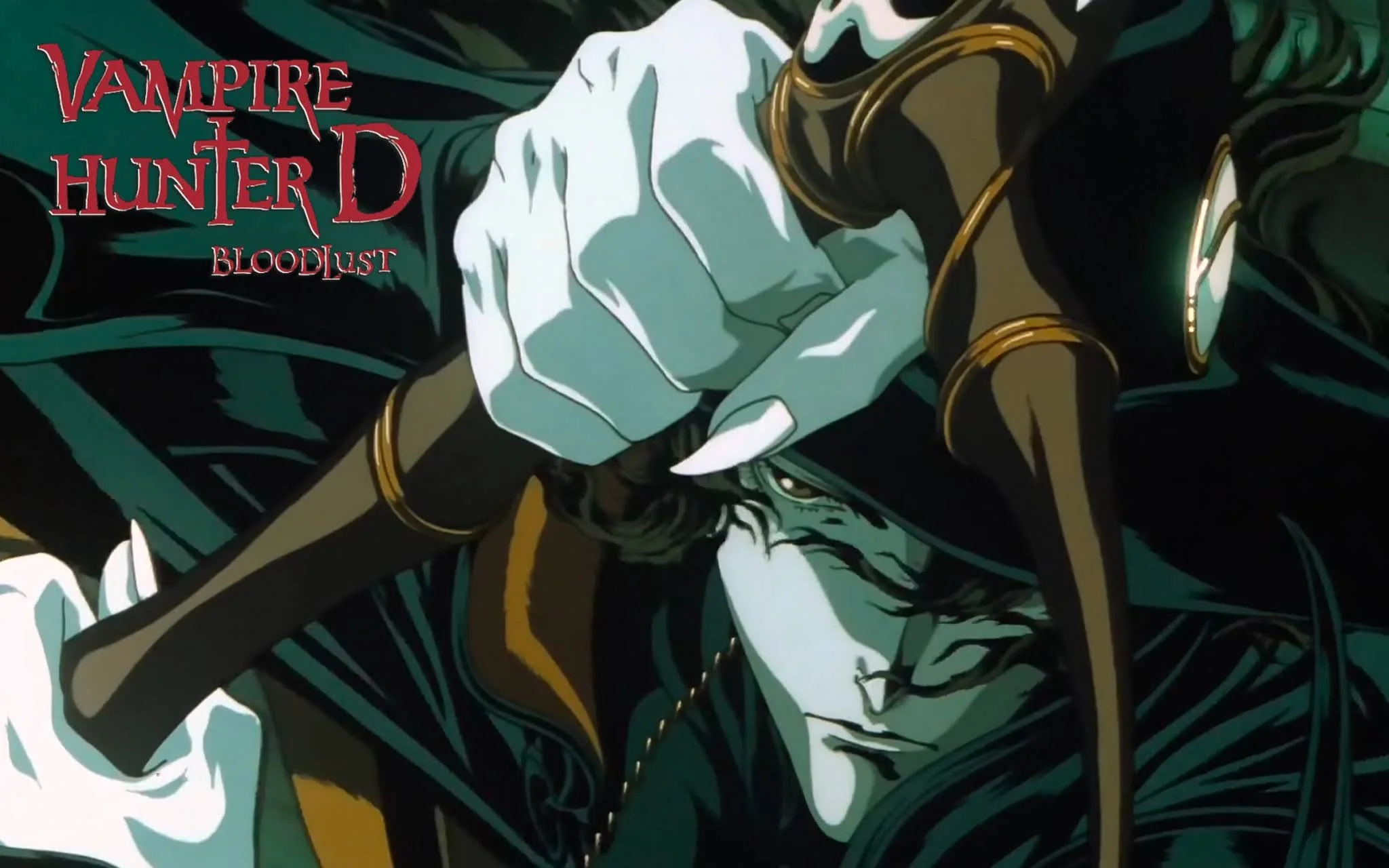
It’s probably the animation people remember most about this film. Indeed, of all the Kawajiri films I’ve watched in this series so far, this is the best-looking. His flair for gothic visuals combined with stylish action sequences is perfected here, making for a stunning feast for the eyes. But the credit shouldn’t go solely to him, as the legendary Yoshitaka Amano, who illustrated Kikuchi’s novels, returned to provide the character design for D, making our central character look as much like the apotheosis of the gothic vampiric antihero as possible be. The background art helps in this regard, as not only do the added western elements add another factor to help Bloodlust stand out from other gothic-themed anime, but the gothic architecture, as Letterboxd user Aberrant Ghoul puts it, “looks like a thousand gothic cathedrals exploded and had their constituent parts reformed into cityscapes and epic castles.” It even makes use of some early CG that has aged surprisingly gracefully.
But the visuals alone would be nothing without interesting characters inhabiting them, and Bloodlust has plenty on offer. The relationship between Meier Link and Charlotte, being entirely consensual in nature, serves as an interesting counterpoint to the relationship between Magnus Lee and Doris Lang in the original film. Meanwhile, D gets many more humanizing moments to let us peek behind his stoic facade, from the scene with the old man who remembers D saving his life as a child to D trying to assuage Leila’s fears of dying alone and unmourned by promising to bring flowers to her grave. The story also explores some interesting philosophical themes, like racism (in how D’s half-human, half-vampire nature means he is not fully welcome among either race, thus causing intense self-loathing), redemption, and even the sunk cost fallacy (the Marcus Brothers’ leader, Borgoff (Matt McKenzie/Yusaku Yara), starts his screentime by telling a fable about a squirrel that becomes so focused on stocking up on food for the winter that it freezes to death, yet doesn’t take that lesson to heart as this newest bounty-hunting job becomes more and more dangerous).
All of this makes it one of the best horror-themed anime ever made, at least among the ones I’ve seen. Vampire Hunter D: Bloodlust is essential viewing for anyone who even remotely cares about anime, and it easily offers one of the genre’s most popular vampire characters, probably rivaled only by Alucard from Hellsing.
#732: Wallace and Gromit: The Curse of the Were-Rabbit
Animation style: Stop-motion
Release date: September 4, 2005
Distributors: Dreamworks Pictures, United International Pictures
Production companies: Dreamworks Animation, Aardman Features
Directors: Nick Park, Steve Box
Writers: Nick Park, Steve Box, Mark Burton, Bob Baker
Producers: Claire Jennings, Clara Shelley, Peter Lord, David Sproxton, Nick Park
Music: Julian Nott
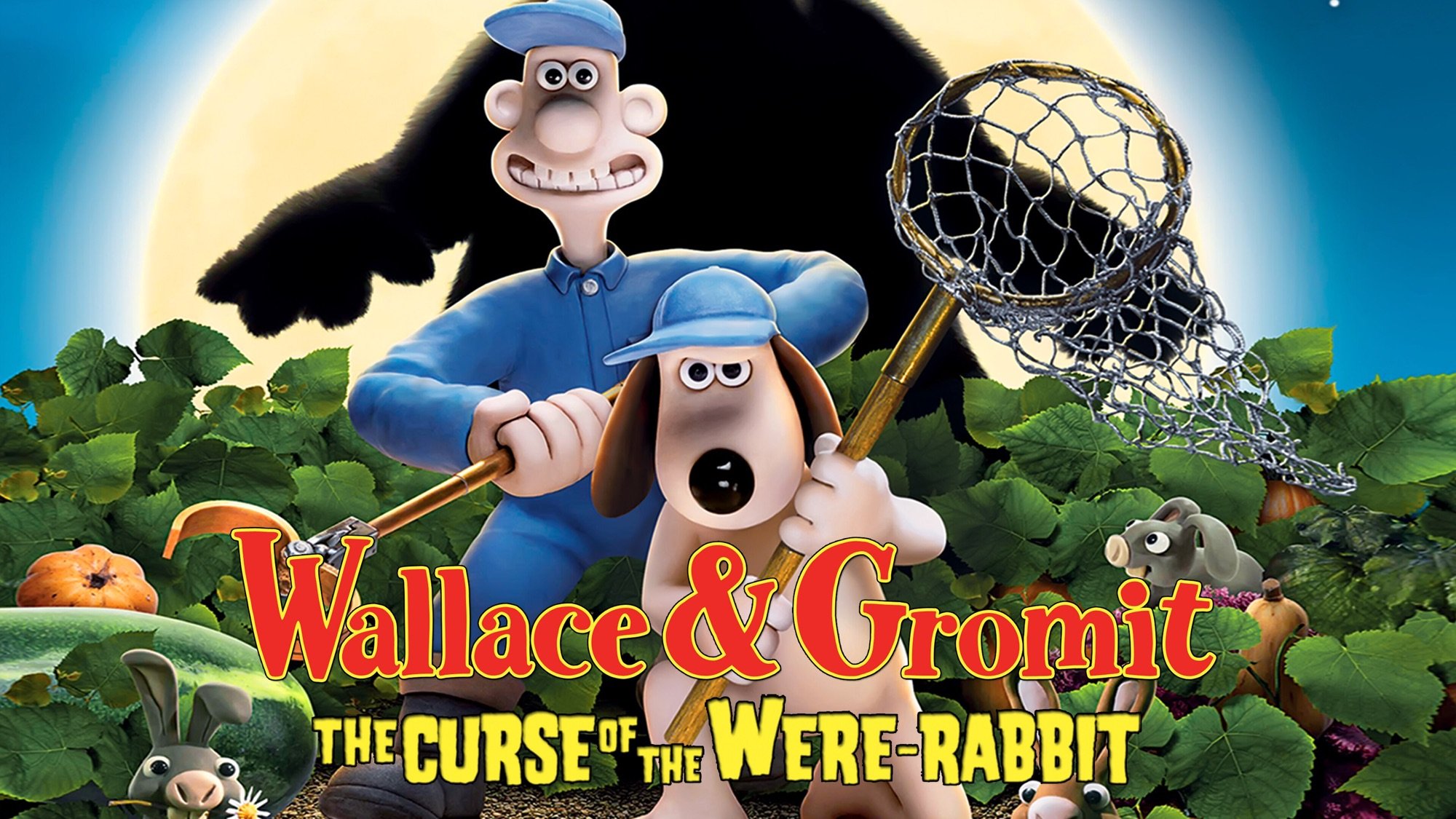
This parody of classic monster movies features one of the greatest comedic duos not only in British stop-motion but in all of animation in their most hare-raising adventure yet (no pun intended).
This time, Wallace (Peter Sallis) and Gromit are working as a humane pest control service called “Anti-Pesto” that captures garden pests, mainly rabbits, using a large vacuum. This earns Wallace the affections of Lady Tottington (Helena Bonham Carter), much to the chagrin of the snobby aristocratic hunter Lord Victor Quartermaine (Ralph Fiennes). Things become more complicated for the duo’s small business when a much larger nocturnal animal begins ransacking gardens all across town, which Reverend Clement Hedges (Nicholas Smith) claims is a “were-rabbit.” Determined to save the annual giant vegetable competition, Anti-Pesto and Quartermaine both set out to dispose of the monster in their own way. But things get even more complicated as Gromit starts piecing together clues about the were-rabbit’s true identity, especially since the monster’s first appearance followed Wallace inventing a device to brainwash the bothersome lagomorphs into disliking vegetables…
It’s clear that Aardman (with the help of their DreamWorks benefactors, no doubt) spared no expense to make this Wallace and Gromit adventure feel as epic as its feature-length runtime suggests. They give us action sequences that rival the car chase in A Close Shave and the toy train chase in The Wrong Trousers in epicness and inventiveness, from Gromit’s underground chase with the Were-Rabbit to Gromit’s plane ride over Tottington Manor during the climax. They give us horror sequences played entirely straight, except the worst violence happens to the fruits and vegetables of West Wallaby Lane (and also because the monster is…you know… a giant bunny rabbit). The soundtrack also gets an upgrade: it often sounds like it’s accompanying a real horror film, which only adds to the sincere charm of the whole affair.
The wry comedy of the shorts is in fine form here, especially with the abundance of puns (“Stand back! There may be a large rabbit dropping!”) and the various slapstick shenanigans (the giant female rabbit mannequin Anti-Pesto uses to try to lure the Were-Rabbit being the most prominent example). The stellar voice cast really helps to sell the comedy. Peter Sallis is as great as ever as the brilliant yet scatterbrained Wallace, while Ralph Fiennes is clearly having the time of his life voicing the bombastically obnoxious Victor Quartermaine (“If I can’t have your money, I can still bag your bunny!”). I also have to give my props to Nicholas Smith’s loony and superstitious vicar (“Does a man have teeth the size of axe blades?! Or ears like terrible tombstones?!”) and Peter Kay as the incompetent Constable Mackintosh (“If you ask me, this was arson…someone arsin’ around!”).
All of this makes it not only the perfect family-friendly Halloween movie for all the Anglophiles out there, but also a film that proves Wallace and Gromit can work just as well on the big screen as in the short films that made them famous. A fair warning to all the vegetable lovers out there, though; there is a very good reason that The Curse of the Were-Rabbit has been called a “vegetable horror film.” I don’t blame you if all the carrot-flavored carnage is too much for you to handle.
#852: Gravity Falls
Animation style: Traditional 2D
Release date: June 15, 2012-February 15, 2016
Distributors: Disney Channel, Disney XD
Production company: Disney Television Animation
Creator: Alex Hirsch
Writers: Alex Hirsch, Mike Rianda, Aury Wallington, Zach Paez, Tim McKeon, Mitch Larson, David Slack, Tommy Reahard, Nancy Cohen, Matt Chapman, Jeff Rowe, Shion Takeuchi, Mark Rizzo, Josh Weinstein
Producers: Alex Hirsch (executive); Tobias Conan Trost, Brian Doell, Suzanna Olson
Music: Brad Breeck
I’m gonna be real with you guys: This is my favorite TV show of all time. There are so many things about it that I relate to, from its characters’ (and creator’s) obsessions with conspiracy theories and the paranormal to the laid-back rural setting to the way it manages to balance its bizarre supernatural shenanigans with a bittersweet emotional core involving growing up and facing an uncertain future. And it does it all with one of the most lovable casts of characters I’ve ever seen in a cartoon.
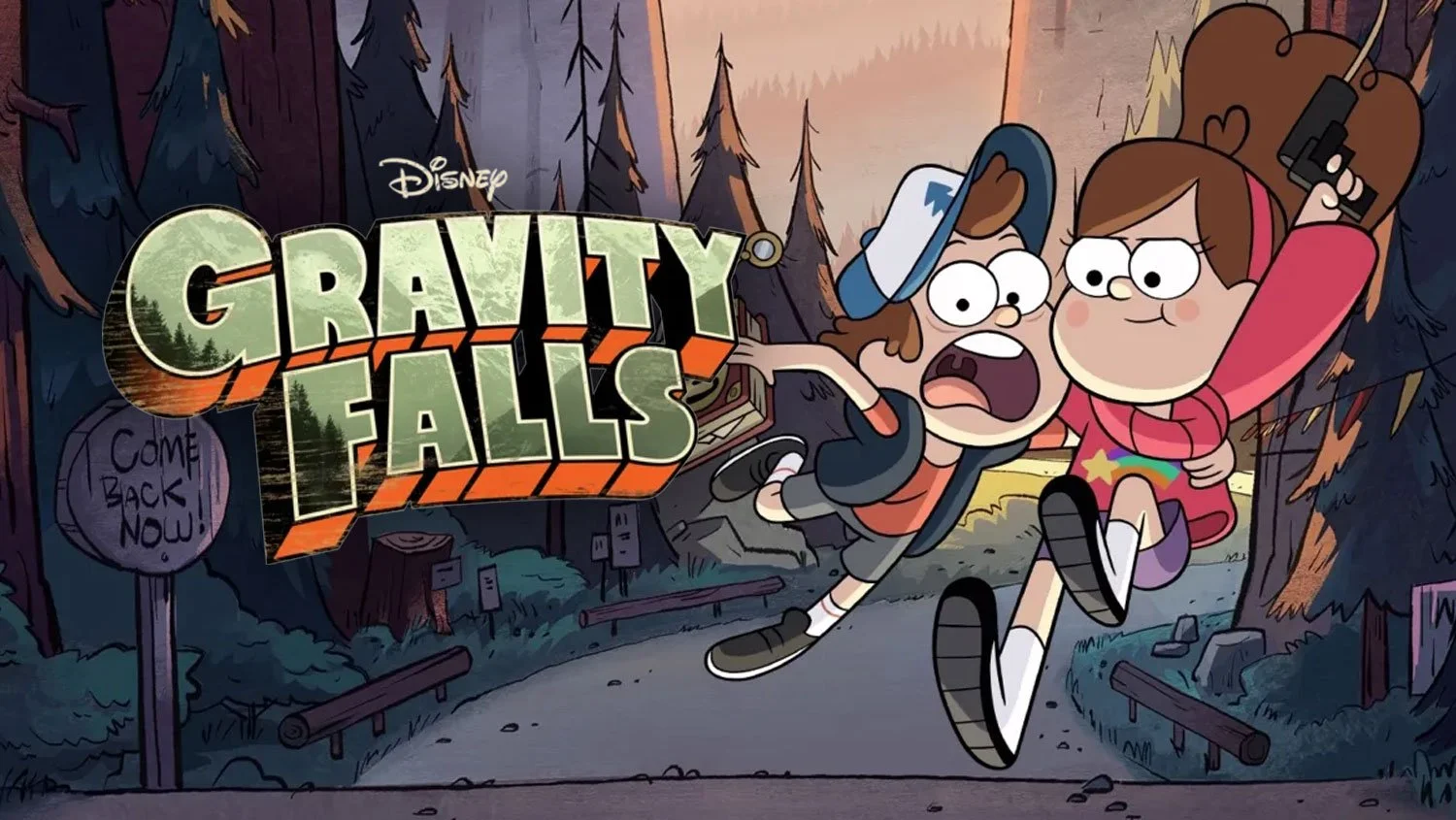
Leading the cast are 12-year-old fraternal twins Dipper and Mabel Pines (Jason Ritter and Kristen Schaal), natives of Piedmont, California, sent by their parents to spend their summer vacation in the sleepy small town of Gravity Falls, Oregon. The twins fear they will spend a boring summer aiding the get-rich-quick schemes of their huckster granduncle (aka “Grunkle) Stan Pines (Alex Hirsch), who runs a tourist trap called the Mystery Shack. But their vacation takes an interesting turn when Dipper discovers a journal hidden in the woods that details the myriad kinds of weirdness in Gravity Falls and the surrounding valley, including strange creatures of myth and legend, hidden truths about the town’s history, and even grand government conspiracies. Dipper, with the help of Mabel and his fellow Mystery Shack employees Wendy Corduroy (Linda Cardellini) and Jesus Alzamirano “Soos” Ramirez (also Hirsch) and various other characters around town, seeks to solve the many mysteries described in the journal, especially the identity of its missing author (JK Simmons). But they’ll have to get past their various insecurities to solve these mysteries, as well as the many villains they will encounter as they bring the town’s dark secrets to light, from the phony psychic and child psychopath Gideon Gleeful (Thurop Van Orman) to the chaos-loving dream demon Bill Cipher (also also Hirsch, impersonating David Lynch), who has disturbing plans for Gravity Falls and the world beyond…
This results in what can probably best be described as “Twin Peaks meets The Simpsons”. Or, as this IndieWire article puts it, “Put Twin Peaks, The X-Files, Northern Exposure, Scooby Doo, and Diff’rent Strokes in a blender, and you get Gravity Falls, a kids’ show so dense with mythology, pop culture jokes, Easter eggs, and mystery that grown-ups were often more invested”. Indeed, the mystery element is one of the show’s biggest hooks. The identity of the journal’s author is the biggest, but the show introduces many more as it goes on. How does local hillbilly stereotype Fiddleford McGucket (also also also Hirsch) know how to build such lifelike machine monsters? What is Grunkle Stan hiding behind the Mystery Shack vending machine? Why does the journal caption Bill Cipher’s likeness with “DO NOT SUMMON AT ALL COSTS!”? The show answers all of these questions as it draws closer and closer to the final showdown with Cipher.
Another big hook is the colorful cast of characters and the deft way the show lets them grow beyond their basic archetypes. The dynamic between Dipper, a neurotic brainiac who is a little too eager to grow up, and Mabel, an unapologetic and free-spirited goofball who is in no hurry to do so, is one of the main ways the show explores the theme of characters on the threshold between childhood and adolescence and the complicated ways children their age deal with the changes (of course, as a real-life person with a childhood interest in the paranormal and a bucketful of insecurities and neuroticisms related to my ASD diagnosis, Dipper is one of the most “he’s just like me for real!” characters I’ve ever encountered in a fictional narrative). Stan seems like nothing more than an unscrupulous con-artist at first, but quickly proves that his devotion to his family and employees often overrides his money-hungry tendencies (especially when we learn who the mystery author really is). Practically every major character gets this treatment (Wendy’s calm stoicism is a mask to hide raging anxiety; Soos is much wiser and more mature than his ditzy demeanor suggests; local snooty rich girl Pacifica Northwest (Jackie Buscarino) only acts that way because of emotional abuse from her parents, etc.). Even many of the minor townie characters are memorable, from the cooky diner owner “Lazy Susan” Wentworth (Jennifer Coolidge) and the ridiculously ugly and pathetic reporter Toby Determined (Gregg Turkington) to the manchild police officers Durland and Blubs (Keith Ferguson and Kevin Michael Richardson) and local “enthusiasm enthusiast” Tyler Cutebiker (Will Forte) (“Get ‘em! Get ‘em!”).
I could go on and on about the other great aspects of this show (the luscious background art, the excellent music score, the laugh-out-loud jokes, etc.), but it’s probably better if I just end things by saying that Gravity Falls is truly one of the greatest shows of the 21st century, not just in animation but in all of TV. It’s got plenty of jokes and colorful animation to satisfy kids while offering parents surprisingly well-rounded characters and effective horror and mystery elements. If you haven’t already experienced this truly weird and wonderful show, you really should, because this? This is beautiful!
#927: Coco
Animation style: 3D CG
Release date: October 20, 2017
Distributor: Walt Disney Studios Motion Pictures
Production companies: Walt Disney Pictures, Pixar Animation Studios
Director: Lee Unkrich
Writers: Lee Unkrich, Jason Katz, Matthew Aldrich, Adrian Molina (story); Adrian Molina, Matthew Aldrich (screenplay)
Producer: Darla K. Anderson
Music: Michael Giacchino
Let’s end this list with something a little different: the Latin American equivalent of Halloween, as shown via a Disney/Pixar film that explores themes of death, family, and legacy.
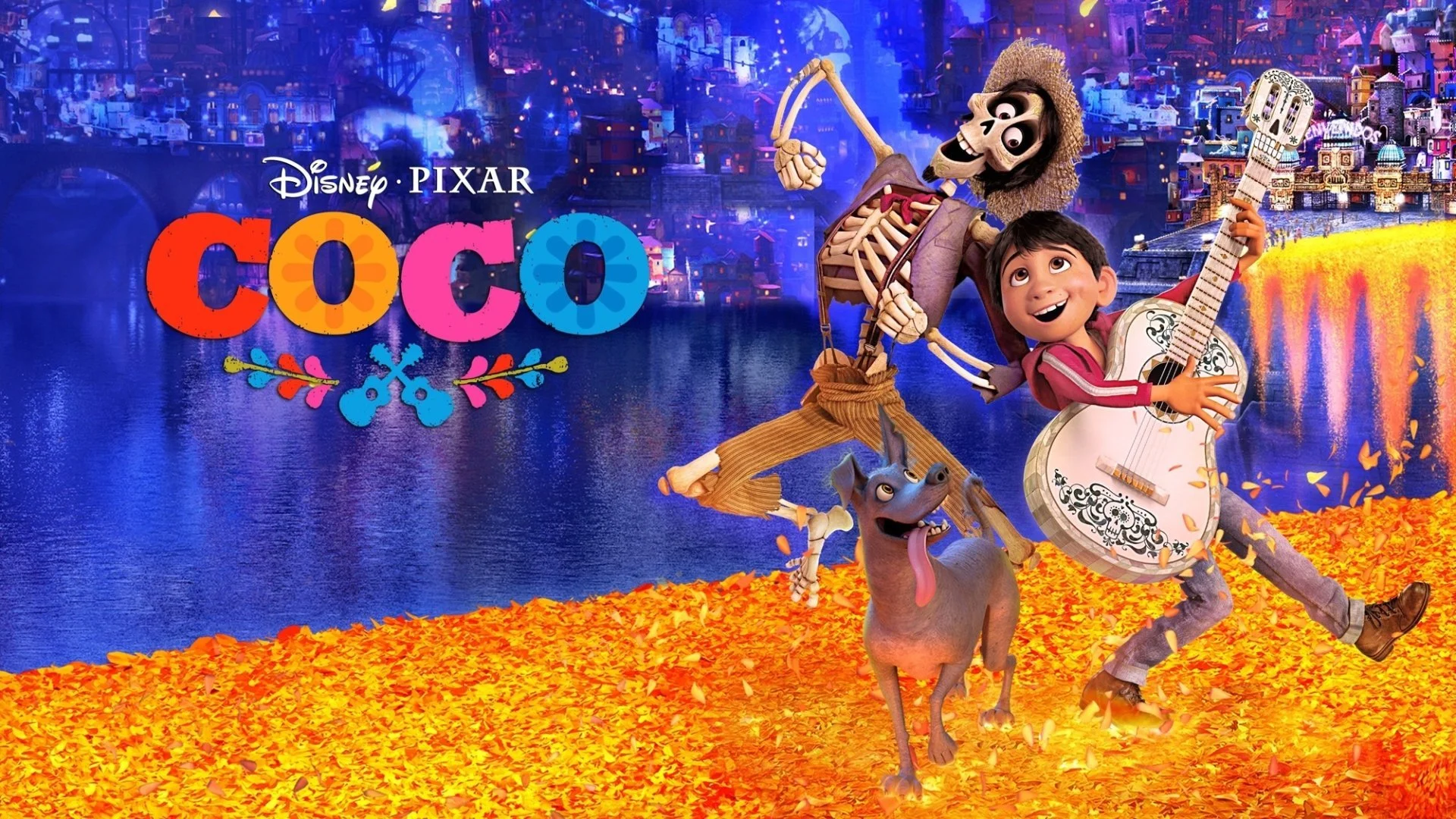
We follow a twelve-year-old Mexican boy named Miguel (Anthony Gonzalez), who’s in a sticky situation. He has a natural talent for music, but his shoemaker family has banned music from the household out of spite toward his great-great-grandfather for walking out on the family. He is initially excited when he discovers possible evidence that his idol, Ernesto de la Cruz (Benjamin Bratt), is that great-great-grandfather, only for his abuelita, Elena (Renee Victor), to smash his guitar in anger when he tries to tell them. Frustrated, Miguel breaks into de la Cruz’s tomb to steal the long-dead singer’s guitar, only to discover that he’s been transported to the Land of the Dead when he plays it, leaving him invisible to the living. He bumps into his deceased relatives, but refuses great-great-grandma Imelda’s (Alanna Ubach) offer to send him back when she attempts to forbid him from ever pursuing music again. Believing that de la Cruz will send him back without such conditions, he teams up with a down-and-out skeleton named Hector (Gael García Bernal), who claims to have toured with de la Cruz, to reach the singer’s mansion. But things get complicated when the true identity of Miguel’s great-great-grandfather is revealed, along with a dark secret from Ernesto’s past…
While the film admittedly starts with a less-than-original story (kid has dreams their family discourages, parental abandonment as backstory, protagonist wants to enter a talent show, twist villain, etc.), it takes so many interesting twists and turns along the way and handles these tropes in such an atypically mature manner that it comes out the other side feeling fresh and new. For instance, Hector starts as a typical Disney-style comic relief sidekick, but soon becomes one of the most tragic characters in the Disney canon when his backstory is revealed. Similarly, Imelda reveals that her banning music from the Rivera family was because she thought her husband’s ambitions had driven him to abandon his family, and she didn’t want that to happen to any of the other Riveras (which, ironically, is now threatening to drive a wedge between Miguel and his elders). And while twist villains have become a much-reviled trope in modern Disney films, Coco’s twist villain avoids the trope’s worst pitfalls by exploring their motivations more fully, even echoing classic Disney villains once they really start to go off the deep end.
The animation is some of the best Pixar has put out, especially in bringing the Mexican Land of the Dead to vivid and colorful life (its introductory shot alone includes 12 layers, over 3,000 individual buildings, and over seven million light sources). The neon-colored alebrijes are especially fun to watch as they dart around the city streets, especially Imelda’s giant flying jaguar, Pepita, whom she deploys to hunt down Miguel when he runs away from her.
As Pixar’s first musical, it’s probably no surprise that the songs are excellent, especially “Remember Me” and “Un Poco Loco.” Coco also sets itself apart from most other Disney musicals by making all its numbers diegetic, the first of the company’s musicals to do so. It also provides plenty of great comedy bits to balance out the family drama, including Hector disguising himself as Frida Kahlo to try to sneak over to the land of the living, Miguel’s meeting with the real Frida Kahlo (Natalia Cordova-Buckley), and the bit in the middle of the otherwise tearjerking scene with Chicharron (Edward James Olmos) where Hector has to censor the bawdy song “Everyone Knows Juanita” because Miguel is present.
There are some elements to criticize. Some argue that the ending feels a little too rushed and ties up a little too nicely, while others have questioned the wisdom of putting up a bureaucratized border patrol station at the boundary of the lands of the living and dead to prevent forgotten souls from crossing over, given the sordid history of overzealous treatment of undocumented immigrants on the US side of the southern border. Still, given how beloved this film has become on the Mexican side of the border, it’s clear that the guys at Pixar did something right when making Coco (well, aside from the whole “trying to trademark the Day of the Dead” controversy). It certainly doesn’t hurt if you want to make your Halloween movie playlist a little more multicultural this year.
And that’s everything for the second 1001 Animations Halloween special. I don’t have much more to add, except to ask you to stay tuned for my best animated movies of 2025 list later this November, as well as the second 1001 Animations Christmas special in December (possibly also a non-holiday-themed 1001 episode in between if I have the time). Until then, have a wonderfully spooky and safe Halloween and, to quote Bing Crosby at the end of Ichabod and Mr. Toad, “Man, I’m gettin’ outta here!”