My Favorite Animated Series of 2024
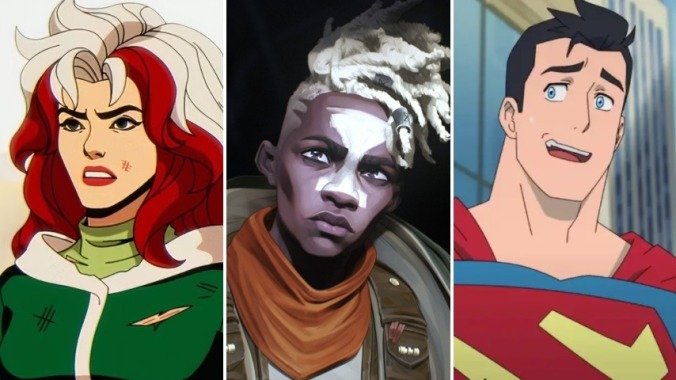
At last, the time has finally come for me to reveal my picks for the best of television animation in 2024. I’ve already explained my reasons for the delay elsewhere, so I won’t waste time explaining what went wrong and just dive right into it.
I do have two changes I want to make to the format of this list before we go forward, though. First, I’m not going to split this list into two parts as I did for the 2023 list. I split the 2023 list into two because I was under the false impression that it would help me get it out sooner, but that didn’t work out. Granted, doing it in two parts was probably the smart move, as so many good shows came out that year that one article probably would have been way too long and tedious to read.
On the other hand, though, part of what made it that long was that my reviews of the honorable mentions were almost always as long as those for my actual picks of the best series from each month. Therefore, I’m going to restrict my honorable mention reviews to just one paragraph apiece, or at least try to.
Otherwise, this list will keep the same format as the previous one: I choose my favorite series from each month of the year, along with some honorable mentions. Let’s start with my favorite from January:
January
Distributors: Netflix, Tokyo MX, SUN, KBS, TVA, AT-X, BS11
Production company: Trigger
Director: Yoshihiro Miyojima
Writer: Kimiko Ueno (based on the manga by Ryoko Kui)
Music: Yasunori Mitsuda, Shunsuke Tsuchiya
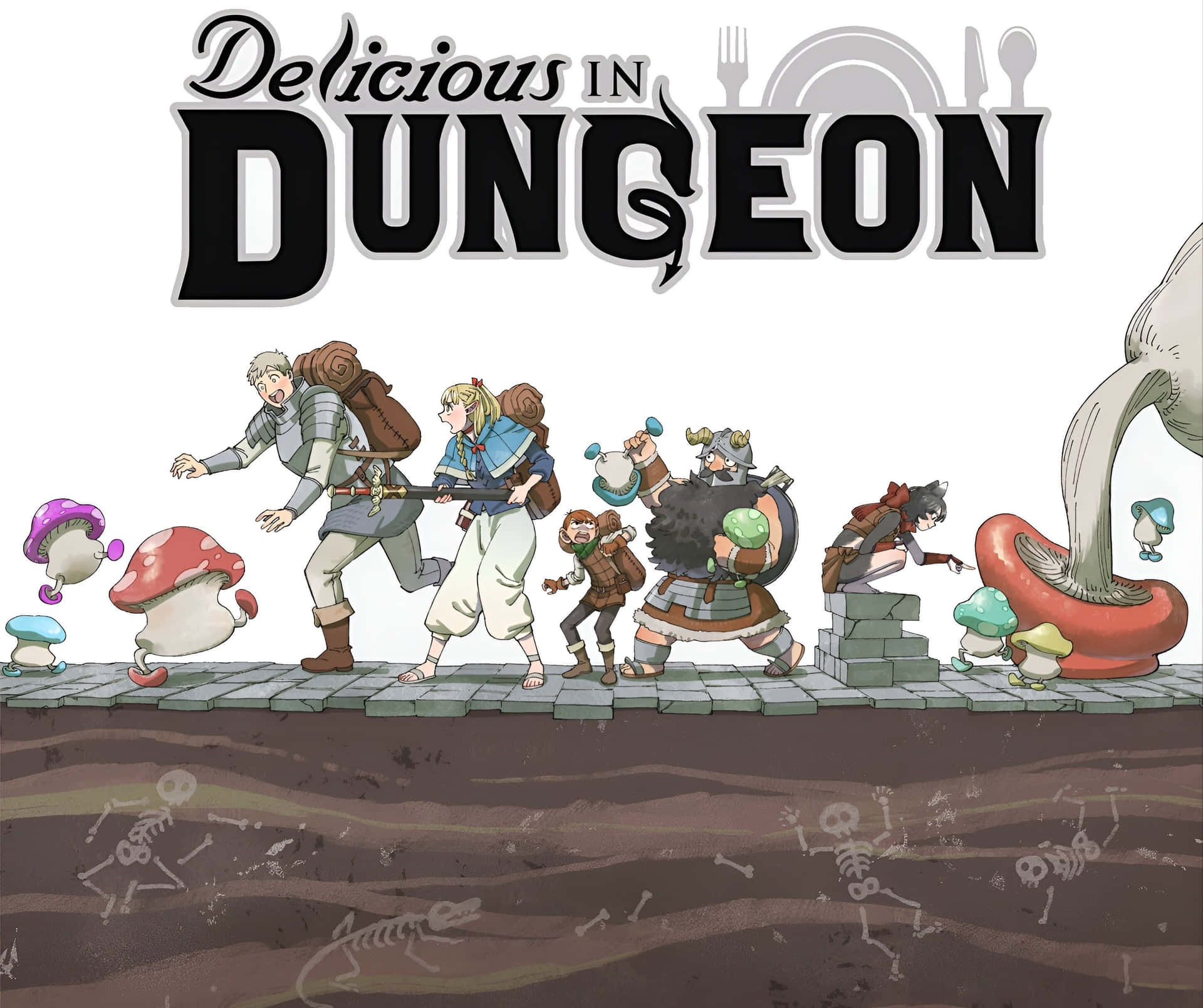
We all love a good fantasy story full of fantastical beasts that our heroes have to fight their way past to get to their ultimate goal, but Delicious in Dungeon sets itself apart by adding a clever twist to the standard high fantasy formula: what if you could eat the monsters?
That’s a question that a knight named Laios Touden (Kentaro Kumagai/Damien Haas) finds himself distracted by as he leads his party, consisting of the halfling trapper Chilchuck Tims (Asuna Tomari/Casey Mongillo) and half-elf spellcaster Marcille Donato (Sayaka Senbongi/ Emily Rudd), into the Red Dungeon. They’re in a hurry because Laios’ sister, Falin (Saori Hayami/Lisa Reimold), was eaten by a red dragon during their last expedition, and they have to reach it before it fully digests her. That gives Laios the perfect excuse to indulge in his longtime fascination with eating dungeon monsters, as it means the team won’t have to waste time going back to the surface to resupply, much to his companions’ dismay. His passion only grows when he finds a kindred spirit in Senshi (Hiroshi Naka/SungWon Cho), an eccentric dwarf with excellent cooking skills who is an experienced connoisseur of dungeon monster flesh. As they descend deeper and deeper into the dungeon, eating their way through whatever monster it throws at them, the Touden team grows to appreciate the beauty of the dungeon’s ecosystem in all its wonderfully surreal glory.
Indeed, it is the dungeon ecosystem itself that sets this fantasy realm apart from the many that came before. This subterranean biosphere is every bit as complex and interconnected as any that can be found in real life, and the series manages to find a biological niche for every species the group encounters, as well as a way for Laios and Senshi to cook and eat them. For instance, mimics are hermit crab-type creatures that use treasure chests and cabinets as shells. There are insects that mimic the appearance of treasure pieces and envenomate anyone who picks them up. There are mushroom rings that cause people to switch bodies when they step into them. There are the tiny, sluglike “dungeon cleaners” who eat any dead thing that’s not supposed to be in the dungeon and fix broken masonry with their secretions. One of my favorite bits of dungeon lore is the way Laios figures out how to eat living armor in Episode 3, which I won’t dare spoil here.
Of course, discovering all these weird and wonderful facets of the dungeon wouldn’t be nearly as fun if the characters we follow weren’t fun to be around as well. All of them manage to transcend their standard fantasy archetypes and become well-rounded characters in their own right, especially in the way they’re often divided between Laios and Senshi’s enthusiasm for cooking and eating the monsters (Laios even reads as autistic-coded for many, which I certainly appreciate) and Marcille and Chilchuck’s disgusted reluctance. As one may surmise, this means that Delicious in Dungeon is one of the more comedic entries in the fantasy anime canon, and never looses that cozy roadtrip feeling even when thing turn more serious (like, for example, what happens when the group finally does find Falin…).
Indeed, Delicious in Dungeon could be considered a good companion piece to Freiren despite being its opposite in many ways, from each series soundtracks (Evan Call’s melancholic Lord of the Rings-style score for the latter vs. the former’s more light and whimsical score) to the way each series focuses more on the practical and personal costs of adventuring, respectively (to paraphrase Kambole Campbell’s review for IGN).
Trust me; it will make you mad that the recipes shown once an episode aren’t real, because it makes fantasy quests look appetizing.
Honorable Mention:
Hazbin Hotel: Much as I’d like to sing the praises of this indie animation success story uncritically, quite a few problems are holding it back for me.
The biggest problem with the series was the pacing. Charlie Morningstar (Erika Henningsen) is given six months to prove that demons can be rehabilitated before Adam (Alex Brightman) comes to start the next Extermination, yet the pacing is so breakneck that it feels like only a few weeks have passed when the climactic battle occurs.
It also somewhat suffers from an inconsistent tone, most notably in how the fourth episode treats the abuse Angel Dust (Blake Roman) suffers at the hands of Valentino (Joel Perez), only to have Sir Pentious (also Brightman) get dragged off to a sex dungeon against his will a few episodes later, which can make viewers question how seriously the show takes the issue of sexual assault. Also not helping is how the series drops us into the action, expecting us to have already watched the pilot, and its overreliance on profanity in the dialogue, which comes across as more adolescent than edgy.
Still, with characters this fun, songs this catchy, and animation this fluid and colorful, it’s easy to see how this show set the record for most-streamed animated premiere on Amazon Prime. Hopefully, it can overcome its several faults in Season Two.
February
Distributor: Disney+
Production companies: Cinesite, Walt Disney Animation Studios, Kugali Media
Director: Olufikayo Adeola
Producers: Jennifer Lee, Byron Howard (executive); Christina Chen
Writers: Olufikayo Adeola, Halima Hudson, Hamid Ibrahim, Toluwalakin Olowofoyeku
Music: Re Olunuga
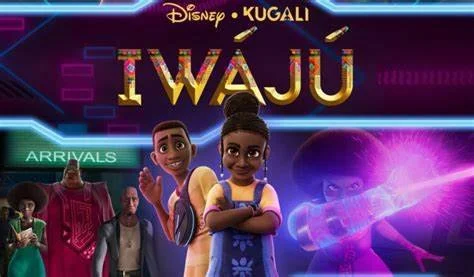
Even as it continues to descend further into enshittification hell, there are still quite a few diamonds in the rough among the Disney+ originals, including this Afrofuturist masterpiece.
Titled after a Yoruba word roughly translating to “the future” and set 100 years in the future in a sci-fi revamp of Lagos, Nigeria, the city is divided between the haves (who live on the barrier island along the Atlantic coast) and the have-nots (on the mainland, literally geographically separated by the Lagos Lagoon). We follow two protagonists from each half of the city. On the island is Tola Martins (Simisola Gbadamosi), a girl who struggles to connect with her overworked dad, Tunde (Dayo Okeniyi), who is busy developing technological solutions to Lagos’ crime problems. On the mainland is Kole Adesola (Siji Soetan), the Martins’ gardener and Tola’s best friend, who struggles in poverty despite his clear skills with technology and caring for his sick mother. Feeling guilty about forgetting his daughter’s birthday, Tunde decides to give Tola an agama lizard-like robot bodyguard he’s been working on as a gift, hardly suspecting that such a gift will lead the children on an adventure that will have them facing the imposing crime lord Bode DeSousa (Femi Branch), who seeks to comandeer Tunde’s tech to pull off a daring digital heist.
What started as an effort by African animators to, in the words of Toluwalakin Olowofoyeku, “kick Disney’s arse” ended with Walt Disney Animation Studios CCO Jennifer Lee calling to ask if they would accept an offer to have their show become a Disney+ original, similar to their previous Africa-centric original Kizazi Moto: Generation Fire. We can debate whether partnering with the increasingly controversial Walt Disney Company was a wise move. Still, there’s no denying that Iwaju is one of the best and most original new programs Disney has offered us in a while.
Sure, stories dealing with class divides are nothing new in our late-stage capitalist hellscape, but Iwaju sets itself apart with its uniquely African perspective on the issue. Indeed, the unique geography of Lagos makes for a perfect metaphor for both figurative and literal divides between the bourgeoisie and the proletariat, and the prejudice that those of higher social classes can have for the lower (like, for instance, when Tunde accuses Kole of being a gold digger and forbids Tola from speaking with him, and also discourages Tola from speaking Yoruba or Nigerian Pidgin).
The animation is vibrant and glorious in its portrayal of a beautiful future vision of Africa’s second-largest city, showing it full of robots and flying cars (that apparently have to deal with drones trying to sell them stuff, in one of the series’ best comedic bits). Iwaju is also very shameless about stuffing the screen with as many Nigerian cultural signifiers as possible, right down to its Afro-centric soundtrack and the way its universally excellent voice cast switches between English, Nigerian Pidgin, and Yoruba on a whim (non-Nigerians may want to turn on subtitles for this one).
One might complain that the series tries to cram too many big ideas and technological concepts into only six episodes and thus fails to explain them properly. Still, Iwaju works as a wonderful coming-of-age story of friendship, set against an unabashedly optimistic vision of a utopian future for Africa. As much as Disney may piss many of us off with its naked greed and short-sighted stupidity, there’s no denying that it’s given us some great programs to help celebrate Black History Month.
Honorable Mention:
Moon Girl and Devil Dinosaur Season 2: The second and final season of everyone’s favorite TV show starring a black tech-genius superheroine and her trusty tyrannosaur sidekick suffered a few well-publicized bumps in the road on its way to the finish line. The biggest was undoubtedly what happened with the episode “The Gatekeeper,” in which Lunella’s trans friend, Brooklyn (Indya Moore), has to battle Greer (Amy Sedaris), the bigoted coach of a rival volleyball team who wants Brooklyn and Lunella’s team disqualified for allowing a trans girl to play. In one of its more egregious displays of corporate cowardice, Disney withheld the episode from airing despite the animation being finished, because they wanted to be “respectful of the role parents play in making choices for their children and having discussions on their own timeline.” Whatever their reasons for deleting the episode, it’s a rather cruel irony that, at one point in the episode, Brooklyn breaks down and asks, “How many doors do I have to break through until they stop locking me out?” only for Dsney to slam another door in her (and many real life trans kids’) face by not airing the episode.
Despite all of the behind-the-scenes shenanigans, however, Moon Girl Season 2 is still every bit as action-packed and vibrantly animated as ever, adding several well-done emotional arcs that really enhance the drama, like Lunella’s conflict with the powerful alien sorcerer Molecule Man (Edward James Olmos), Lunella telling the Beyonder to go away after he screws up one too many times (only to regret it immediately), and Lunella’s mother finding out about her superhero double life and forbidding her from donning the mask out of fear for her safety.
As sad as I am to see such an excellently made show end after just two seasons, I’m still happy with what we got and felt that it wrapped things up in a satisfying manner. In the words of the Beyonder, “You go, Moon Girl!”
Oh, and speaking of Disney+ originals that don’t suck…
March
Distributor: Disney+
Production company: Marvel Studios Animation
Creator: Beau DeMayo
Producers: Brad Winderbaum, Kevin Feige, Louis D’Esposito, Victoria Alonso, Beau DeMayo, Matthew Chauncey (executive); Danielle Costa, Sean Gantka
Writers: Beau Demayo, Charley Feldman, JB Ballard, Anthony Sellitti (based on characters created by Stan Lee and Jack Kirby)
Music: Haim Saban, Shuki Levy (theme music); The Newton Brothers
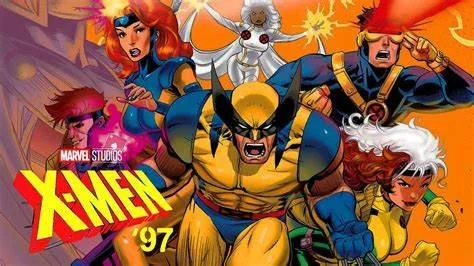
I’ve never seen the 90s X-Men series, but I can confidently say that you don’t need to to appreciate what this dark reimagining of Stan Lee’s famous allegory for prejudice and racism has to offer.
Taking place a year after the final episode of the original series (which saw Professor Charles Xavier (Ross Marquand) being taken by the extraterrestrial Shi’ar race to be healed after a near fatal assasination attempt), the X-Men feel lost without their leader, and the new defacto leader, Scott “Cyclops” Summers (Ray Chase) doesn’t feel up to the task, especially with him and Jean Grey (Jennifer Hale) expecting a new child. Despite this setback, the mutants continue with their lives; Rogue (a returning Lenore Zann) and Remy “Gambit” LeBeau (A.J. LoCasico) with their touchless love affair, Wolverine (a returning Cal Dodd) casually glowering from the sidelines as he pines after Jean, and Jubilation “Jubilee” Lee (Holly Chou) taking another young mutant, Roberto “Sunspot” De Costa (Gui Augustini), under her wing. But that’s the least of the mutants’ troubles, for not only has Professor X inexplicably left the X-Men under the official control of their arch-nemesis, Erik Magnus “Magneto” Lehnsherr (Matthew Watterson), in his will, but they also have to deal with the unrelenting hatred of non-mutant humans, which may lead to tragedy and terror, especially as Magneto gets more and more fed up with their prejudice…
What really sets this Marvel entry above all the others is that it is not afraid to embrace the politics inherent in the X-Men’s entire premise. Stan Lee made no secret of how his mutant superheroes were his attempt to speak out about the civil rights movement of the 1960s, and given how much racial and LGBTQ politics have inspired all new social conflicts in the 2020s, it’s probably no wonder the creators of X-Men ‘97 decided to tackle those subjects in their more adultified reboot. From relatively small moments like Cyclops’ disastrous interview with an insensitive news reporter in “Remember It” to much more significant instances like the Friends of Humanity attack on the United Nations in “Mutant Liberation Begins” (which plays out uncomfortably similar to the January 6th insurrection), Sunspot’s mother warning him to keep his mutant powers secret to avoid public ridicule in “Bright Eyes,” and the devestating twist that occurs at the end of “Remember It” taking obvious cues from 9/11 and the Pulse nightclub shooting (I’m not spoiling too much with that description, am I?)
But, of course, it’s not the politics alone but rather the characters and story that make the series as great as it is. In addition to the subplots mentioned above, we also see Ororo “Storm” Monroe (a returning Alison Sealy-Smith) lose her powers and fall in with Daniel “Forge” Lone Eagle (Gil Birmingham) as she tries to figure out what to do with herself, Kevin “Morph” Sidney (JP Karliak) trying to overcome his trauma after being brainwashed by Nathaniel “Mr. Sinister” Essex (a returning Chris Britton), and Scott and Jean having to make an agonizing decision when their infant son comes down with a techno-organic infection.
Tie it all together with excellent action scenes, animation that pays tribute to the style of the original series while updating it just enough to help it fit in with the modern era, and an excellent voice cast that brings back as many of the original voice actors as possible (George Buza also returns as Dr. Hank “Beast” McCoy, and a few others, like Catherine Disher, Chris Potter, and Ron Rubin return voicing new characters), and you’ve got a nostalgic revival that’s actually worth the price of admission. I’m not necessarily saying you need to subscribe to Disney+ to watch it (that would probably be hypocritical of me, given how much I’ve complained about the company as of late), but X-Men ‘97 is well worth watching by whatever means you feel comfortable with.
Honorable Mention:
Ark: The Animated Series: It might be hard for me to review this video game adaptation objectively, since the premise involves a world where people from across time coexist with dinosaurs and other prehistoric life and use them for gladiatorial conflict, but how can you blame me with a premise that awesome?! Probably my favorite part of Ark, however, is the way it brings such a diverse cast of characters together and shows us character-building flashbacks in which they speak their native languages (like Lakota warrior Thunder Comes Charging, aka John (Zahn McClarnon), 3rd century Chinese rebel leader Meiyin Li (Michelle Yeoh), and the villainous Roman general Gaius Marcellus Nerva (Gerard Butler)). Oh yeah, and as you might tell from that list, the voice cast is stacked with a surprising amount of big names, like Madeline Madden (main protagonist Helena Walker), David Tennant (mad scientist Dr. Edmund Rockwell), Jeffrey Wright (Revolutionary War spy Henry Townsend), Karl Urban (D-Day Army Ranger Bob), Devery Jacobs (John’s adopted Inuk daughter Alasie), and Elliot Page (Helena’s missing-and-presumed-dead wife Victoria).
Unfortunately, this is a Paramount+ original, meaning it’s owned by a company arguably even more evil than Disney, so maybe keep that in mind in deciding how you want to watch it.
April
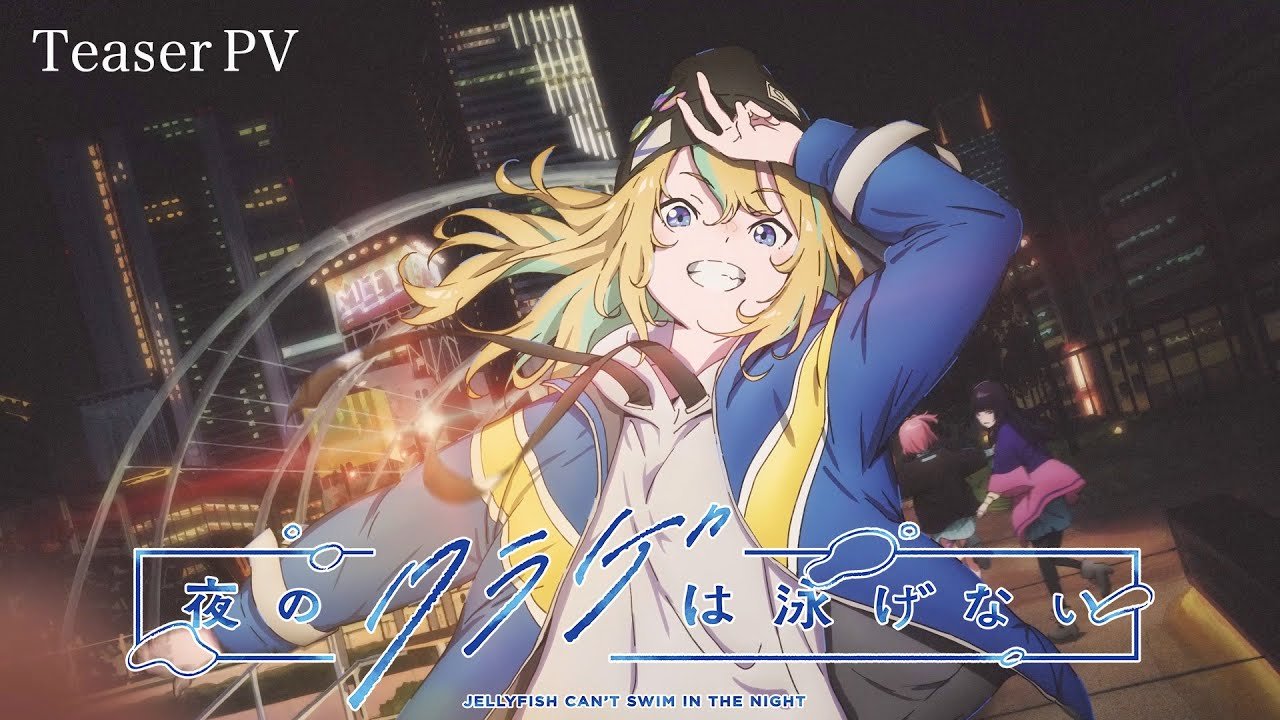
Distributors: Sentai Filmworks, Muse Communication, Tokyo MX, Kansai TV, BS11, AT-X, HTB
Production company: Doga Kobo
Director: Ryohei Takeshita
Writer: Yuki Yaku
Music: Masaru Yokoyama
Looking for a Hidive original idol anime, but don’t want to deal with the complex emotional rollercoaster ride that is Oshi no Ko? Buddy, do I have the anime for you (made by the same animation studio to boot)!
We follow four artistically inclined misfits in Tokyo’s Shibuya ward. There’s Mahiru Kozuki (Miku Ito/Luci Christian), a high schooler afraid to indulge her hobby of drawing for fear of ridicule. There’s Kano Yamanouchi (Rie Takahashi/Juliet Simmons), a former idol singer forced into early retirement after a falling out with her former group, the Sunflower Dolls. There’s also Mahiru’s childhood friend, Kiui Watase (Miyu Tomita/Molly Searcy), a shut-in VTuber with video editing and sound mixing skills. And finally, there’s fellow high schooler Mei Takanashi (Miyuri Shimabukuro/Natalie Rial), a piano prodigy who is a huge fan of Kano’s work. As they cross paths, they decide to combine their talents to form the anonymous idol group JELEE and pursue their artistic dreams. But they’ll have to confront their insecurities, past traumas, and industry pressures if they want to make it big…
Now, don’t get me wrong. While Jellyfish isn’t quite as thematically heavy as Oshi no Ko, it still deals with some dark subject matter, like bullying, suicidal ideation, parental abuse, gender dysphoria, toxicity in the entertainment system, etc. Still, it uses these themes tastefully, in service of helping the girls overcome their hang-ups and blossom into their true selves. Stories about being yourself and forging your own path are nothing new, especially in the context of “making it big in showbiz” stories like this one, but this anime pulls it off in a beautiful manner.
The animation helps in this regard, adding surreal touches to the musical performances that enhance the emotional impact of the scenes and symbolize the freedom one feels when expressing their true selves artistically. The music, as great as it is, helps in this regard. However, the English dub is guilty of that thing where the localizers don’t bother to dub the songs, which especially annoys me here, considering how important music is to the story. I don’t know how complicated translating songs is compared to dialogue, so maybe I’m being unfair to the localizers, but I feel like they could have put a little more effort into that front. Still, it doesn’t make moments like Mei singing one of the group’s songs despite her lack of talent behind the mic to break Kano out of a depressive slump hit any less hard.
Some others, like in this Reddit thread, have argued that Jellyfish felt way too rushed, as if the writers were afraid the show wouldn’t get a second season and splooged out as many ideas as possible without giving them any room to breathe. Maybe I’m biased, since I’ve made no secret of how I’ve been struggling with many of the same issues the JELEE members struggle with, but I didn’t notice any of that stuff. I guess I just liked these characters and the way they handle these familiar struggles too much to care.
The bottom line is, if Oshi no Ko didn’t convince you to get a Hidive subscription, maybe Jellyfish Can’t Swim in the Night will.
Honorable Mentions:
Go! Go! Loser Ranger: This action-packed tokusatsu parody follows the shapeshifting Footsoldier D (Yusuke Kobayashi/Zeno Robinson), who gets tired of his alien species getting humiliated in mock battles with this world’s resident sentai squad as part of a peace treaty with Earth and decides to infiltrate the sentai’s organization and finish the invasion his people started 13 years ago. One could think of it as to Power Rangers what The Boys is to modern superhero movies: a dark, cynical take on the genre it’s parodying. Some may find it too mean-spirited to stomach, but I had quite a bit of fun with its characters and action.
Kaiju No. 8: Speaking of genre subversions, this anime puts a unique spin on the kaiju subgenre by having its protagonist, Kafka Hibino (Masaya Fukunishi/Nazeeh Tarsha), gain the ability to transform into a kaiju after being infected by a parasite from a carcass he’s helping clean up. This is played both for comedy, as Kafka struggles to adjust to his newfound abilities, and for drama, as the Anti-Kaiju Defense Force mistakes him for a threat and tries to hunt him down. Kafka’s struggles are only one element that makes this anime an instant classic, however, as it’s also helped by fluid, action-packed animation and worldbuilding that really digs into the biology of the various kaiju that wreak havoc in Japan over the course of the story.
May
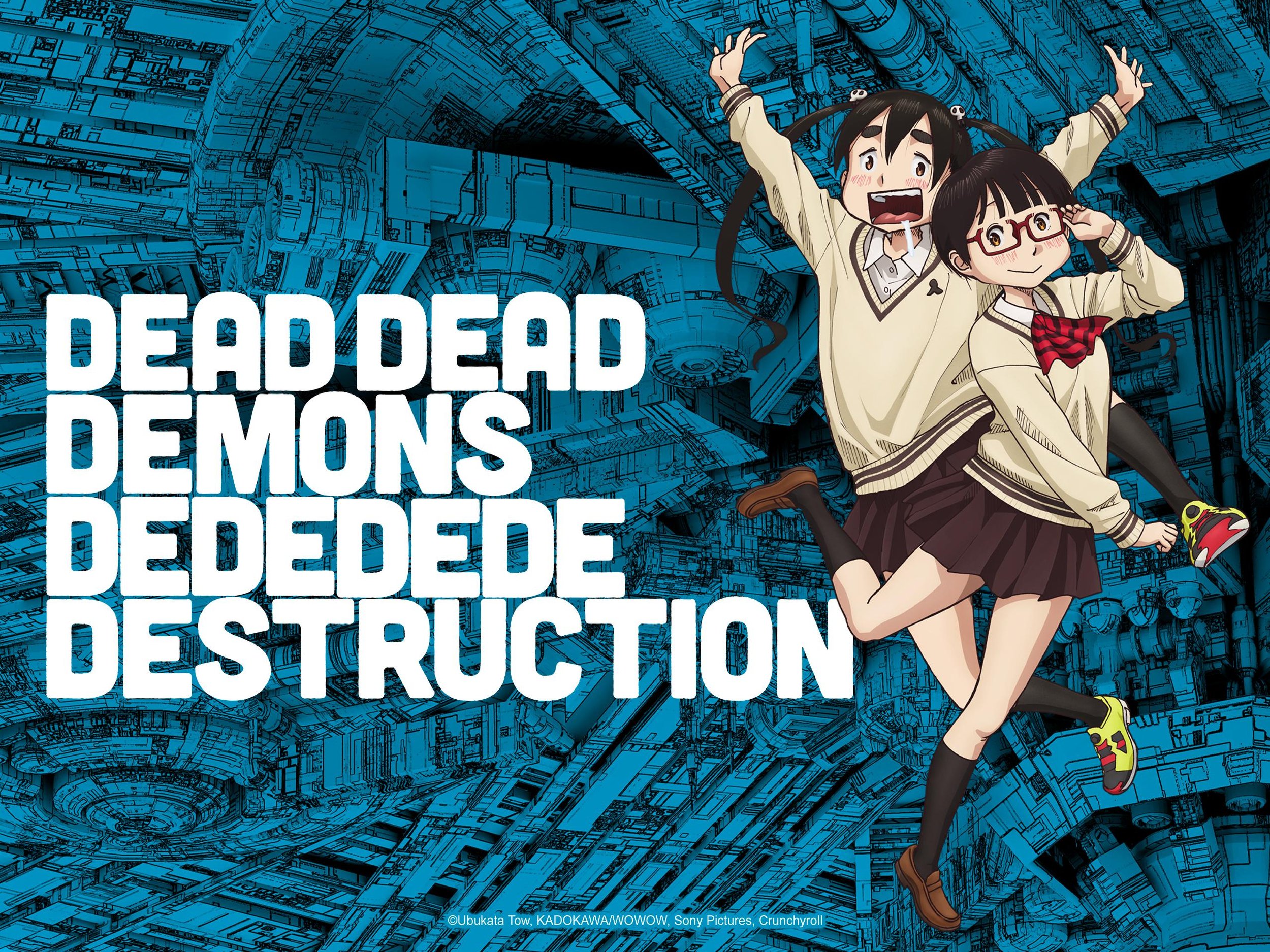
Distributor: Crunchyroll
Production company: Production +h.
Director: Tomoyuki Kurokawa
Writers: Reiko Yoshida, Takaaki Suzuki (based on the manga by Inio Asano)
Music: Taro Umebayashi
At last! An anime that gives us an accurate portrait of the apocalypse: people continuing to live their normal lives even as a massive machine that can rain total annihilation upon them at any time hangs above their heads in plain sight. I’m not saying it’s a metaphor for COVID (the manga was first published in 2014, after all), but there’s no shortage of other slow-burning catastrophes it can stand in for.
Said machine is a massive alien spaceship that parked itself in the sky over Tokyo three years ago. While neither it nor its occupants has made any aggressive moves as of yet, the Japanese military has made several efforts to destroy it, the result of which has been massive collateral damage to surrounding neighborhoods and the cratering of the Japanese economy. Our central group of high school protagonists, led by the shy and bookish Kadode Koyama (Rira “Lilas” Ikuta/Elyse Maloway) and the eccentric and boisterous Ouran “Ontan” Nakagawa (ano/Britt McKillip), prefers to ignore all the drama surrounding the UFO and live their lives as normal teenagers. But as the conflict between the “warctopuses” (those who want to destroy all the aliens) and the “peacesquids” (those who wish to negotiate peace) ramps up and their friends start to get caught in the crossfire, the girls soon realize that they may have a bigger part to play in this sci-fi epic than they originally anticipated.
It seems like a simple enough premise, but it’s used as a vehicle for a surprisingly complex story that touches on several themes. There’s a subplot where, in an alternate timeline, Kadode gets her hands on a piece of alien technology that she uses to enact vigilante justice upon unsuspecting victims. One member of the main friend group, Makoto Tainuma (Ryoko Shiraishi/Travis Turner), is a boy who likes dressing in girls’ clothing, not because of gender dysphoria but simply because he likes to feel pretty. One of the girls suffers a horrible fate, which leads her brother to become an especially ruthless “warctopus.” The girls also befriend a former idol, Keita Oba (Miyu Irino/Cole Howard), who has a much closer relationship with the aliens than he initially lets on.
DDDDD’s biggest overarching theme, however, is the way humanity reacts whenever a large disaster is looming over their heads. Our adaptability in the face of such large threats is treated as both a blessing (in the form of emotional resilience) and a curse (in that it’s often far too easy for us to adapt to ongoing crises, meaning we hardly ever learn from our mistakes).
It’s not just the story where DDDDD shines, though. It also has some of the most creative and diverse character designs I’ve seen in any anime, to the point that some humans look more alien than the actual alien invaders. From the government official who has cheeks so droopy that he looks more like a bulldog than a human, to Ouran’s older brother Hiroshi (who is shockingly good-looking for a morbidly obese hikkikomori), to the unique features of the leading ladies (Ontan’s big eyebrows and droopy eyes, Ai’s chipmunk cheeks and beady eyes, Makoto’s buck teeth, etc.), it really is a cast of snowflakes with this one.
Add to that a shockingly good English dub for having a cast that’s mostly new to anime voice acting (half of them don’t even have Wikipedia pages), and it’s easy to see why many consider Dead Dead Demon’s Dededede Destruction to be a prime candidate for anime of the year.
Honorable Mentions:
Jurassic World: Chaos Theory: I don’t want to say too much about this one, as I still plan to complete that Jurassic Park sometime within the next few months. Suffice it to say, though, that Chaos Theory is a massive improvement on Camp Cretaceous, with a much tighter story that not only makes for a much better “dinos and humans living together” story than Dominion but also makes excellent use of a tense thriller atmosphere inspired by the likes of All the President’s Men. It might very well be the best thing to come out of the franchise since the original film.
My Adventures with Superman Season 2: It’s mostly a “second verse, same as the first” situation with this one, albeit with the stakes upped a bit this time. We get some new relationship drama between Clark and Lois that is much better handled than last season, and we’re introduced to Clark’s cousin, Kara Zor-El (Kiana Madeira), who has a secret connection to the deadliest foe this version of Superman has faced yet: the rogue Kryptonian AI system Primus Braniac (voiced with menacing glee by Michael Emerson). So, yeah, one could say this is an improvement over the last season, with greater emotional highs, especially as Braniac’s plan reaches its final stages.
Oh, and speaking of DC Comics…
June
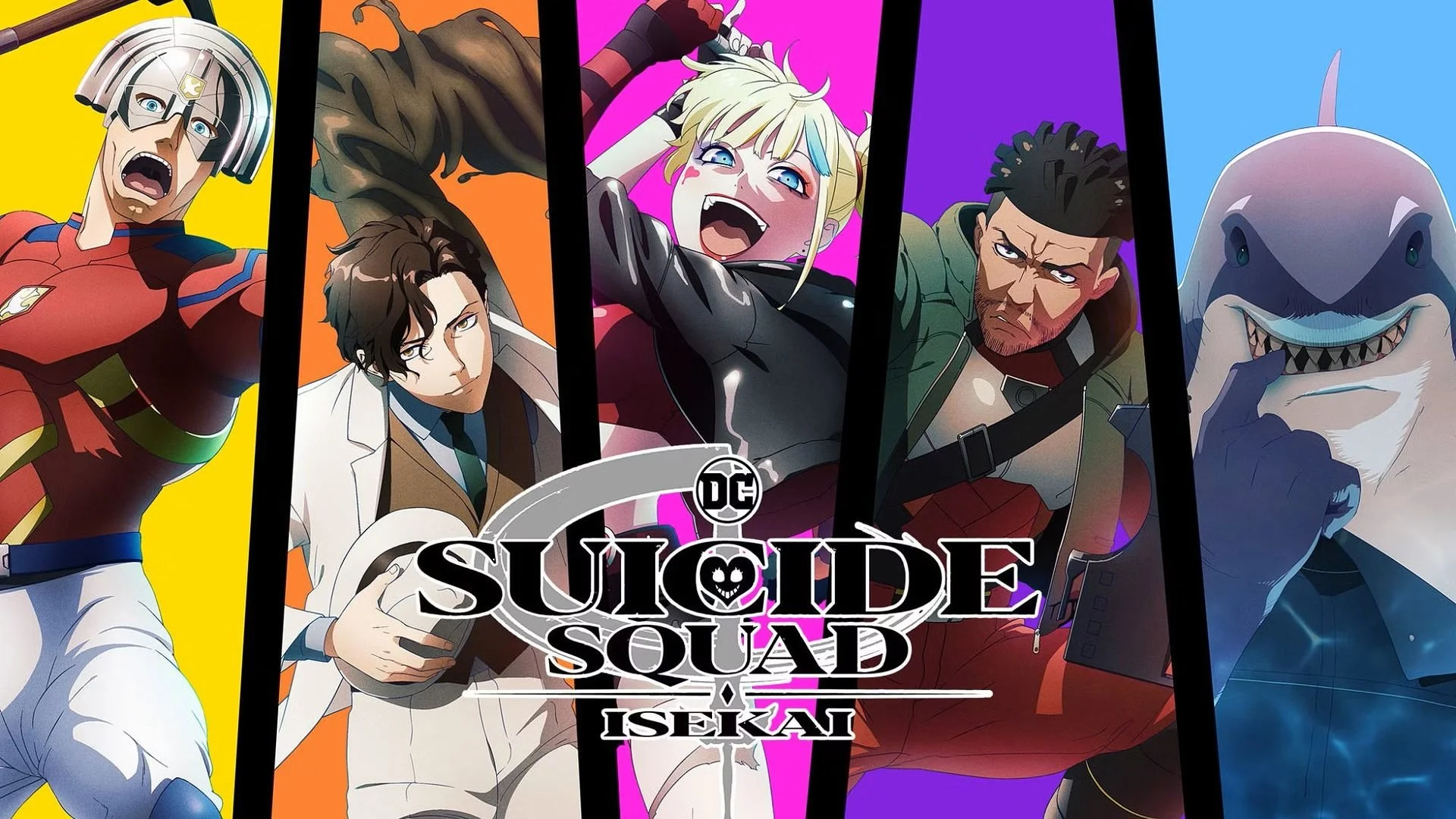
Distributors: Warner Bros. Animation, Medialink, Tokyo MX, BS11, Animax Asia
Production company: Wit Studio
Director: Eri Osada
Producer: Shinya Tsuruoka
Writers: Tappei Nagatsuki, Eiji Umehara
Music: Kenichiro Suehiro
This anime reimaging of everyone’s favorite team of superpowered misfits (co-written by the creator of Re:Zero) follows Harley Quinn (Anna Nagase/Karlii Hoch), Floyd “Deadshot” Lawton (Reigo Yamaguchi/Jovan Jackson), Christopher “Peacemaker” Smith (Takehito Koyasu/Sean Patrick Judge), Basil “Clayface” Karlo (Jun Fukuyama/Brandon Hearnsburger), and Nanaue aka King Shark (Subaru Kimura/Andrew Love) as ARGUS sends them into an alternate universe resembling a high fantasy novel, complete with dragons, orcs, and floating castles. Their mission is to defeat the villainous monsters native to this world, as well as the other Suicide Squad team that was sent there before them, to make way for ARGUS to secure its resources. Oh, and they only have 72 hours to complete this mission before bombs implanted in their necks blow them to kingdom come. No pressure!
Sadly, this iteration of the Suicide Squad isn’t nearly as vibrant or well-rounded as the version James Gunn gave us. All of the Squad characters here have been boiled down to their basic archetypes (Harley as the wild card, King Shark as the dumb muscle, Peacemaker as the boisterous patriot, Clayface as the washed-up actor, Amanda Waller (Kujira/Jasmine Renee Thomas) as the shady government official running the affair, etc.), and the isekai world natives don’t offer much more than them (the most interesting is probably Princess Fione (Reina Ueda/Luci Christian), who starts as a prim and proper royal only to have Harley’s insanity rub off on her more and more as events spiral out of control).
That being said, Suicide Squad Isekai still offers more than enough action and laughs to keep fans of these characters entertained. Comedic highlights include the Squad learning the Isekai world’s language from orcs and thus shocking the royalty with their vulgarity when they first meet, the bar brawl in Episode 8, and Amanda Waller of all people dancing to the end credits music.
If it sounds like I’m a little down on this series, that’s mainly because June 2024 was a rather slow month for new series. The only other notable one from this month was WondLa, which I didn’t feel comfortable signal-boosting since it was executive-produced by John Lasseter. Still, even if Suicide Squad Isekai is a bit style-over-substance, I am glad I saw it.
But hold on to your butts, because we’re not done with the DC stuff just yet…
July
Distributor: HBO Max
Production companies: Delicious Non-Sequitur, Yes Norman Productions, Lorey Stories, DC Entertainment, Warner Bros. Animation
Creators: Patrick Shumacker, Justin Halpern, Dean Lorey, Katie Rich (based on the character created by Bill Finger and Dick Sprang)
Producers: Patrick Schumacker, Justin Halpern, Kaley Cuoco, Suzanne McCormack, Dean Lorey, Jennifer Coyle, Sam Register (executive); Joann Estoesta
Writers: Dean Lorey, Patrick Shumacker, Justin Halpern, Conner Shin, Chris Marrs, Vidhya Iyer, Katie Rich, Leslie Schapira, Jess Lieberman, Lexi Slater
Music: Michael Gatt, Jefferson Friedman
Many fans of HBO’s Harley Quinn (myself included) were rather skeptical when they heard that the showrunners were making a spinoff centered on Kite Man, of all characters. How the hell is a joke character like that supposed to carry an entire show on his own? Much like the characters in-universe, however, it appears we may have underestimated him.
We follow Charles “Kite Man” Brown (Matt Oberg) and his girlfriend, Lisa “Golden Glider” Snart (Stephanie Hsu), as they try to save Noonan’s Bar, the favorite hangout of Gotham’s supervillains, when Lex Luthor (Lance Reddick (rest in peace, king)) threatens to buy it from its owner, retired hitman Sean Noonan (Jonathan Banks), as revenge for Kite Man screwing up a mission. He and Golden Glider manage to save Noonan’s and become its new owners, but not before Luthor hides the Anti-Life Equation in their freezer, which leads to big problems when Darkseid (Keith David) comes looking for it.
Kite Man isn’t quite on the same level as Harley Quinn in terms of its humor or storytelling, but the characters are endearing enough that it’s hard to care. Our heroes get compelling character arcs, with Kite Man struggling with insecurities about being seen as a joke by the other supervillains (as well as his strained relationship with his father) and Golden Glider worrying that her powers will one day slip out of her control and hurt someone she loves. The characters they surround themselves with are equally enjoyable. Bane (James Adomian) continues to steal the show whenever he shows up, with his bumbling attempts to be a good babysitter to Goldilocks (Carla Delaney), after she escapes from one of the Queen of Fables’ (Janelle Jones) storybooks, being a big comedic highlight. Also darkly hilarious is the way mobster Moe Dubelz (Michael Imperioli) refuses to acknowledge that his conjoined twin Joe is dead until his rotting corpse starts literally falling apart.
Meanwhile, Noonan and Malice Vunabar (Natasia Demetriou), Darkseid’s goddaughter who joins Noonan’s as their social media consultant, provide deadpan cynicism to offset Kite Man’s sunny optimism. Granted, not all of the characters are winners. Sydney “Sixpack” Speck (Eddie Pepitone) is a one-note town drunk stereotype who’s more annoying than funny. Still, as I’ve hopefully demonstrated, there are enough good characters surrounding him that it’s forgivable.
Some reviewers have argued that having Darkseid, of all people, as the main villain is a bit overkill for a series centering on a bar rescue. Indeed, the subplot with the megacorp Villigan’s and its CEO, Helen Villigan (Judith Light), feels like a much better fit for this type of story. Then again, for this type of story to escalate into a battle to stop a literal god of evil from robbing humanity of its free will feels perfectly on brand for this version of the DCU. Besides, the chorus that follows Darkseid around is funny enough that I was fine with it (“DARKSEID! DARKSEID! YOU’RE GONNA NEED A DIAPER ‘CAUSE IT’S DARKSEID!”).
While it’s definitely a step down in quality from Harley Quinn, Kite Man has more than enough likeable characters and blood-soaked action to keep fans of the former entertained. Kite Man himself does sometimes feel a little bit overshadowed by all the colorful characters surrounding him, but he’s still a dogged nice guy that you can’t help but root for even as the world starts to fall apart around him. It’s a good time all around with a bunch of people who really belong behind bars (ba-dum tiss!).
Honorable Mentions:
Oshi no Ko Season 2: Kaguya-Sama writer Aka Akasaka’s examination of the seedy underbelly of Japan’s entertainment industry is just as much of an emotional rollercoaster ride in its second season as it was in the first. We get to see the production of a play from the actors’ perspective, and watch as Aqua makes some shocking discoveries in his continuing investigations into Ai’s murder, all with the same top-notch animation and writing we saw in season one. Here’s hoping that quality continues in future seasons.
Too Many Losing Heroines: Sadly, my brain is probably a little too wired for action and adventure to fully appreciate what this high-school slice-of-life romantic comedy has to offer. Still, with its unique premise (self-proclaimed background character Kazuhiko Nukumizu (Shuichiro Umeda/Kevin D. Thelwell) becomes friends with several girls at his school in Toyohashi whose crushes have rejected them (but not in a harem kind of way!)), it’s not hard to see why many consider it “anime of the year” material with its mature examinations of the complications of being a teenager and what it truly means to be someone’s friend.
But hold on to your butts, because we’re still not done talking about DC stuff…
August
Distributor: Amazon Prime Video
Production companies: Bad Robot Productions, 6th & Idaho Motion Picture Company, DC Entertainment, Warner Bros. Animation, Amazon MGM Studios
Creator: Bruce Timm (based on characters created by DC Comics)
Producers: Bruce Timm, J.J. Abrams, Matt Reeves, Ed Brubaker, James Tucker, Daniel Pipski, Rachel Rusch Rich, Sam Register (executive); Adamma Ebo, Adanne Ebo, Gabriel Strick
Writers: Jase Ricci, Bruce Timm, Greg Rucka, Ed Brubaker, Adamma Ebo, Adanne Ebo, Halley Gross, Marc Bernardin
Music: Frederik Wiedmann
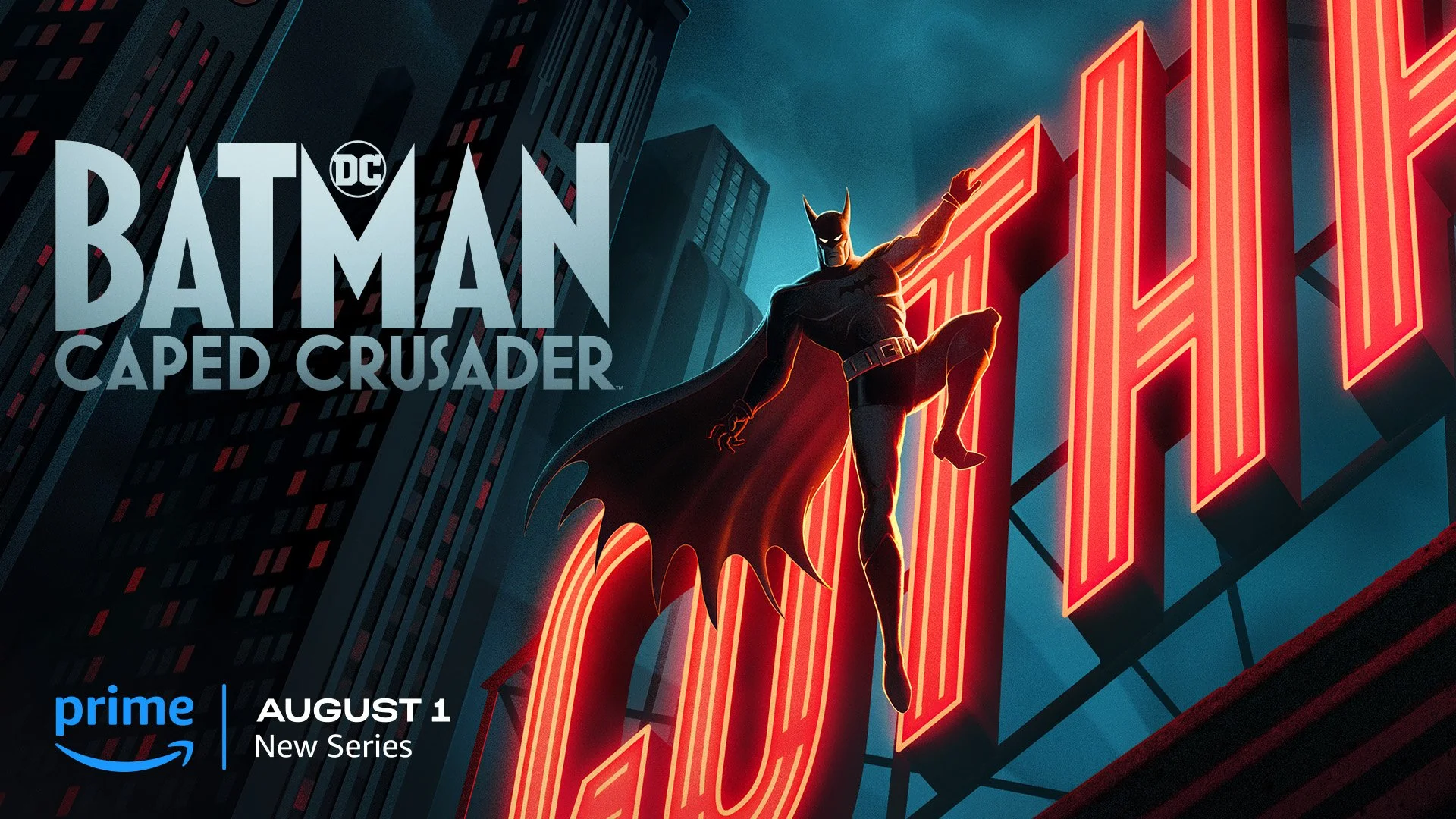
This series is best described as the successor to the iconic Batman: The Animated Series, but moodier and darker to reflect how audiences have grown since the 90s. It also injects a heavy dose of influence from the Golden Age comics of the 30s and 40s to help give Caped Crusader its own identity, as well as a deeper examination of the psychological factors that drive Bruce Wayne to do what he does.
We mainly focus on the Dark Knight (Hamish Linklater) in the early years of his crime-fighting career, going to war with Gotham’s various organized crime syndicates and dodging the corrupt police force, with detectives Harvey Bullock and Arnold Flass (Joe DiMaggio and Gary Anthony Williams) gunning to expose him as a fraud. His only allies are his butler, Alfred Pennyworth (Jason Watkins), and GCPD commissioner Jim Gordon (Eric Morgan Stewart). He gains new allies as the story progresses, including Jim’s public defender daughter, Barbara (Krystal Joy Brown), and detective Renee Montoya (Michelle C. Bonilla). He also gains new enemies, like Selina “Catwoman” Kyle (Christina Ricci), Basil “Clayface” Karlo (Dan Donohue), and Natalie “Nocturna” Knight (McKenna Grace). All the while, he is confronted with questions about why he feels the need to go after criminals so persistently.
Indeed, this newfound focus on Bruce Wayne’s psyche is a big part of what sets Caped Crusader apart from the other animated Batman stories that came before it. His reaction to seeing his parents murdered as a child is portrayed much more realistically here, with Alfred waking up one night to see Bruce standing over his bed and demanding the butler help him “make them pay” with a blank expression on his face. His trust issues also make him rather cold toward those closest to him, referring to Alfred only as “Pennyworth” and treating all his allies as assets in his quest rather than as trusted friends. However, events like his methods accidentally sending Harvey Dent (Diedrich Bader) into a murderous rampage, almost losing Alfred to the Gentleman Ghost (Toby Stephens), and finding out what his psychiatrist, Dr. Harleen Quinzel (Jaime Chung), gets up to in her off-hours lead him to open up more and relearn the value of human connection.
Another thing that gives Caped Crusader its own identity is the way it plays around with its established characters. For instance, Barbara and Jim Gordon are black in this version, while The Penguin (Minnie Driver) is reimagined as a female lounge singer who ruthlessly murders one of her sons on suspicion that he is a mole (and expresses no remorse when she learns she was mistaken). Harvey Dent becomes far more sleazy and self-interested in this incarnation (ironically becoming more empathetic after he becomes Two-Face), and Harley Quinn becomes less of the hyperactive loon we’ve grown used to and a much darker and more ominous villain with no connection to the Joker whatsoever. The more retro Art Deco aesthetic of Gotham also helps set the series apart, as does the greater focus on Batman’s detective skills (as befitting the film noir aesthetic the creators were clearly going for).
Some fans and critics have argued that incorporating Golden Age elements into a story somewhat undermines the darker, more adult examination of the Batman mythos that the creators are clearly aiming for. Even I found it rather jarring when more supernatural villains like the Gentleman Ghost and Nocturna showed up, as well as the supervillain Onomatopeia (Reid Scott), who only speaks in sound effects (also, the CG animation on the vehicles is often laughably bad). Still, with writing and animation this good and voice-actors this well cast (even Linklater sounds perfectly natural despite this being his voice acting debut), it’s no wonder that many critics consider Caped Crusader the best Batman series since the 90s series.
Honorable Mentions:
Tales of the Teenage Mutant Ninja Turtles: The direct sequel to the 2023 smash hit Mutant Mayhem manages to be a worthy follow-up to its predecessor, with the action not affected one bit by the somewhat simplified 2D animation.
Terminator Zero: This entry into the classic killer robot franchise, in which a scientist working in Japan to develop an AI to rival Skynet finds himself and his children with a target on their backs from a killer robot from the future and fight alongside a resistence fighter sent to protect them, might be the best thing to come out of the franchise since Judgement Day. The show stumbles a bit, thanks to only having eight episodes to tell its story (and, naturally, since this is a Netflix show, it was canceled after one season), but it’s still just as action-packed and philosophical as the best entries in James Cameron’s greatest creation.
But hold on to your butts, because we’re still not done with the DC stuff…Nah! I’m just kidding! Let’s do a show about Norse mythology instead.
September
Distributor: Netflix
Production companies: Stone Quarry Animation, Xilam Animation
Creators: Zack Snyder, Jay Oliva, Eric Carrasco
Producers: Zack Snyder, Deborah Snyder, Wesley Coller, Jay Oliva (executive); Sherry Gunther Shugerman, Eric Carrasco
Writers: Eric Carrasco, Caitlin Parrish, Peter Aperlo
Music: Hans Zimmer, Omer Benyamin, Steven Doer
Zach Snyder may be one of the most divisive figures in Hollywood for often going for style over substance (and his fandom almost certainly the most insufferable), but his Game of Thrones-esque take on the gods of Asgard is certainly one of his more enjoyable efforts.
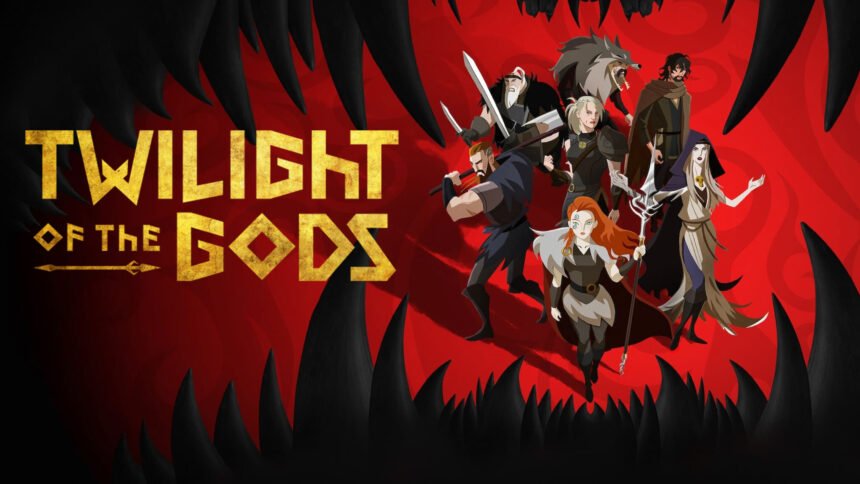
The story centers on a half-Jotunn warrior woman named Sigrid (Sylvia Hoeks), who returns to Jotunheim to marry Leif (Stuart Martin), the fully human king of the Volsung Viking clan. But the ceremony takes a tragic turn when Thor (Pilou Asbaek), in a rage and trying to hunt down Loki (Paterson Joseph), slaughters everyone attending the wedding, leaving Sigrid and Leif as the only survivors. Loki and Hel (Jaime Chung), sensing an opportunity, summon Sigrid to Helheim, where they tell her of a dwarf named Andvari (Kristofer Hivju) who creates iron weapons that can even kill gods, and that she can raise an army from the Vanir (a rival pantheon to Thor and Odin’s (John Noble) Aesir). She and Leif recruit him for their quest, alongside Sigrid’s shieldmaiden friend Hervor (Birgitte Hjort Sorenson), Leif’s poet/shaman slave Egill (Rahul Kohli), the blood magic sorceress Alie (Jamie Claydon), and her wolf pelt-clad berserker servant Ulfr (Peter Stormare).
Whether or not Twilight… counts as yet another style-over-substance venture for Snyder will probably depend on the person (some will definitely balk at the somewhat excessive gore and nudity), but I appreciated that this one had a stronger emotional core than other Snyder outings in the form of examinations of grief, both in Sigrid’s rage over her family’s massacre and Loki’s own despair at being constantly blamed for humanity’s failures and constantly being wronged by his brother. The relationship that develops between the two as a result of this is one of the more interesting story threads explored by this series.
The other characters are equally as interesting, from the Norse pantheon itself (presented here in a much more ignoble and bloodthirsty form than the version we got in the MCU) to arguably the best character, Aile the Seid-Kona, the transgender blood magician (yes, those were a real thing in Norse culture). Still, though, as with any Snyder project, the action scenes and visuals are the real stars of the show, and the animators clearly spared no expense in bringing the epic battles of Ragnarok to life.
It’s still got the same flaws as much of Zach Snyder’s work. One moment that really annoys me is in the final episode, when Odin has a vision implying that the Norse pantheon is destined to fall as Christianity rises. While I don’t think Snyder was intentionally implying that the forced conversion of the Norse people to Christianity was good and necessary, it still feels wrong, given how often the Bible has been wielded as a weapon against the non-Christianized by European colonizers. It doesn’t help that the Aesir are much more vicious towards their human worshippers than they were in the original myths.
While it’s probably not going to unseat Delicious in Dungeon as the best animated fantasy TV show of 2024, Twilight of the Gods is still a well-made and entertaining adventure. Sadly, it has since become another victim of what Paste Magazine writer Kathryn Porter calls the “Tiny Season Industrial Complex” (a phrase I’m totally going to be stealing), being cancelled after a single season of only eight episodes, thus robbing it of any chance to realize its potential beyond being “pretty damn good.”
October
Distributors: Crunchyroll, Netflix, GKIDS, Hulu, Muse Communication, Japan News Network, MBS, TBS
Production company: Science Saru
Director: Fuga Yamashiro
Writer: Hiroshi Seko (based on the manga by Yukinobu Tatsu)
Music: Kensuke Ushio
Just when you thought that the perfect anime for Halloween didn’t exist, here comes a show that can probably be best described as “Buffy the Vampire Slayer meets The X-Files with a Japanese sense of humor,” although most of the time it dispenses with scares in favor of pure balls-to-the-walls insanity (no pun intended).
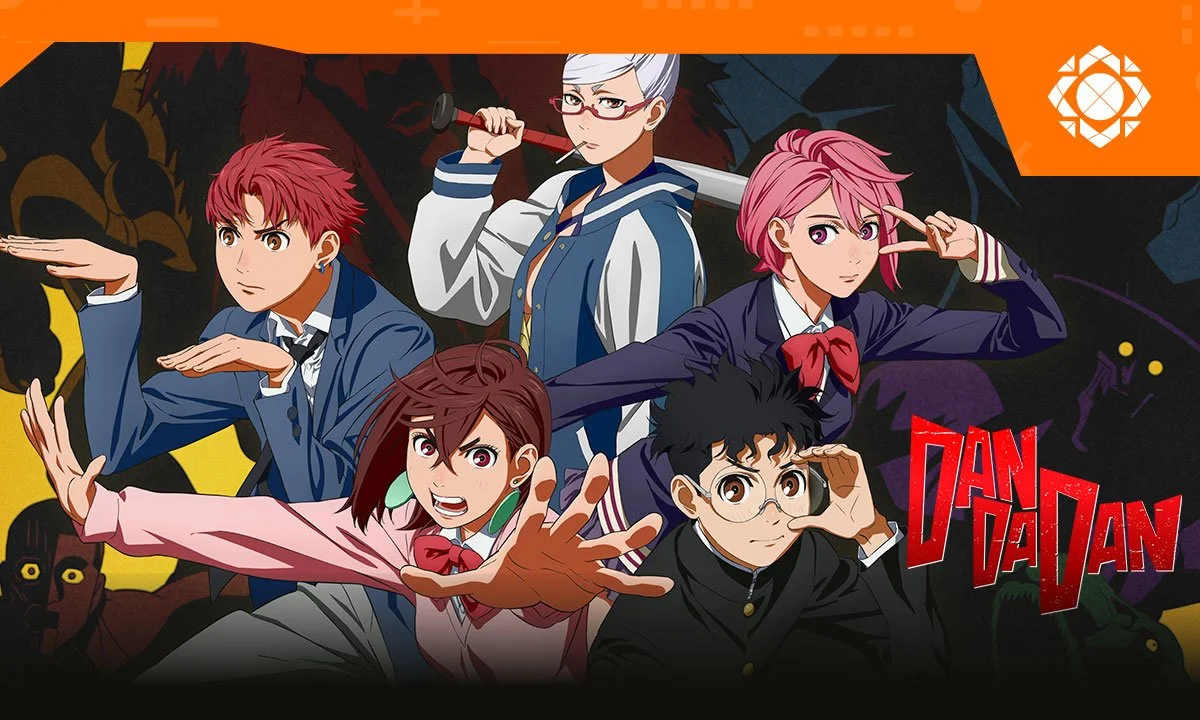
One day, a hot-tempered high-school gyaru girl named Momo Ayase (Shion Wakayama/ Abby Trott) encounters a timid nerd who happens to share the name of Momo’s celebrity crush, Ken Takakura (Natsuki Hanae/A.J. Beckles). Momo reveals that she believes in ghosts but not aliens, whereas Okarun (as she calls him) believes in aliens but not ghosts. In their quest to prove each other wrong, Momo gets abducted by aliens who accidentally cause her latent psychic abilities to awaken, while Okarun gets possessed by Turbo Granny (Mayumi Tanaka/Barbara Goodson), a foul-mouthed elderly ghost who ends up stealing his testicles. Thus begins a wild and crazy trip through the supernatural world, where the duo fights aliens and yokai with the help of allies like Momo’s spirit medium grandmother Seiko (Nana Mizuki/Kari Wahlgren), self-absorbed popular girl Aira Shiori (Ayane Sakura/Lisa Reimold), and Turbo Granny herself, trapped in a maneki-neko doll while Okarun gets to use her powers to fight demons and find his missing manhood.
As you can probably tell from my description, this show’s story is all over the place, but in a good way. As Anime News Network’s editorial team notes, “Depending on the day or even the individual scene, DAN DA DAN can be a rollicking sci-fi action-adventure, a terrifying supernatural horror show, a heartbreaking drama, a side-splitting comedy, or a pitch-perfect rendition of sappy adolescent romance.” Indeed, the relationship between Momo and Okarun is so well developed that many fans joke that Dandadan is really just a romantic comedy cleverly disguised as a shounen series.
Of course, Momo and Okarun, in all their messy teenage glory, are but two of the astounding cast of characters that this anime graces us with. Turbo Granny ends up stealing the show, especially in the English dub, where Barbara Goodson voices her with levels of old lady ham not seen since Cloris Leachman’s portrayal of Dola in the Disney dub of Castle in the Sky. Seiko fills the “cranky old mentor” role, which is contrasted with her absurdly youthful appearance for comedic effect. Aira is funny with her god complex and single-minded quest to destroy Momo (whom she’s mistaken for a demon), while latecomer Jin “Jiji” Enjoji (Kaito Ishikawa/ Aleks Le) charms as Momo’s goofy and fun-loving ex.
It’s also amazing how deftly the show goes from over-the-top comedy (from the very premise of trying to find Okarun’s lost testicles to the aliens’ insistence on stealing Momo’s “banana” then revealing their mechanical syringe/scissor-like penises) to heartbreaking drama (like when it reveals the tragic backstories of the Bound Spirit of the Tunnel and Acrobatic Silky (Kikuko Inoue/Amber Lee Connors)) without breaking the tone at all.
Probably the only thing that bothers me about Dandadan is the designs of some of the supernatural beings that appear on the show. While it’s easy to tell what most of these creatures are (the Flatwoods Monster, the Loch Ness Monster, etc.), I would never have guessed that Mr. Shrimp the Boxing Alien (Tomokazu Seki/Brent Mukai) was supposed to be the Dover Demon if he hadn’t come right out and said it. That’s probably more a case of me being a pedantic nitpicker than a genuine flaw of the show, though, and I do have to credit the creators with basing almost all of the supernatural beings on actual urban legends (yes, even Turbo Granny).
As you can probably tell, Dandadan has a little bit of everything: action, drama, romance, comedy, horror, and plenty of new urban legends to keep cryptozoology nerd like me busy with research for weeks. It is one of the best anime of the decade (possibly even the century) and one that you absolutely need to check out.
Honorable Mentions:
Uzumaki: This Adult Swim original serves as the best animated adaptation that Junji Ito’s classic cosmic horror manga could ever hope for…for all of one episode, before the animation quality devolves thanks to behind-the-scenes production chaos. I don’t think it’s quite as bad as everyone else says it is, but with its inconsistent animation quality and its attempts to squeeze 656 pages worth of story into four hour-long episodes, you’re probably better off sticking to the manga.
Ranma 1/2: The second anime adaptation of Rumiko Takahashi’s gender-bending martial arts classic doesn’t make much of an attempt to update the story for a modern audience (aside from Shampoo no longer speaking in broken English/Japanese), but it’s still just as fun as the original (I assume. I haven’t actually watched the 1989 show).
Tomb Raider: The Legend of Lara Croft: The intrepid video game archaeologist’s animation debut is a worthy addition to the franchise, giving us a much more human Lara Croft (Haley Atwell) who has to deal with past failures and regrets and learning to depend on other people as she tries to retrieve a dangerous Chinese artifact from a former associate turned to the dark side.
November
Distributor: Netflix
Production companies: Fortiche, Riot Games
Creators: Christian Linke, Alex Yee
Executive producers: Christian Linke, Marc Merill, Brandon Beck, Jane Chung, Thomas Vu
Writers: Amanda Overton, Nick Luddington, Henry Jonas, Graham McNeill, Kristina Felske, Giovanna Sarquis, Alex Yee, Christian Linke
Music: Imagine Dragons, JID (theme music); Alexander Temple, Alex Seaver
So… it seems people have opinions about the second and final season of Netflix’s hit video game adaptation, with many accusing it of pacing issues and rushing to wrap up the story. Before we get into that, however, let’s see what kind of story Season 2 has to tell.
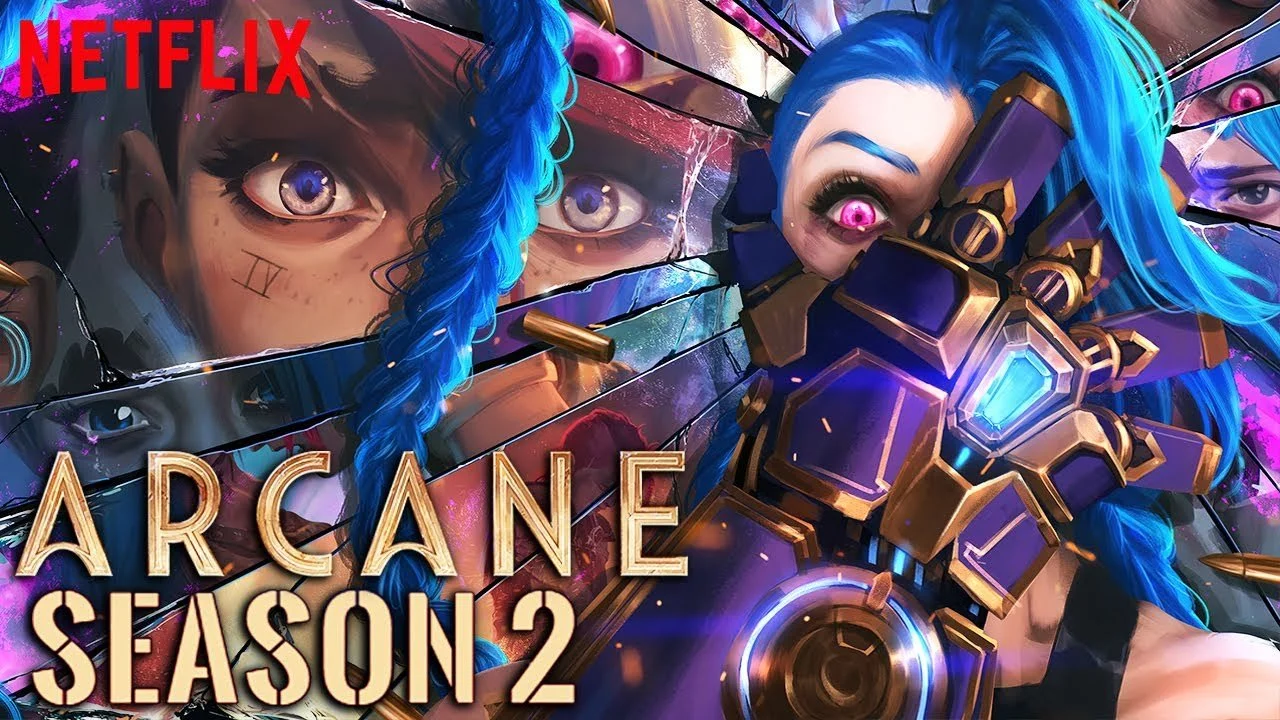
Much like the previous season, this season is divided into three acts. Act I follows Vi (Hailee Steinfeld) and Jinx (Ella Purnell) in the immediate aftermath of the latter’s bombing of the Council building, with the former deciding to join the Enforcers to help Caitlyn Kiramman (Kaite Leung) hunt Jinx down and avenge her mother’s death. Meanwhile, Jinx befriends a mute orphan girl named Isha (Lucy Lowe), who becomes something of an adoptive daughter to her, while Viktor (Harry Lloyd) forms a cult around the Zaun residents he cures with his new powers. Act II sees Vi turning to alcohol and pit-fighting after Caitlyn breaks up with her for letting Jinx get away. The sisters are reunited when they discover that their adoptive father, Vander (JB Blanc), has been transformed into a monstrous beast named Warwick, which seems like a happy reunion until tragedy strikes when Viktor’s camp is attacked. Act III shows Zaun and Piltover having to join forces to stop Viktor when he decides to forcibly convert all of Runeterra into emotionless robots, as he’s become convinced that emotion is at the root of all earthly woes.
You see one of the biggest problems right off the bat, right? Season 2 practically drops the class warfare story from the first season like a hot potato in favor of having Zaun and Piltover settle their differences to combat a greater threat, something that doesn’t feel earned in the slightest, as the problems between the two cities still haven’t been resolved even by the end of the last episode. We’re expected to believe that everything is hunky-dory now, despite the season having begun with Caitlyn gassing the undercity in her maniacal efforts to find Jinx and shut down Shimmer production.
That’s another thing this season fails at: the characters’ motivations are much more muddled, often to the point where they act in ways that are the opposite of how they were portrayed in Season 1. Vi willingly joins the Enforcers despite having watched them murder her parents right in front of her as a child. Jinx’s mental illness has inexplicably vanished. Heimerdinger’s (Mike Wingert) antipathy toward Hextech abruptly vanishes (as he’s come to believe that it’s merely human misuse that makes the Arcane dangerous) despite the second half of the season proving him 100% right. Mel Medarda’s (Toks Olagundoye) political guile is downplayed in favor of turning her into a bog-standard mage (in addition to taking her out of the story for most of the season by having a coven of witches kidnap her). Caitlyn arguably gets it worst of all, starting the season by devolving into a violent authoritarian willing to do anything to get back at Jinx (from gassing Zaun to trying to murder Isha (a literal child) when she gets between her and Jinx, leading to the fight between her and Vi that ends their relationship).
And if all that isn’t bad enough, Season 2 is extremely guilty of violating the “show, don’t tell” rule. Many important events, like the gassing of Zaun, Vi’s descent into drunken pit-fighting darkness, and Jinx and Isha’s entire relationship, are depicted via montages, which led many fans to half-jokingly accuse it of being a series of music videos poorly disguised as a season of television.
I wouldn’t say that Arcane Season 2 is a total loss, though. The voice acting is still excellent, and the animation is still positively immaculate, even if the animators seem to be doing the writers’ job for them half the time. It’s also got plenty of moments that manage to almost reach the same emotional heights as Season 1, like Vi and Jinx’s reunion with Vander, Isha’s sacrifice, and the final battle. Still, though, all of it could have hit much harder if the writers weren’t in such a hurry.
I’m not sure what happened to make Season 2 turn out as it did. From what I’ve gathered, it seems to be a combination of the creators being determined to stick to their original plan of two seasons (despite clearly having way too much story material to fit into it) and Riot Games changing their minds about making the series canon and thus forcing the writers to make the characters closer to their in-game counterparts. The result isn’t quite as bad as Game of Thrones Season 7, but it’s still not the finale that a show this excellent deserved.
December
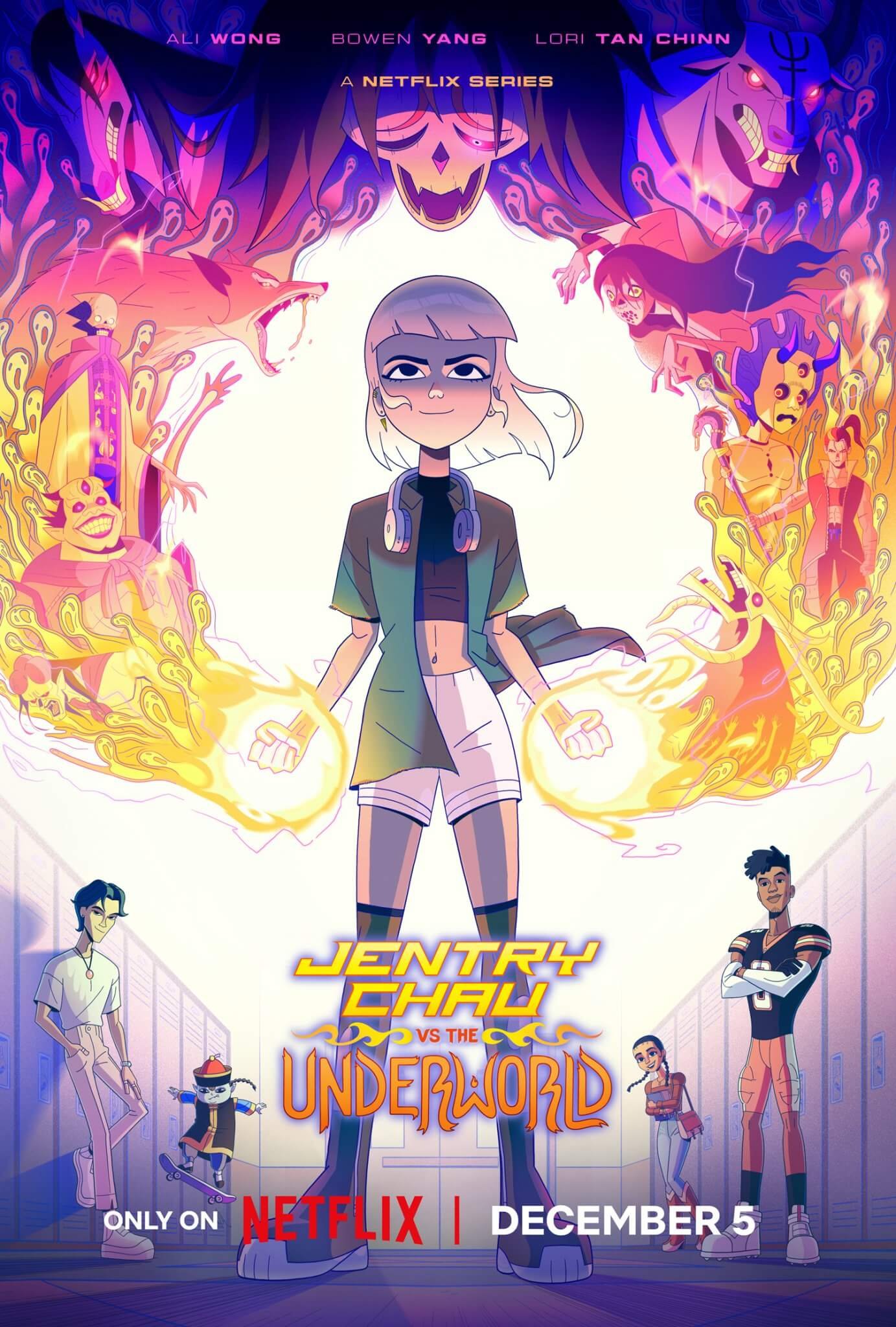
Distributor: Netflix
Production companies: Buji Productions, Tresspassers Will Inc., Lightbulb Farm Productions, Titmouse Inc., Netflix Animation
Creator: Echo Wu
Executive producers: Echo Wu, Ali Wong, Aron Eli Coleite, Chris Prynowski, Shannon Prynowski, Ben Kalina, Antonio Canobbio
Writers: Echo Wu, Saba Shaghafi, Tiffany So, Brittany Jo Flores, Peter Chen, Jade Chang, James Hamilton, Ryan Harer, Tanchelle “Nikki” Hudgens
Music: Katseye (theme music): Brian H. Kim
This future Halloween classic follows the eponymous Chinese American teenager (Ali Wong) as she is summoned from a boarding school in South Korea to her grandmother, Flora “Gugu” Chau (Lori Tan Chinn), in the suburban town of Riverfork, Texas, in hopes of helping the 16-year-old gain control of her latent pyrokinesis and help close a portal to the Chinese underworld that has sprung open nearby. Unbeknownst to Jentry, a mysterious supernatural entity calling himself Mr. Cheng (Greg Chun) seeks to steal her powers for his own purposes, leading to a battle in which Gugu dies and then returns as a ghost. As she gets more and more involved in the affairs of the Chinese spirit world, Jentry gains allies like Ed (Bowen Yang) (a jiangshi and former minion of Mr. Cheng who joins Jentry after being betrayed by him), Michael Ole (AJ Beckles) (Jentry’s childhood friend who has precognitive abilities), and Kit (Woosung Kim) (a mysterious new student who has nefarious plans for Jentry but is conflicted about them). But gaining control over her powers may prove difficult for Jentry, not only because she’s still traumatized over an incident in her childhood when she burned half of Riverfork down, but also because she learns that Gugu is keeping secrets from her, especially those involving what happened to her parents, Moonie and Peng (Lucy Liu and Jimmy O. Yang).
Shows involving teenage protagonists going toe to toe with supernatural forces are nothing new, with the likes of Gravity Falls, The Owl House, Avatar, and Dandadan having preceded it (Fun fact: Michael is voiced by the same guy who voices Okarun in the English dub). Jentry Chau sets itself apart from the others by having high school play a much larger role in the story. The fact that the show clearly portrays Jentry as being more anxious dealing with the realities of being a teenager than dealing with supernatural terrors is played for both comedy and drama (especially in her ultimately futile attempts to keep her classmates from figuring out that she’s the “demon girl” who burned down Riverfork eight years ago).
But navigating high school drama is the least of Jentry’s worries, as this story presents her (and, by extension, the audience) with several much heavier dilemmas, like how to deal with a loved one (Gugu, that is) betraying her trust, and learning to accept that your loved one is dead and that it’s better to accept that than try to hold it off. The show even dips its toes into contemporary political discourse with the episode “Forget the Alamo,” in which a fanatical tour guide, angered that the kids aren’t giving the “heroes” of the Alamo their “proper” respect, orders the ghosts of the fortress’s defenders to possess the kids and reenact their last stand as a way of getting back at them. It’s a good metaphor for the struggle over how to remember our founders and whether we’re doing more harm than good by trying to bury the more unsavory aspects of their biographies so we can continue revering them as heroes.
Jentry Chau also sets itself apart by drawing on Chinese mythology as its supernatural basis, thus giving us several mythological figures that aren’t quite as overdone as the yokai in Japanese mythology (jiangshi, mogui, Ox-Head and Horse-Face, Zhong Kui, the Yellow Emperor, painted skin demons, etc.). It’s in any sequence with these weird and wonderful creatures that the show’s stellar animation (which is definitely some of the best to come out of any Western TV show this year) is at its most colorful and breathtaking, especially whenever Jentry breaks out her fire powers.
It really feels like Netflix was saving the best for last by releasing Jentry Chau vs. the Underworld in December. Even through all the supernatural shenanigans and unraveling mysteries, the show is, at its heart, an exploration of a teenage girl who is trying to figure out who she really is as she navigates high school drama and untangles her complicated family history. I think that’s something any teenager (hell, even many adults) can relate to, even the ones that aren’t firebenders.
Honorable Mentions:
Creature Commandos: James Gunn’s first major animated project feels a bit samey with his typical Guardians of the Galaxy/Suicide Squad formula of putting together a bunch of superpowered oddballs and sending them out to save the day. Still, Gunn proves adept at delving into the psychology of even the wackiest of these freaks, getting us to care about their struggles (even Weasel, of all characters, has an effectively heartbreaking backstory). Add to that excellent animation that really lets Gunn go crazy with his offbeat brand of bloody hyperviolence, and it’s as fun and exciting as any other DC superhero project.
Secret Level: Amazon Prime’s answer to Netflix’s Love, Death, and Robots (which, incidentally, was also created by Tim Miller) puts its own spin on the anthology formula by basing its fifteen shorts on various video games. It’s not quite as successful as LDR, though, with the photorealistic CG animation of the shorts tending to blend together after a while, and many episodes feeling more like glorified trailers than fully fledged stories in their own right. Still, there are some diamonds in there, like “Dungeons and Dragons: Queen’s Cradle,” “New World: The Once and Future King” (starring Arnold Shwartzennegger as the titular king), “Warhammer 40K: And They Shall Know No Fear,” and “Concord: Tale of the Implacable” (which is apparently far more entertaining than the game it’s based on, from what I’ve heard). And good God… what this show does with Pac-Man really needs to be seen to be believed (your mileage may vary on whether or not what they did is good, however).
Secret Level has apparently been renewed for a second season. Here’s hoping the creators double down on what worked in Season 1 for their second go-round.
And with that, my discussion of animation in 2024 has come to a long-overdue conclusion. So that means we’ll get started with the best of 2025, right? Not yet.
First, I have my 2022 list to finish. It’s not going to be a full list of the best TV shows and movies of that year. I’m only going to do a single article, picking ten entries from that year that I don’t think got the attention or recognition they deserved, and giving my thoughts on them.
Before that, though, I’ve decided that my first animation-based article after this one will be another “1001 Animations” article. You can blame Netflix for forcing my hand on that one, as they were removing Five Centimeters Per Second at the end of February, and I wanted to watch it and review it before it left. I feel in a bit of a hurry to get that one done as soon as possible, since I want to catch some of my entries for that list while they’re still free with ads on YouTube. So, yeah, that’s going to be my next major project on the blog…once I’m finished with the next “Cryptids of North America” article, that is.
Yeah, I think I could use a break from animation for a little bit, and talking about cryptids is usually much easier for me than evaluating what makes certain works of art…well, work. So tune in next time when my cryptozoological road trip takes me to the great state of Virginia. I hope you’ll be there to join me.