P.J.’s Ultimate Playlist #10: “We Can’t Make It Here Anymore” by James McMurtry
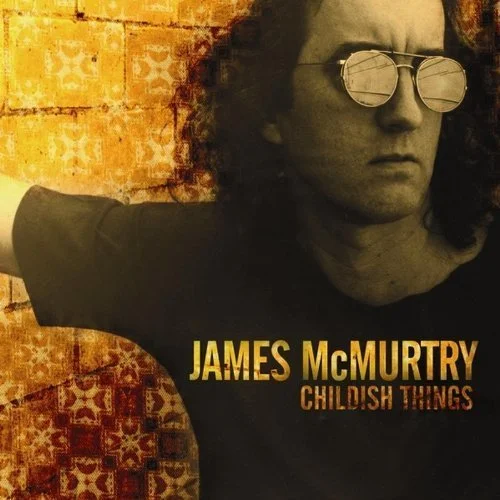
The cover for McMurtry’s seventh studio album, Childish Things, of which “We Can’t Make It Here” is the third track
Part of me feels a little weird having two Playlist articles one right after the other, but I can’t really think of any other short article ideas to tide you guys over while I’m still finishing my best animated TV shows of 2024 list. Besides, this song suddenly popped into my head one morning a few days ago while I was in the shower, and I just knew I had to make an article about it. Sure, it’s yet another song in the Playlist series where I use it as another opportunity to rage at the socio-political state of this rotten world, but the Playlist has to have a theme, right?
With all that said, let’s look at a song from an underground country artist talking about the sorry state of America under the Bush administration that still feels depressingly relevant 21 years after it was written.
The Artist

McMurtry in a 2025 publicity still
McMurtry was born in Fort Worth, Texas, on March 18, 1962, but was mostly raised in Leesburg, Virginia, a suburb of Washington, D.C. Being the son of an English professor and Larry McMurtry, the novelist responsible for The Last Picture Show, Terms of Endearment, and Lonesome Dove, it’s probably no surprise James also went on to be a storyteller, albeit as a musician rather than an author. He took a while to get there, though, as he spent most of the 1980s working as a housepainter, bartender, and actor (including in the TV adaptation of Lonesome Dove as Jimmy Rainey) after moving to San Antonio. He demonstrated a gift for songwriting from a young age, though, and was persuaded by a friend to enter a new songwriter contest at the Kerrville Folk Festival, where he became one of six winners that year. McMurtry’s real big break came when Larry was hired to write the screenplay for Falling from Grace, a film both directed by and starring legendary heartland rocker John Mellencamp. Mellencamp was impressed by some of James’ demos and not only agreed to produce his first studio album, 1989’s Too Long in the Wasteland, but also included McMurtry in the film’s fictional band the Buzzin’ Cousins alongside himself, Joe Ely, Dwight Yoakam, and John Prine.
McMurtry’s musical career has since been defined by his studies of quirky characters and the way he uses them to examine the nuances of American culture. The most famous of these is “Choctaw Bingo” from the 2002 album Saint Mary of the Woods, which tells the tragicomic story of a dysfunctional family reunion in Oklahoma full of drug-dealing methheads and gun-toting con artists and is such an honest portrait of the American underclass that Ron Rosenbaum of Slate argued that it should be considered the new national anthem.
But that’s not the song we’re talking about here. The song I want to talk about comes from McMurtry’s next studio album, 2005’s Childish Things, and serves as a meditation on America’s decline during the George Bush administration, which remains a distressingly accurate portrait of our society even two decades later. It was even named as the best song of the 2000s by no less a figure than Robert Christgau, who could probably be considered the Roger Ebert of music critics if you want to know what his opinion is worth.
So let’s talk about it.
The Song
There’s not much to the music of “We Can’t Make It Here.” It’s more or less a standard meat-and-potatoes country/folk rock band laying down a basic track as a bed for the lyrics to rest on. Indeed, as with most great country songs, it’s in the lyrics that the true heart of the song lies, as McMurtry weaves a blunt yet poetic portrait of the decline of small-town America over the song’s seven-minute runtime.
He starts with one of the most tragic of all of America’s down-and-out archetypes: the war veteran who was discarded once his government decided it had no more use for him:
There’s a Vietnam vet with a cardboard sign
Standing there by the left-turn line;
Flag on the wheelchair flapping in the breeze,
One leg missing, both hands free.
The second half of the verse condemns the government for not providing these veterans with any resources to help them reintegrate into everyday society, preferring instead to spend hundreds of billions of dollars to create new traumatized veterans while leaving the Veterans Administration to wither and descend into corruption and scandal:
No one’s paying much mind to him.
The V.A. budget’s stretched so thin
And there’s more comin’ home from the Mideast war.
We can’t make it here anymore.
The non-veteran citizens aren’t doing much better, though, as the narrator points out in the second verse, as he shows us the devastation wrought by the wave of deindustrialization that swept the country in the 1980s:
That big ol’ building was the textile mill.
It fed our kids and paid our bills,
But they shut us out and closed the doors.
We can’t make it here anymore.
The third verse goes into more detail about the decay of the narrator’s hometown, as the mill’s closing caused the town to descend into economic destitution. Most of the legitimate businesses have closed down, leaving criminals and drug dealers to fill the void:
See all those pallets piled on the loading dock?
They’re just gonna sit there ‘till they rot,
‘Cause there’s nothing to ship, noting to pack;
Just busted concrete and rusted tracks.
Empty storefronts around the square;
There’s a needle in the gutter and glass everywhere.
You don’t come down here unless you’re looking to score.
We can’t make it here anymore.
There are still some businesses open, like the local tavern, but from the way the narrator tells it, they probably won’t be for long:
The bar’s still open, but man, it’s slow.
The tip jar’s light and the register’s low.
The bartender don’t have much to say.
The regular crowd gets thinner each day.
The unsurprising reason, as the narrator explains, is that money is getting harder and harder to come by now that the mill doesn’t offer an easy route to financial security:
Some have maxed out all their credit cards.
Some are working two jobs and living in cars.
Minimum wage won’t pay for a roof; won’t pay for a drink;
If you’ve gotta have proof, just try it yourself, Mr. CEO.
See how far $5.15 an hour will go.*
Take a part-time job at one of your stores.
Bet you can’t make it here anymore.
*In more recent live versions of the song, McMurtry updates this line to “See how far seven and a quarter will go” to reflect how the national minimum wage has risen since 2005.
McMurtry then focuses on one of his famous character studies, using the case of a local teenage girl to show how economic hardship is affecting America’s youth:
There was a high-school girl with a bourgeois dream,
Just like the pictures in the magazine.
She found out on the floor of a laundromat
That a woman with kids can forget all that.
If she comes up pregnant, what can she do?
Forget the career; forget about school.
Can she live on faith? Live on hope?
High on Jesus or hooked on dope?
When it’s way too late to just say no,
You can’t make it here anymore.
The narrator then gives us a glimpse into what he’s been doing with himself since the mill closed down. Turns out he’s been working at Wal-Mart, where he gets to witness firsthand how globalization has screwed him over:
Now I’m stocking shirts in the Wal-Mart store,
Just like the ones we made before,
‘Cept this one came from Singapore.
I guess we can’t make it here anymore.
Whereas many working-class Americans like him would immediately pin the blame on people of color for their plight, be they immigrants or overseas workers, the narrator of the song instead pins the blame on those who are truly to blame:
Should I hate a people for the shade of their skin,
For the shape of their eyes or the shape I’m in?
Should I hate ‘em for having our jobs today?
No, I blame the men who sent the jobs away!
I can see ‘em all now. They haunt my dreams,
All lilywhite and squeaky-clean.
They’ve never known want.
They’ll never know need.
Their shit don’t stink and their kids won’t bleed,
Their kids won’t bleed in their damn little war,
And we can’t make it here anymore.
The end result of this sad state of affairs is demonstrated in the next verse:
Will work for food, will die for oil,
Will kill for power and to us the spoils.
The billionaires get to pay less tax
And the working poor get to fall through the cracks.
Let ‘em eat jellybeans. Let ‘em eat cake.
Let ‘em eat shit, whatever it takes.
They can join the Air Force or join the Corps
If they can’t make it here anymore.
Finally, the narrator brings it all home with a final plea to the ruling class to listen to his grievances and tries to remind them that his story is just one of millions that can be found across the deindustrialized US:
Now that’s how it is and that’s what we’ve got
If the president wants to admit it or not.
You can read it in the paper, read it on the wall,
Hear it on the wind, if you’re listening at all.
Get out of that limo. Look us in the eye.
Call us on the cellphone. Tell us all why.
In Dayton, Ohio, or Portland, Maine,
Or a cotton gin out on the great high plains
That’s done closed down along with the school
And the hospital and the swimming pool.
Dust devils dance in the noonday heat.
There’s rats in the alley and trash in the street.
Gang graffiti on a boxcar door;
We can’t make it here anymore.
Personal Thoughts
As someone who’s lived in rural Northern New York since the day I was born, “We Can’t Make It Here” strikes me as a far more accurate portrait of small-town America than anything modern country music has come up with (I’ve already gone on at length about how poorly “Try That In a Small Town” by Jason Aldean represents small-town USA). Indeed, listening to this song 21 years after it was recorded, it’s shocking how its relevance has only grown in the years since, and I don’t think James McMurtry realized how much worse it was going to get.
For one thing, one could argue that America hadn’t yet seen the worst of what the Bush administration would inflict upon us. True, by the time Childish Things was released on September 6, 2005, we had long since figured out that the WMD that the administration used to justify invading Iraq were nonexistent (not that all the death and destruction that ensued would have been worth it if they had). However, the worst effects of Hurricane Katrina, which made landfall in Louisiana a week before, had yet to manifest. The worst effects of the opioid epidemic had not yet made themselves known, and the financial crisis of 2008 would soon come along and make the economic upheavals McMurtry describes even worse. And that’s not even getting into the damage the two Trump administrations and the COVID-19 pandemic wrought.
I witnessed this firsthand in St. Lawrence County. I watched as the General Motors plant where my father worked was shut down, and then watched him bounce from one job to another (first a glass-recycling plant, then Alcoa Corporation, and then the New York Power Authority, where he retired last year). Unlike the narrator of “We Can’t Make It Here,” however, he blames illegal immigrants for costing him his GM job, rather than the greedy corporate executives who decided they wanted his paycheck for themselves.
While the Main Street decline I’ve seen in my hometown and those around me is nowhere near as bad as what McMurtry describes in the song, I can still relate to the sight of many nostalgic local places from my childhood falling victim to economic troubles and closing up shop. The local mall is probably the biggest example. I remember how fun it was to visit the Waldenbooks shop whenever I got a new gift card for my birthday or Christmas (I still have a cloth bag from that shop hanging on a hook beside my writing desk, right next to my birdwatching binoculars). It even had an ice rink, which my younger brother’s hockey team made frequent use of. But then the financial crisis hit, and that shop was one of the first in the mall to close. Nowadays, so few shops remain at that mall that my family members often wonder aloud how it’s even still open.
This memory and the verse that begins with the line about the pallets on the loading dock remind me of a Twitter post I came across recently that really resonated with me:
I hate that I had to grow up in the generation that got to see what life was like before the internet and then have to watch as it single-handedly destroys every single social entertainment space. Video rental stores, movie theaters, malls, arcades, bowling alleys, etc. The infinite access to at-home entertainment is turning us all into lazy, antisocial, depressed hermits and we’re just willingly allowing this to happen to us. The long term ramifications of this are so dire.
-@nicksterwickster, March 1, 2026
As much as I disagree with said poster’s other tweets about willingly voting for a Republican blowhard narcissist because Democrats “hate America” or that Paramount buying Warner Bros. is good, actually, because it will make Hollywood less “woke” (remember, guys: retweets are not endorsements), I can’t find much to argue about with this one. Well, aside from maybe arguing that it isn’t the internet itself that’s the problem, but rather the gentrified capitalistic version that exists today.
Indeed, that’s the lesson that McMurtry really wants us to take away from “We Can’t Make It Here”: the only people making life worse for us are the billionaire CEOs trying to turn us against each other with racism, overseas forever wars, and economic immiseration. Don’t let them. We can have the good times back again, but only if we stop letting Mr. CEO call all the shots. Remember your solidarity with the working class of your country and with working people across the world, and you’ll soon be saying, “We can make it here!”
I promise that I have a non-political song review in me somewhere, I swear!
Anyway, that was a fun detour where I got to talk about a great country music artist that mainstream radio has neglected, but now it’s time for me to get back to finishing the “best animated TV shows” list for 2024. Not much left to say here except to stay tuned for when that eventually comes out.
Until then, stay safe, stay in school, and remember: no war but the class war!