So I Just Watched Jurassic World Rebirth…
…and while I definitely thought it was miles better than Dominion, I don’t necessarily think it lives up to its title.
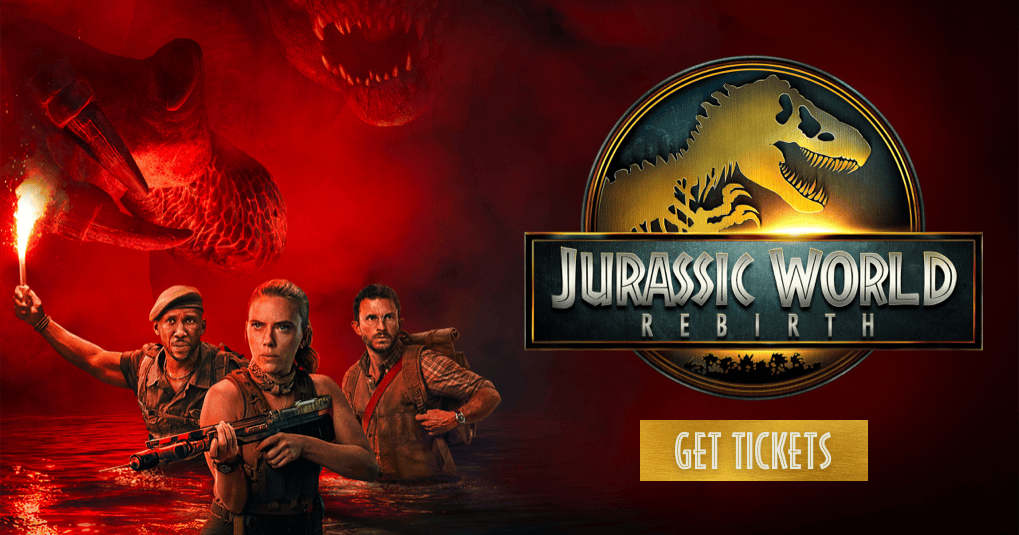
Dinosaurs are pretty dumb, right? And yet they survived for 167 million years. And we, almost 8 million, geniuses, by comparison, only have about 200,000 years so far. But with our huge cranial cavities, they're so smart, we already have the capacity to annihilate ourselves. I doubt we make it to even 1 million- Dr. Henry Loomis
It’s been five years since the events of Dominion, and dinosaurs have been undergoing a re-extinction. As it turns out, Earth’s modern climate is ill-suited to helping them thrive anywhere except the tropics, and the places where they still survive are considered off-limits to human explorers. Martin Krebs (Rupert Friend), a representative for a pharmaceutical company, believes the largest terrestrial, aquatic, and avian prehistoric animals currently living (Titanosaurus, Mosasaurus, and Quetzalcoatlus, respectively) hold the secret to developing a new treatment for cardiovascular disease, but has no means of legally getting to the only place where all three live: Ile Saint-Hubert, an island some 200 miles off the coast of Suriname, where an abandoned InGen laboratory lies. He thus relies on a team of mercenaries led by Zora Bennett (Scarlett Johansson) and Duncan Kincaid (Mahershala Ali) to get him there in secret, accompanied by paleontologist Dr. Henry Loomis (Jonathan Bailey). But the team faces several complications over the course of their mission, including Krebs getting suspicious that the team plans to make his treatment open source and thus cheat his company out of a financial windfall, the team stumbling across a family that was shipwrecked when the Mosasaurus capsized their sailboat, and the horrific genetically-engineered abominations that InGen left behind on the island…
Those hoping for an entirely new direction for this franchise (especially with David Koepp returning as screenwriter and Gareth Edwards commandeering the director’s chair) will probably be sorely disappointed by this film, as it feels less like Jurassic World Rebirth and more like Jurassic World Retread. It not only recycles plot elements from Jurassic Park (a slimy corporate executive being the main human antagonist, a copy of the “raptors in the kitchen” scene except in a convenience store, an awe-inspiring shot of a sauropod set to John Williams’ “Jurassic Park Theme,” the heroes siding into the sunset at the end admiring a group of modern animals (dolphins instead of pelicans this time), etc.), but also copies much of the plot of Jurassic Park III (a civilian and mercenary group being stranded on an InGen test site, Spinosaurus returning as a villain, a cliffside action setpiece involving pterosaurs, a character luring the main dino antagonist away then miracualously turning up alive, characters disturbing a T. rex near its Parasaurolophus kill, two bigger and badder new predators turning up to steal T. rex and Velociraptor’s spot as top dogs, etc.). I’m not inherently opposed to franchise films going back to basics in this way. After all, Alien: Romulus did the same thing a year before Rebirth and turned out fantastic (well, mostly: whoever thought it was a good idea to deepfake Ian Holm should be hanged, drawn, and quartered). The problem with Rebirth is that it seems content to be a greatest hits compilation rather than doing anything new and innovative with the franchise.
The characters seemed to suffer a similar lack of care, as there’s not really much to them. The main characters seem to have only as much character as the actors wrangle out of them through performance alone. Zora and Duncan are both given tragic backstories (Zora lost her mother to heart disease and a fellow covert op on a mission gone wrong, while Duncan’s marriage fell apart after his son died), but we never learn much detail, so it’s hard to care that much. Bobby Atwater (Ed Skrein) could have been interesting if his more unscrupulous nature had led to him being an ally to Krebs when he betrays the group later on, but instead, he gets chomped by a Spinosaurus early on. Loomis is probably the most interesting of them, especially when he rebukes Krebs for overvaluing intelligence as an evolutionary advantage, pointing out that human intelligence enabled the development of nuclear weapons. However, even he gets undermined by some very egregious mistakes that no paleontologist worth his salt should make (referring to Mosasaurus and Quetzalcoatlus as dinosaurs, estimating the titanosaurs as 11 tons despite them being just as big (if not bigger) than Argentinosaurus (which may have topped out at 88 tons), etc.).
It felt like more attention was given to the Delgado family, which annoyed some critics and viewers. Indeed, from all the reviews I read, it seems that one’s enjoyment of Rebirth depends on how much they like the Delgados. Personally, I liked them. True, their presence is a bit of a distraction from the main plot, but they make up for it by being much more vibrant and engaging than the mercenary team (in my opinion, at least). Xavier Dobbs (David Iacono) even gets a decent character arc, being dismissed by Reuben (Manuel Garcia-Rulfo) as a stoner moron at first, only to prove himself to be more selfless than he appears when he dives off the boat to save Teresa (Luna Blaise) when she falls overboard during the Spinosaurus chase. It leads to a rather heartwarming moment later on when he starts dunking on himself, and Reuben tells him that “other people may talk shit about us, but we don’t have to do the job for them. Otherwise, it becomes true.” Isabella (Audrina Miranda) gets her own moments of quick thinking (blocking the lights in her hiding place to throw off a Mutadon, squeezing through the bars to open the tunnel gate, etc.) and her relationship with Dolores the Aquilops. Teresa, meanwhile, gets an awesome (and hilarious) moment when he rushes to attack Krebs for almost getting her killed upon their reunion despite him clearly carrying a loaded pistol. True, the way they constantly evade life-threatening situations virtually unscathed does strain credibility after a while. Still, I was rooting for them, so it didn’t bother me all that much.
But the real question is: how do the real stars of the show fare in this go-round? Is the dinosaur action at least worth the price of admission?

Let me clarify: yes, in the sense that a lot of the action scenes are very well done and as thrilling as a Jurassic Park setpiece should be, but also no, in that it seemed the filmmakers doubled down on the genetic hybrids angle at the expense of the “natural” dinosaurs.
The scenes with the Mosasaurus/Spinosaurus pack and Quetzalcoatlus are excellent, though not quite as memorable as the action setpieces from previous films. Much of the marketing hype centered on the T. rex river-raft scene from the original novel finally being adapted for the screen, and many viewers (myself included) consider it the best scene in the film. It especially works because the Saint-Hubert Rex (officially named Ember) contains much more of the real animal than previous Rexes, from cosmetic changes like a bulkier build and non-pronated front limbs to a surprising level of strategic planning as it pursues the Delgados, giving it a showing as equally creepy as Rexy’s debut in the original film (indeed, modern paleontology has established that the real T. rex was likely as intelligent as modern day baboons).
Unfortunately, the normal dinos feel somewhat neglected in the final film, as the filmmakers apparently decided to include not just one but two new hybrid species: the Distortus rex and the Mutadons. This is annoying because, in the end, the film never actually does anything interesting with them. Despite its admittedly cool design (apparently inspired by the Xenomorphs and the Rancor from Return of the Jedi), it never actually accomplishes anything that a T. rex or Spinosaurus couldn’t have done just as easily (aside from one thing, which I’ll get to in a bit). Meanwhile, the Mutadons are established as “Velociraptors, except they can fly,” yet they never do anything to take advantage of their flight abilities, which makes me wonder why the filmmakers didn’t just use normal-ass Velociraptors instead (indeed, the only raptors to show up are immediately killed off by the Mutadon after mere seconds of screentime). I was sure that these flying hybrids would be the ones to take down the rescue copter at the end, but instead, what happens next? Well, in Whoville, they say that the D. rex inexplicably grew three sizes that day! Seriously, compare how big its teeth are next to the pilot’s head compared to Krebs.’ It’s ridiculous! (Oh, yeah, uh…spoilers, I guess).
Overall, my feelings toward Rebirth are similar to those toward Jurassic World and Fallen Kingdom: I am glad I saw it, but any compliments I can give the film come with a bucketful of caveats. Many of the problems with the film can probably be explained by its being rushed into production so soon after Dominion. Indeed, Gareth Edwards stated that he was only given a year-and-a-half to finish the film rather than the two-and-a-half years that is the norm for such a special effects-heavy picture. While he thinks it worked in the film’s favor by making the production process a “weirdly straightforward process,” I’m less inclined to agree. I think we all know that Universal Pictures rushed the film out just for profit.
As I said, there is plenty to like about this film. The dinosaur action is still fun (if a bit overly reliant on CGI spectacle), the characters are underwritten but still likable, the music by Alexandre Desplat is good (albeit not as memorable as John Williams’), and even if the story feels a little too familiar and recycles a few too many elements from previous films, it’s still competently written.
In the end, the film gets a 6/10 for me. I don’t think I’m quite ready to jump ship on the franchise just yet. Still, I’m also hoping that a non-Jurassic Park-related film comes out soon that adds some variety to our “saurian cinema” canon (apologies to YouTube’s Cold Crash Pictures for stealing his bit there). We probably won’t have to wait long, though, as a film called Flowervale Street is coming out in August of this year, which seems to feature dinosaurs time-traveling into modern-day suburbia and is directed by David Robert Mitchell, of It Follows and Under the Silver Lake fame. I’m definitely excited to see what a filmmaker like that is going to do with everyone’s favorite terrible lizards.
Before I wrap this up, however, I feel I would be remiss if I didn’t shout out a much better film that technically isn’t part of the Jurassic Park franchise, but does feel necessary to discuss in the same conversation, since it talks about the one person who probably helped more than anyone else to make Jurassic Park become the worldwide phenomenon that it was.
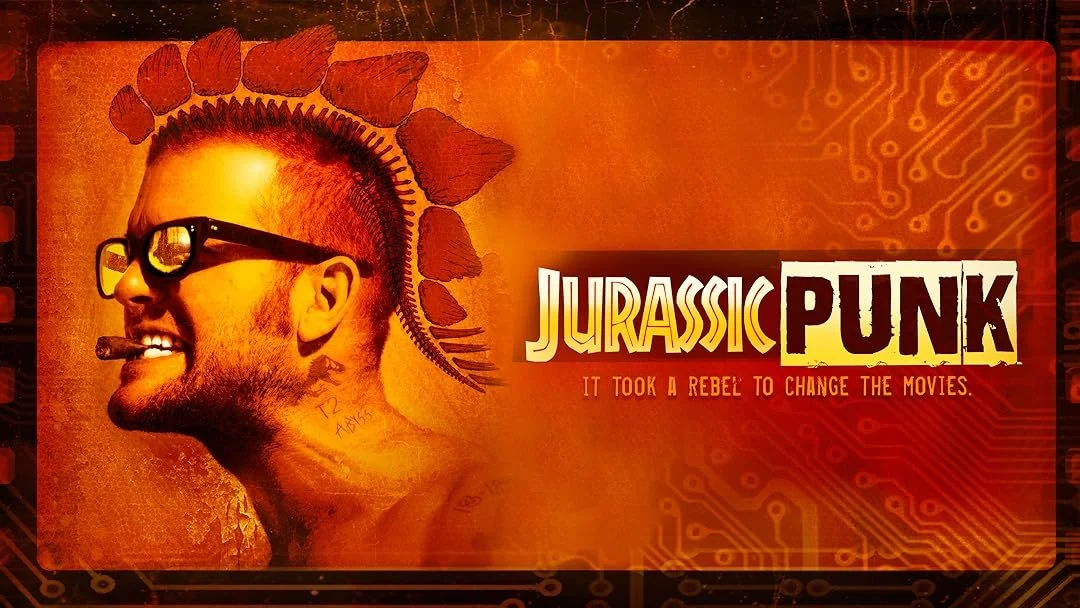
This documentary feature tells the story of Steven Williams (also known by his nickname, “Spaz,” which I won’t be using here out of respect for those who consider it an abelist slur), a Canadian-born animator and special effects engineer who became enamored with the then-developing art of computer animation while attending Sheridan College in the early 80s. He joined Industrial Light & Magic in 1988 and quickly established himself as a CG prodigy with his work on the alien water tentacle in James Cameron’s The Abyss, the T-1000 in Terminator 2: Judgement Day, and especially the dinosaurs in Jurassic Park. Williams recounts how Steven Spielberg and ILM creative director Dennis Muren were dead set on animating the dinosaurs using Phil Tippett’s go-motion until he snuck a rig of a walking T. rex skeleton (which he built singlehandedly) into a meeting with Muren and the film’s producers, Kathleen Kennedy and Gerald Molen.
Unfortunately, the aftermath of Jurassic Park’s success saw the rebellious spirit and disdain for authority that defined Williams’ personality lead him down a path of self-destruction. First came what he viewed as a snub from Spielberg when the director named Phil Tippett as special effects supervisor, which Williams thought should have gone to him, as he had far more experience with computer animation than Tippett. Then came his being snubbed by Dennis Muren and the other ILM higher-ups at awards ceremonies for Williams’ unwillingness to play along with office politics (he also perceives it as “stolen valor,” since Muren only supervised and directed, and didn’t actually animate any CG effects shots himself). Nevertheless, Williams continued to have a steady career at ILM for the next four years, during which he combined his love of Golden Age animation with his CG craft to create the cartoony effects for 1994’s The Mask and also contributed to Jumanji, Eraser, and Spawn (the latter of which was directed by his best friend, Mark Dippe). By that time, Williams’ relationship with ILM had deteriorated to the point that he was fired from the company, and spent much of the rest of his career directing commercials. He also turned to alcohol to cope with the unfairness of it all, especially after the critical and financial failure of Disney’s The Wild (Williams’ directorial debut) proved to be the point where Hollywood gave up on him entirely.
We learn this story through interviews with his family and the people he worked with at ILM. We get interviews with actor Robert Patrick (who recounts how Williams painted a grid on his body to aid in constructing the CG rig for the T-1000), Phil Tippett, Mark Dippe, Stefan Fangmeier, Scott Leberech (who directed the doc), and even Jamie Hyneman of Mythbusters fame. We see him lose not only his job but also two marriages due to his alcoholism and unwillingness to confront his self-destructive tendencies. We are also faced with the paradox of Hollywood depending on misfit ne’er-do-wells like Williams to create groundbreaking innovations, then casting them aside when they won’t conform to the squeaky-clean corporate image the big studios are trying to cultivate. The doc even examines the dark side of the CGI revolution Williams spearheaded, with Hollywood’s overreliance on it in the following decades growing to the point that they even used it to bring cartoons into live action (although the examples it highlights (Casper, The Flintstones, Scooby-Doo, etc.) are goddamn masterpieces compared to the past decade of Disney remake slop).
Despite the downbeat subject matter, Jurassic Punk ultimately finds a silver lining in Williams’ story by showing him going to rehab to kick his addictive habits and meeting younger animators who appreciate what he’s given the world on the lecture circuit. True, the cutthroat corporate structure of Hollywood that left him out to dry is still going strong to this day, and the quality of American film culture is suffering greatly for it, but films like this are definitely a welcome reminder that it’s not the suits to whom we should be thankful for giving us classic works like Jurassic Park, but rather real artists like Steve Williams, who are the real unsung visionairies of such projects. And I’m giving this one a 9/10.
Sorry for the detour from the animation retrospective. I finally got around to watching Rebirth last week, and I wanted to get this out as soon as possible. I’m somewhere between 2/3 and 3/4 of the way through the 2024 film list, so that will definitely be out sometime next week. I hope to see you there!